















 ● 20 min read
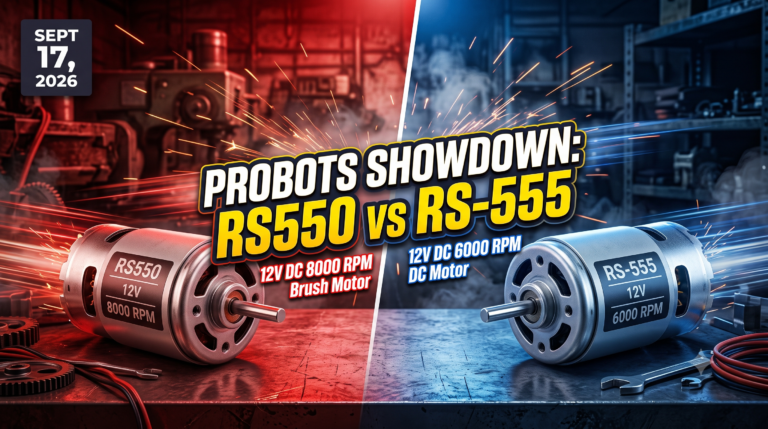
Showdown: RS550 12V DC 8000 vs RS-555 12V DC 6000 RPM DC Motor
Vol. 56 | The Heavyweight DC Drivetrain Duel Reliability isn’t optional when you’re designing actuators that need to move actual steel or
Read Article →
| Bulk Pricing | ||
|---|---|---|
| QTY | Unit Price(Inlc. GST) | |
| 10+ | ₹204.82 ₹ 173.58 + 31.24 GST | |
| 20+ | ₹202.73 ₹ 171.81 + 30.93 GST | |
| 30+ | ₹200.64 ₹ 170.03 + 30.61 GST | |
| 50+ | ₹196.46 ₹ 166.49 + 29.97 GST | |
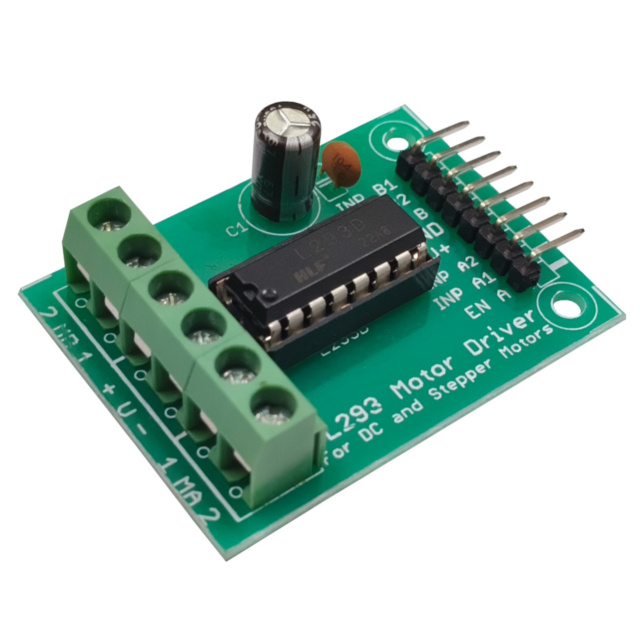
Ultra-efficient MOSFET-based dual motor driver. Controls two DC motors with PWM speed input, operating on 2.7V-5.5V logic and 4.5V-10V motor power.
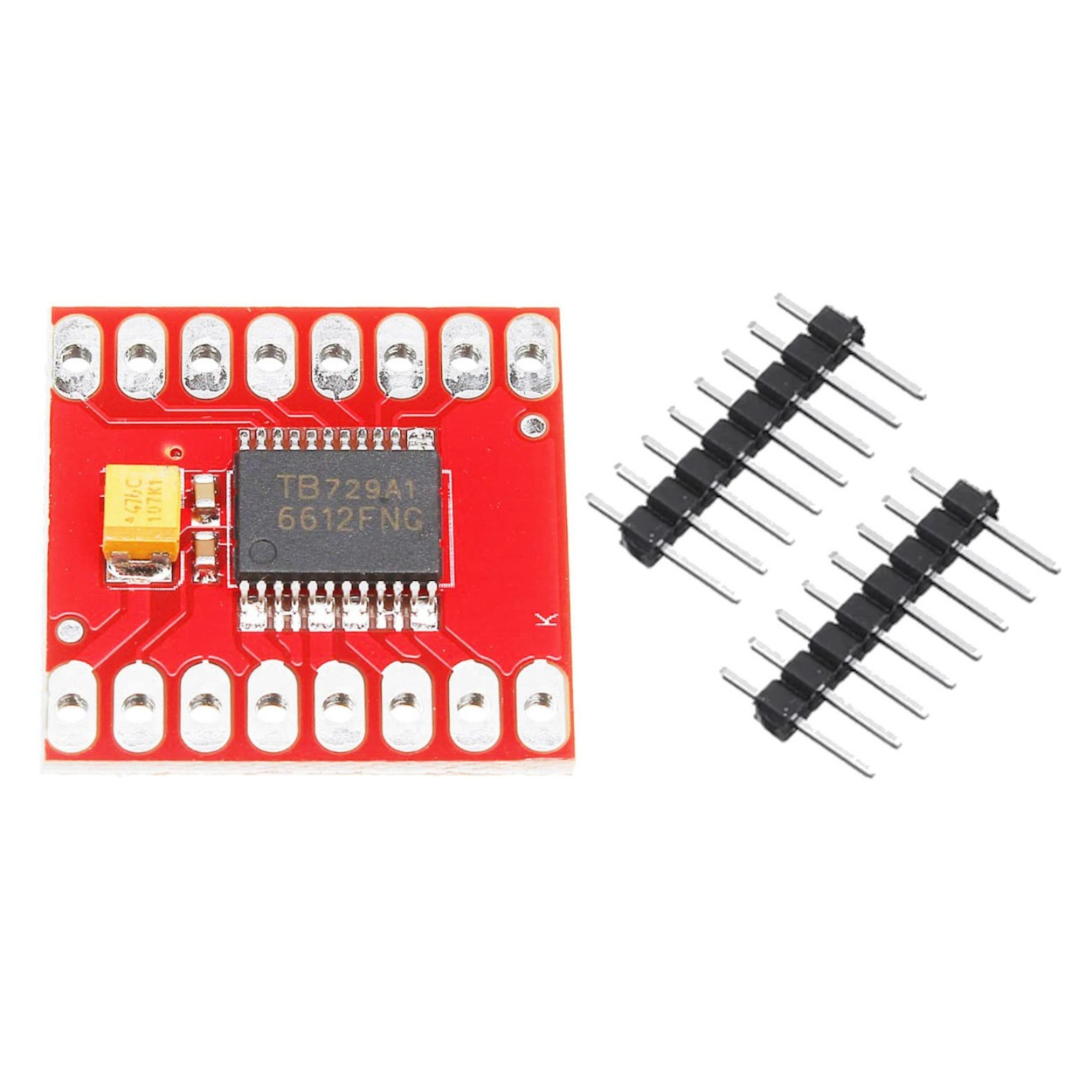
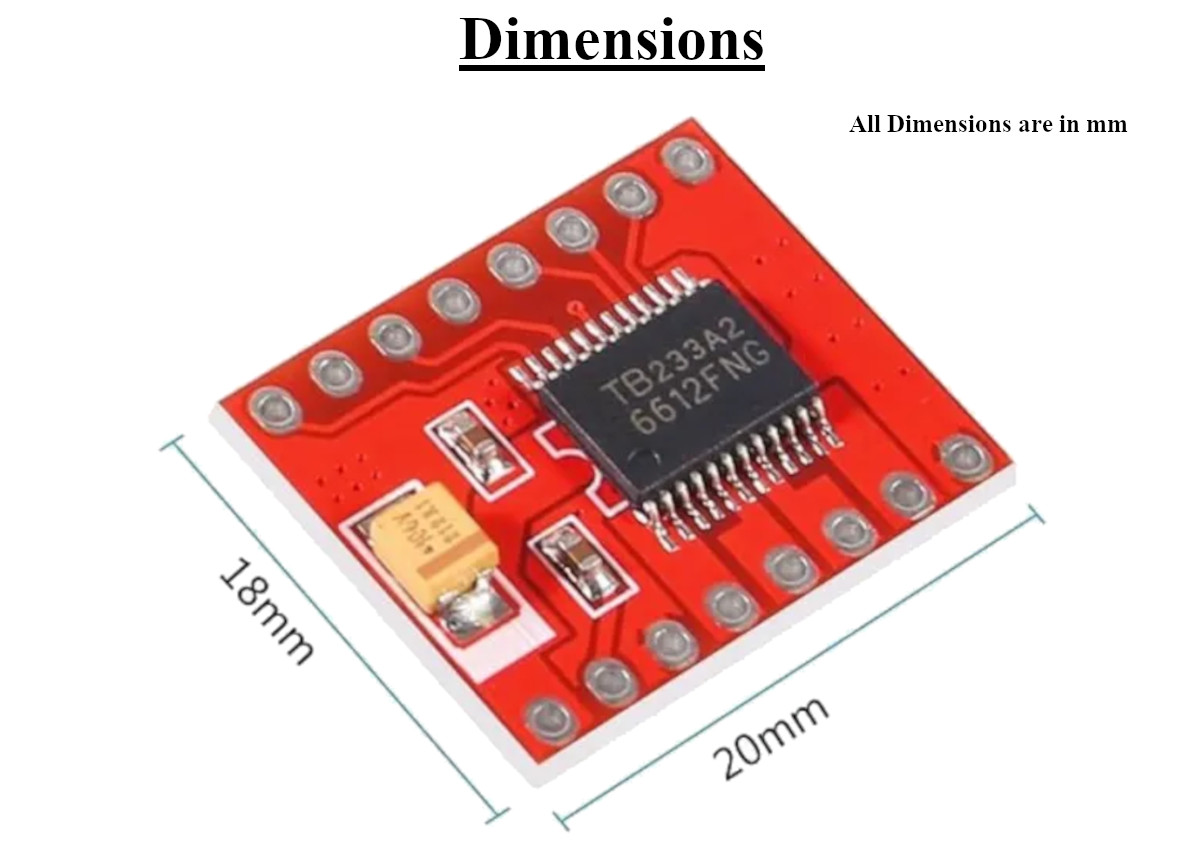
Next-generation efficiency for compact robotics. The TB6612FNG Dual Motor Driver is the modern standard for driving small DC motors. Unlike older bipolar drivers (like the L298N or L293D) which suffer from massive voltage drops and require huge heatsinks, the TB6612FNG uses MOSFET components. This means your motors get almost the exact voltage you supply from your battery, resulting in longer runtimes and zero need for active cooling.
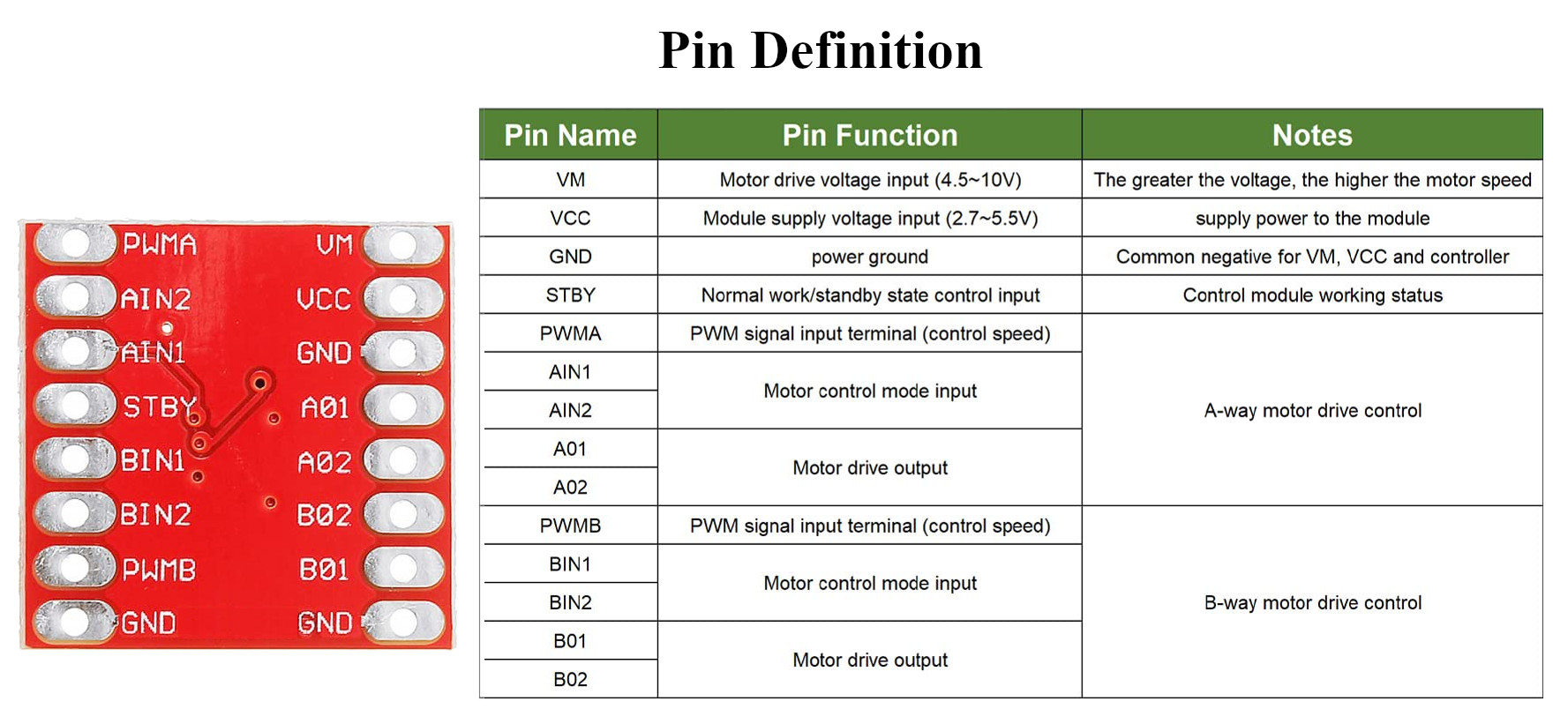
Advanced Control Logic The breakout board carefully splits the power and logic domains to protect your microcontroller. The VCC pin handles the logic supply (2.7V to 5.5V), while the VM pin provides the raw power to the motors (4.5V to 10V). To drive Motor A, you supply direction logic to AIN1 and AIN2, and a PWM signal to PWMA to control the exact speed. A crucial feature of this board is the STBY (Standby) pin; it must be pulled HIGH for the motors to operate, providing a convenient way to instantly disable all movement to save power or act as an emergency stop.
Driver IC: TB6612FNG
Logic Supply Voltage (VCC): 2.7V to 5.5V DC
Motor Supply Voltage (VM): 4.5V to 10V DC
Output Current: 1.2A continuous per channel (3.2A peak)
Motor Channels: 2 Independent DC Motors (A01/A02 and B01/B02)
Speed Control: Independent PWM inputs (PWMA / PWMB)
Standby Mode: Hardware STBY pin for power saving
Micro-Robotics (Micromouse/Line Followers): Driving tiny N20 micro gear motors with extreme precision where space and battery weight are limited.
Mecanum Wheel Cars: Using two of these modules to drive four independent wheels for omnidirectional robotic movement.
Camera Gimbals: Smoothly controlling small pan/tilt mechanisms utilizing the high-frequency PWM capabilities.
Unlock New Capabilities (Project Evolution)
Battery Upgrade: Because there is minimal voltage drop, you can transition from heavy 12V lead-acid batteries to a compact 2S LiPo battery (7.4V) connected to the VM pin and still get maximum torque from your 6V motors.
Safety Upgrade: Connect the STBY pin to a dedicated emergency-stop button or a bumper switch on your robot; when pressed, it pulls STBY LOW and immediately halts the drive without complex code.
Package Includes:
1 x TB6612FNG Dual Channel Motor Driver Module
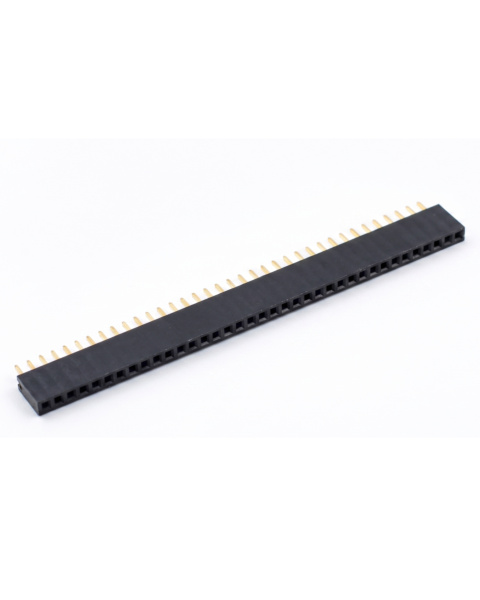
2 x 8-Pin Male Headers (Note: These are included loose and require soldering)
What is the difference between VM and VCC? VM is the raw power supply for your motors (4.5V-10V). VCC is the low-voltage power for the logic chip (2.7V-5.5V).
Why aren't my motors turning? You must pull the STBY (Standby) pin HIGH. If STBY is disconnected or LOW, the module is in sleep mode and will not drive the motors.
Are the header pins pre-soldered? No, the module comes with two loose 8-pin headers that you must solder yourself before it can be used on a breadboard.
How do I control the motor speed? Send a Pulse Width Modulation (PWM) signal from your microcontroller to the PWMA (for Motor A) or PWMB (for Motor B) pins.
How do I change the motor direction? For Motor A, toggle the AIN1 and AIN2 pins. If AIN1 is HIGH and AIN2 is LOW, it spins one way; flip them to reverse the direction.
Can I power the motors from my Arduino's 5V pin? You can power the logic VCC from the Arduino's 5V pin, but you should never power the motor VM from the Arduino. Always use a separate battery or power supply for VM.
Is there a common ground requirement? Yes, the GND pins are shared internally. You must connect your motor battery's ground and your Arduino's ground to the module.
Where do I connect the DC motors? Motor A connects to the A01 and A02 pins. Motor B connects to the B01 and B02 pins.
What is the maximum current rating? The chip is rated for 1.2A of continuous current per channel, with brief peak bursts up to 3.2A.
Why use the TB6612FNG instead of the L298N? The TB6612FNG uses highly efficient MOSFETs, so it doesn't waste battery power as heat, it doesn't need a massive heatsink, and it is significantly smaller.
Can it drive a stepper motor? Yes, you can drive a single 4-wire bipolar stepper motor by treating the two coils as two separate DC motors.
What exactly does the STBY pin do? The STBY pin controls the working status. When pulled LOW, the module enters a low-power standby state, disabling all motor outputs to save battery.
What happens if I make AIN1 and AIN2 both HIGH? This triggers a "Short Brake" mode, actively resisting the motor's rotation to stop it quickly.
Is it compatible with 3.3V boards like the ESP32 or Raspberry Pi? Yes, the VCC logic accepts 2.7V to 5.5V, making it perfectly safe and compatible with 3.3V controllers.
Can I parallel the outputs to drive one larger motor? Yes, you can bridge A01 with B01, and A02 with B02 to essentially double the current capacity for a single motor (up to 2.4A continuous).
Does the module have thermal protection? Yes, the TB6612FNG IC includes a built-in thermal shutdown circuit that disables the outputs if the chip gets too hot.
Do I need external flyback diodes? No, the internal MOSFETs have built-in body diodes that safely handle the inductive voltage spikes generated by the motors.
What is the maximum PWM frequency it supports? The module supports high-frequency PWM input up to 100 kHz, allowing for extremely smooth and silent motor operation.
Can I use this to drive a solenoid or relay? Yes, because it is an H-bridge, it can drive other inductive loads like solenoids or electromagnets up to 1.2A.
What happens if the motor voltage (VM) drops too low? The chip features a low-voltage detecting circuit. If VM drops below the operational threshold, it will protect the circuit by disabling the motor outputs to prevent erratic behavior.
| Technical Details |
|
|---|---|
| Motor Type Supported | DC Brushed |
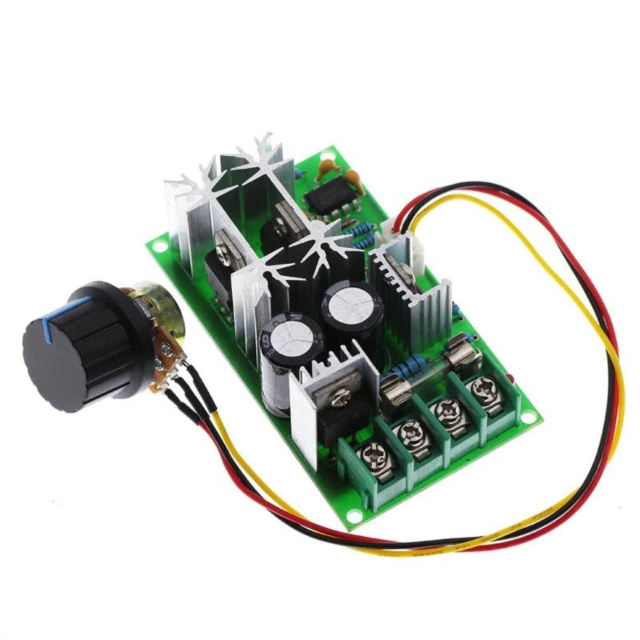
| Max Operating Voltage | 11-20V DC |
| Current (Max): | 0.3A - 5A |
| Max Motors Controlled(Nos) | 2 |
| Control Interface | PWM / Logic Level |
| Step Resolution | NA |
| Feedback Type | NA |
Probots sells every Electronics Part for your next Project. You can order 10,000+ Electronic Parts Online - Arduino, Raspberry Pi, NodeMCU Development Boards, Sensors, Motors, Motor Drivers, SMPS, Plastic Enclosures etc in India directly on probots.co.in
We delivery electronics components and parts throughout India using standard couriers like Bluedart, Delhivery & India Post.
For order related queries contact -
This item is covered by a warranty of 7 days from the date of delivery, against confirmed manufacturing defects only, as verified by Probots' own testing and investigation. In case of a confirmed defect, we will replace the item — a refund is issued only if a replacement can't be supplied (e.g. discontinued or out of stock). Transit damage or a wrong item received must be reported within 3 days of delivery.
If the product shows signs of misuse, tampering, physical damage, static discharge, liquid or fire damage, use of unapproved chemicals, or has been soldered or physically altered in any way.
China
Probots sells every Electronics Part for your next Project. You can order 10,000+ Electronic Parts Online - Arduino, Raspberry Pi, NodeMCU Development Boards, Sensors, Motors, Motor Drivers, SMPS, Plastic Enclosures etc in India directly on probots.co.in
We offer specialized services for Bulk, Wholesale & B2B Customers like discounted prices, additional shipping options, customised products, etc . Customer with large quantity & regular orders qualify for the specialised discounted rates.
We also offer dedicated sales team to assist you with the order process by providing sales quotations, PI, technical support for choosing products, etc.
Note: Business Orders are processed manually and usually take 1-3 days to process compared to placing the order directly on our website. Please plan your purchases accordingly.
Need Help?
For bulk enquiries contact us by -
Probots Electronics is highly regarded for its highly skilled team and knowledgeable staff who provide expert guidance to ensure customers select the right components for their technical projects. The business maintains a strong reputation for prompt service and reliable support, with many clients praising their quick response times and genuine commitment to customer satisfaction.


A very great place for electronics Such a well maintained shop... Felt good shopping here


Nice

For new developments kit available and they will support till working, and I suggest this place strongly


This place has all the electronic parts students will ever need, staff is friendly and the place is organised.


It was a really nice experience! I was happy to find such a wide range of robotics kits for kids, suitable for different age groups and learning levels.

Excellent experience




Good stuff

Buyed them. But no bargain. Helpful staff.


Available all children school project spears parts like electronics


It was good experience




Staff is very patient and helpful

One of the best place for electronics you will get everything you want! With the best and orginal quality

Very helpful staff and the best place to buy components for projects

Wonderful store with expert service and technically strong people.

Prompt delivery, excellent technical support


Large inventory of electronic components and parts. Well trained service personnel and technicians who can quickly identify and rectify product defect if any. They are a reliable and trustworthy online stores.

A very great place for electronics Such a well maintained shop... Felt good shopping here
Nice
For new developments kit available and they will support till working, and I suggest this place strongly
This place has all the electronic parts students will ever need, staff is friendly and the place is organised.
It was a really nice experience! I was happy to find such a wide range of robotics kits for kids, suitable for different age groups and learning levels.
Excellent experience
Good stuff
Buyed them. But no bargain. Helpful staff.
Available all children school project spears parts like electronics
It was good experience
Staff is very patient and helpful
One of the best place for electronics you will get everything you want! With the best and orginal quality
Very helpful staff and the best place to buy components for projects
Wonderful store with expert service and technically strong people.
Prompt delivery, excellent technical support
Large inventory of electronic components and parts. Well trained service personnel and technicians who can quickly identify and rectify product defect if any. They are a reliable and trustworthy online stores.
● 20 min readVol. 56 | The Heavyweight DC Drivetrain Duel Reliability isn’t optional when you’re designing actuators that need to move actual steel or
Read Article →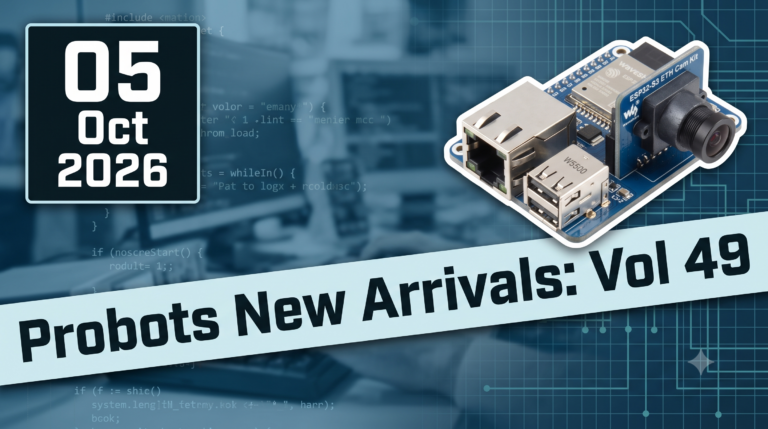 ● 13 min read
Workbench Vol. 49 🚀 The Project Trifecta: 3 Builds to Start Today We don’t just stock parts; we curate ecosystems. This week’s arrivals are desi
Read Article →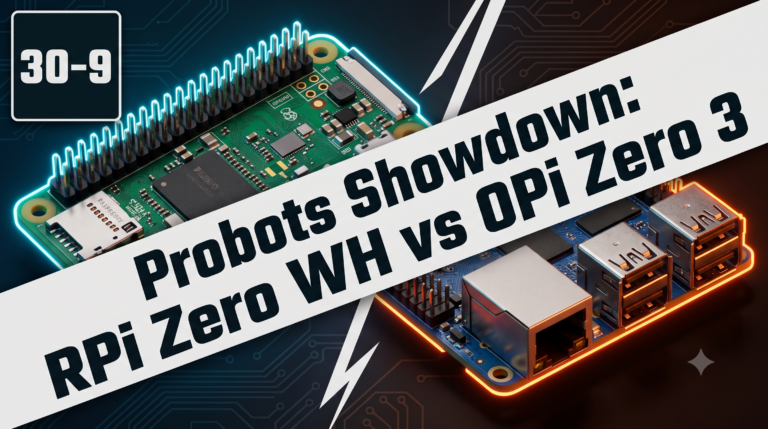 ● 18 min read
Vol. 59 | The Battle of the Bite-Sized Boards Picture a project that needs full Linux, networking, and GPIO—but has almost no room for a conventional
Read Article →