

















 ● 20 min read
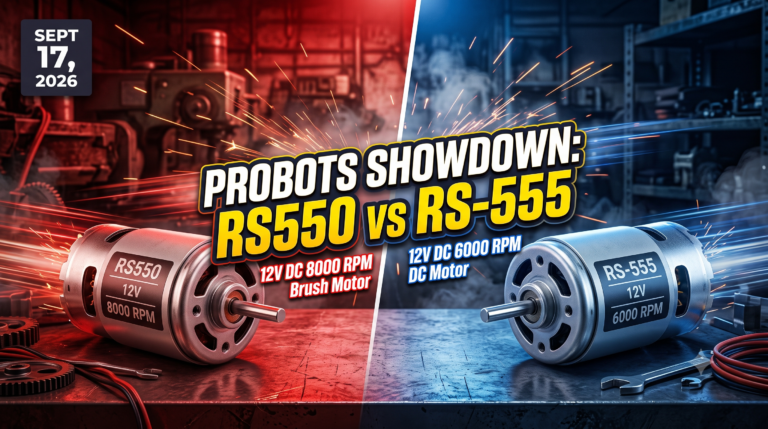
Showdown: RS550 12V DC 8000 vs RS-555 12V DC 6000 RPM DC Motor
Vol. 56 | The Heavyweight DC Drivetrain Duel Reliability isn’t optional when you’re designing actuators that need to move actual steel or
Read Article →
| Bulk Pricing | ||
|---|---|---|
| QTY | Unit Price(Inlc. GST) | |
| 25+ | ₹587.02 ₹ 497.47 + 89.54 GST | |
| 50+ | ₹581.03 ₹ 492.4 + 88.63 GST | |
| 75+ | ₹575.04 ₹ 487.32 + 87.72 GST | |
| 100+ | ₹563.06 ₹ 477.17 + 85.89 GST | |
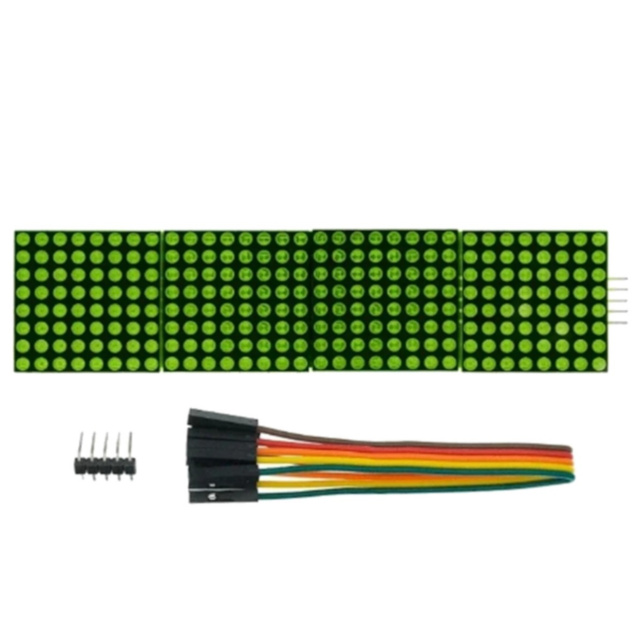
Create massive scrolling text displays! This module cascades four 8x8 LED matrices into a continuous 32x8 grid. It is driven by the MAX7219 chip and controls 256 bright blue LEDs using only 3 data pins on your microcontroller.
The Cascaded 32x8 Advantage Wiring a single 8x8 LED matrix manually requires at least 16 pins and an intense amount of multiplexing code. The MAX7219 chip solves this by acting as a dedicated shift register and LED driver. This specific "4-in-1" module takes that efficiency further by pre-wiring four MAX7219 chips and four 8x8 matrix blocks together on a single rigid PCB. This instantly gives you a massive 32x8 pixel grid (256 total LEDs) that operates seamlessly as one long display, eliminating the messy wiring and physical alignment issues of trying to glue individual modules together.
3-Wire SPI Simplicity Despite controlling 256 individual LEDs, this module only requires 3 digital pins from your microcontroller (Data In, Clock, and Chip Select/Load), plus 5V Power and Ground. The data is simply shifted from the first MAX7219 chip down the line to the fourth. If 32x8 isn't long enough for your project, the right side of the module features an output header (DOUT). You can daisy-chain a second or third 4-in-1 module directly into the first, creating an immensely long, synchronized scrolling sign while still only using those same 3 pins on your Arduino!
Intense Blue Illumination While red matrix displays are common and often look like cheap alarm clocks, this module is populated with intense blue LEDs. This provides a sleek, modern, and highly visible aesthetic that is excellent for high-tech desktop builds, cyber-punk themed projects, or contrasting against dark acrylic enclosures.
Specifications
Driver IC: 4x MAX7219 (Cascaded)
Display Format: 32 Columns x 8 Rows (Four 8x8 Blocks)
Total LED Count: 256 Pixels
LED Color: Blue
Communication Interface: 3-Wire SPI (DIN, CS, CLK)
Operating Voltage: 5V DC
Max Current Draw: ~1 Amp (All LEDs on full brightness)
Cascadable: Yes (via DOUT pins)
Module Dimensions: ~132mm (L) x 32mm (W) x 14mm (H)
Mounting: 4x M3 Holes (One in each corner)
Key Applications and Projects
Digital Desk Clocks: Pairing the module with a DS3231 Real-Time Clock to display the time, date, and current room temperature in large, retro digits.
YouTube/Twitch Subscriber Counters: Using an ESP8266 to pull live API data from the internet and update a scrolling subscriber or viewer count.
Audio Visualizers: Programming an Arduino with an MSGEQ7 audio analyzer chip to create a jumping 32-band graphic equalizer that bounces to your music.
Unlock New Capabilities (Project Evolution) The Live Subway / Bus Arrival Board: Bring the city into your apartment! Connect this display to a Wi-Fi-enabled ESP8266 node. Write a script that hits the open data API of your local transit authority. You can program the matrix to continuously scroll the arrival times of the next train or bus at your specific stop. It turns this simple LED matrix into an incredibly useful, real-time smart home appliance!
1 x MAX7219 4-in-1 Dot Matrix Module (Blue)
1 x 5-Pin Dupont Jumper Cable (Female to Female, ~200mm)
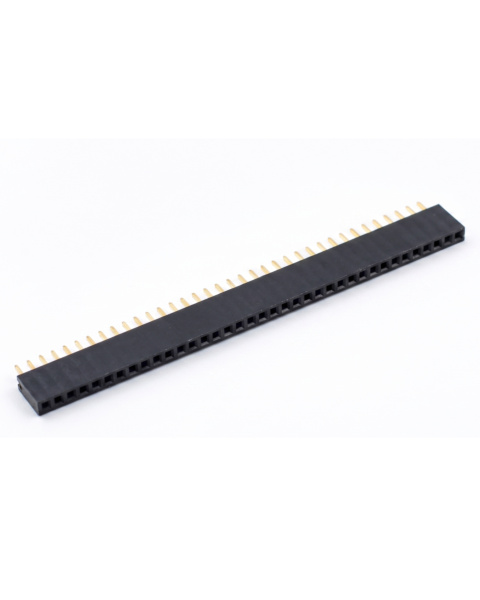
1 x 5-Pin Right-Angle Male Header (for cascading)

1. What is the MAX7219 chip? It is a dedicated serial input/output common-cathode display driver. It does all the hard work of rapidly turning the LEDs on and off (multiplexing) so your microcontroller doesn't have to.
2. How many total LEDs are on this board? There are four 8x8 matrices. 8x8 = 64 LEDs per block. 64 x 4 = 256 total LEDs.
3. What does "Cascaded" mean? It means the four driver chips are wired in a chain. The data enters the first chip; when the first chip is full, it overflows the data into the second chip, and so on. This allows you to control all four screens as one long screen.
4. What voltage does this module require? It requires exactly 5V DC.
5. Can I power this directly from the Arduino's 5V pin? If you are only scrolling a few letters at a time, yes. However, if you turn ALL 256 LEDs on simultaneously at maximum brightness, it can pull nearly 1 Amp of current, which will overload and reset a standard Arduino via USB. For full-screen graphics, use an external 5V 2A power supply.
6. Can I use this with a 3.3V board like the ESP32 or Raspberry Pi? The MAX7219 logic technically requires 5V. However, many users successfully drive the DIN, CS, and CLK pins with 3.3V logic signals, provided the VCC pin is supplied with a separate 5V power source. If it glitches, you must use a logic level converter.
7. How do I wire this to an Arduino Uno? Typically: VCC to 5V, GND to GND, DIN (Data In) to Pin 11, CS (Chip Select / Load) to Pin 10, and CLK (Clock) to Pin 13. (These pins can be changed in your software depending on the library used).
8. What Arduino library is best for this? The MD_Parola library combined with MD_MAX72xx is widely considered the absolute best and most feature-rich library for scrolling text, offering dozens of animation effects (wipe, slice, fade). The LedControl library is also good for simpler static graphics.
9. Why is my text displaying backward or mirrored? Not all factory matrix modules are wired the same way internally (some are FC-16, some are generic). If your text is backwards, you simply need to change the hardware definition type in the setup code of your MD_Parola or MD_MAX72xx library from PAROLA_HW to FC16_HW or GENERIC_HW.
10. Can I connect two of these 4-in-1 modules together? Yes! The right side of the board has a 5-pin output header. You can use jumper wires to connect the DOUT of the first board to the DIN of the second board, creating an enormous 64x8 display.
11. Is there a limit to how many modules I can daisy-chain? While you can theoretically chain dozens together, the SPI signal eventually degrades over long wires, and the display update rate will noticeably slow down. Most users max out around 4 to 6 of these 4-in-1 modules per microcontroller.
12. Can I display different colors? No. This is a monochromatic display. Every LED on this specific board is physically manufactured as a blue LED.
13. Can I adjust the brightness? Yes. The MAX7219 chip allows for software-controlled brightness adjustment, typically offering 16 distinct levels of intensity (0 to 15).
14. Are the LED blocks removable? Some variants have the 8x8 blocks soldered into female socket headers, allowing them to be pulled off. Others are soldered directly to the PCB. Even if removable, they must remain plugged in for the module to function correctly.
15. What are the physical dimensions? The entire PCB is approximately 132mm long, 32mm tall, and about 14mm thick (including the LED blocks and the chips on the back).
16. How do I mount it inside an enclosure? The PCB features four small M3-sized holes, one in each corner, allowing you to use standoffs to mount it behind a piece of smoked acrylic glass.
17. What is the black cable included in the package? It is a 5-pin female-to-female Dupont jumper cable used to easily connect the input pins of the module directly to the header pins of an Arduino Uno or similar dev board.
18. Will this display graphics or just text? It can display anything you program! While it excels at text, you can create custom 8x8 byte arrays to draw space invaders, smiley faces, or custom battery icons.
19. My display occasionally flashes random garbage characters. Why? This is almost always a power issue or a loose wire. Ensure your 5V power supply can handle the current spikes, and ensure your ground wire (GND) is solidly connected between the display and the microcontroller.
20. Can I use the hardware SPI pins on my Arduino? Yes, it is highly recommended. Connecting DIN to MOSI and CLK to SCK allows the Arduino's hardware SPI bus to push data to the screens significantly faster than using standard software "bit-banging" on random digital pins.
| Technical Details | Arduino Libraries
|
|---|---|
| Display Technology | 7-Segment & LED Dot Matrix |
| Touch Capability | Non-Touch |
| Communication Interface | I2C / SPI |
| Smart / Integrated Ecosystem | Standard Display (Requires external MCU) |
| Screen Size (Diagonal) | Small (1.5 - 3.4 Inch) |
Probots sells every Electronics Part for your next Project. You can order 10,000+ Electronic Parts Online - Arduino, Raspberry Pi, NodeMCU Development Boards, Sensors, Motors, Motor Drivers, SMPS, Plastic Enclosures etc in India directly on probots.co.in
We delivery electronics components and parts throughout India using standard couriers like Bluedart, Delhivery & India Post.
For order related queries contact -
This item is covered by a warranty of 7 days from the date of delivery, against confirmed manufacturing defects only, as verified by Probots' own testing and investigation. In case of a confirmed defect, we will replace the item — a refund is issued only if a replacement can't be supplied (e.g. discontinued or out of stock). Transit damage or a wrong item received must be reported within 3 days of delivery.
If the product shows signs of misuse, tampering, physical damage, static discharge, liquid or fire damage, use of unapproved chemicals, or has been soldered or physically altered in any way.
China
Probots sells every Electronics Part for your next Project. You can order 10,000+ Electronic Parts Online - Arduino, Raspberry Pi, NodeMCU Development Boards, Sensors, Motors, Motor Drivers, SMPS, Plastic Enclosures etc in India directly on probots.co.in
We offer specialized services for Bulk, Wholesale & B2B Customers like discounted prices, additional shipping options, customised products, etc . Customer with large quantity & regular orders qualify for the specialised discounted rates.
We also offer dedicated sales team to assist you with the order process by providing sales quotations, PI, technical support for choosing products, etc.
Note: Business Orders are processed manually and usually take 1-3 days to process compared to placing the order directly on our website. Please plan your purchases accordingly.
Need Help?
For bulk enquiries contact us by -

Probots Electronics is highly regarded for its highly skilled team and knowledgeable staff who provide expert guidance to ensure customers select the right components for their technical projects. The business maintains a strong reputation for prompt service and reliable support, with many clients praising their quick response times and genuine commitment to customer satisfaction.


A very great place for electronics Such a well maintained shop... Felt good shopping here


Nice

For new developments kit available and they will support till working, and I suggest this place strongly


This place has all the electronic parts students will ever need, staff is friendly and the place is organised.


It was a really nice experience! I was happy to find such a wide range of robotics kits for kids, suitable for different age groups and learning levels.

Excellent experience




Good stuff

Buyed them. But no bargain. Helpful staff.


Available all children school project spears parts like electronics


It was good experience




Staff is very patient and helpful

One of the best place for electronics you will get everything you want! With the best and orginal quality

Very helpful staff and the best place to buy components for projects

Wonderful store with expert service and technically strong people.

Prompt delivery, excellent technical support


Large inventory of electronic components and parts. Well trained service personnel and technicians who can quickly identify and rectify product defect if any. They are a reliable and trustworthy online stores.

A very great place for electronics Such a well maintained shop... Felt good shopping here
Nice
For new developments kit available and they will support till working, and I suggest this place strongly
This place has all the electronic parts students will ever need, staff is friendly and the place is organised.
It was a really nice experience! I was happy to find such a wide range of robotics kits for kids, suitable for different age groups and learning levels.
Excellent experience
Good stuff
Buyed them. But no bargain. Helpful staff.
Available all children school project spears parts like electronics
It was good experience
Staff is very patient and helpful
One of the best place for electronics you will get everything you want! With the best and orginal quality
Very helpful staff and the best place to buy components for projects
Wonderful store with expert service and technically strong people.
Prompt delivery, excellent technical support
Large inventory of electronic components and parts. Well trained service personnel and technicians who can quickly identify and rectify product defect if any. They are a reliable and trustworthy online stores.
● 20 min readVol. 56 | The Heavyweight DC Drivetrain Duel Reliability isn’t optional when you’re designing actuators that need to move actual steel or
Read Article → ● 13 min read
Workbench Vol. 49 🚀 The Project Trifecta: 3 Builds to Start Today We don’t just stock parts; we curate ecosystems. This week’s arrivals are desi
Read Article → ● 18 min read
Vol. 59 | The Battle of the Bite-Sized Boards Picture a project that needs full Linux, networking, and GPIO—but has almost no room for a conventional
Read Article →