
















 ● 20 min read
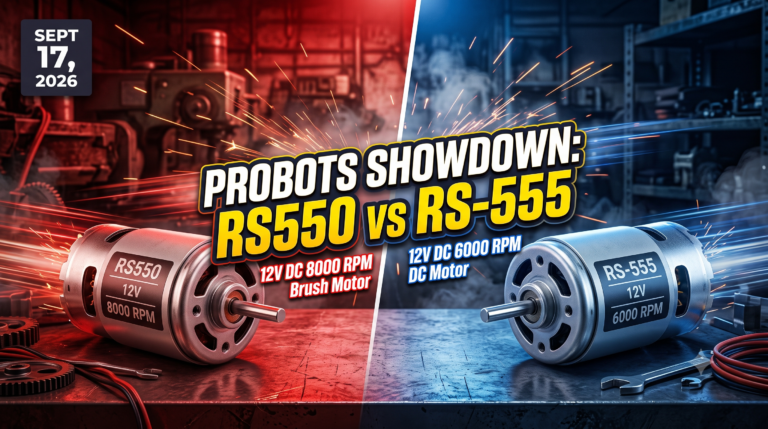
Showdown: RS550 12V DC 8000 vs RS-555 12V DC 6000 RPM DC Motor
Vol. 56 | The Heavyweight DC Drivetrain Duel Reliability isn’t optional when you’re designing actuators that need to move actual steel or
Read Article →
| Bulk Pricing | ||
|---|---|---|
| QTY | Unit Price(Inlc. GST) | |
| 2+ | ₹9,309.02 ₹ 7889 + 1420.02 GST | |
| 4+ | ₹9,214.03 ₹ 7808.5 + 1405.53 GST | |
| 6+ | ₹9,119.04 ₹ 7728 + 1391.04 GST | |
| 10+ | ₹9,024.05 ₹ 7647.5 + 1376.55 GST | |
Master digital circuit design! Powered by the Gowin GW2A-LV18 FPGA, this modular kit pairs a compact 20K LUT System-on-Module with a full-featured Dock expansion board providing HDMI, Ethernet, PMODs, and multimedia display interfaces.
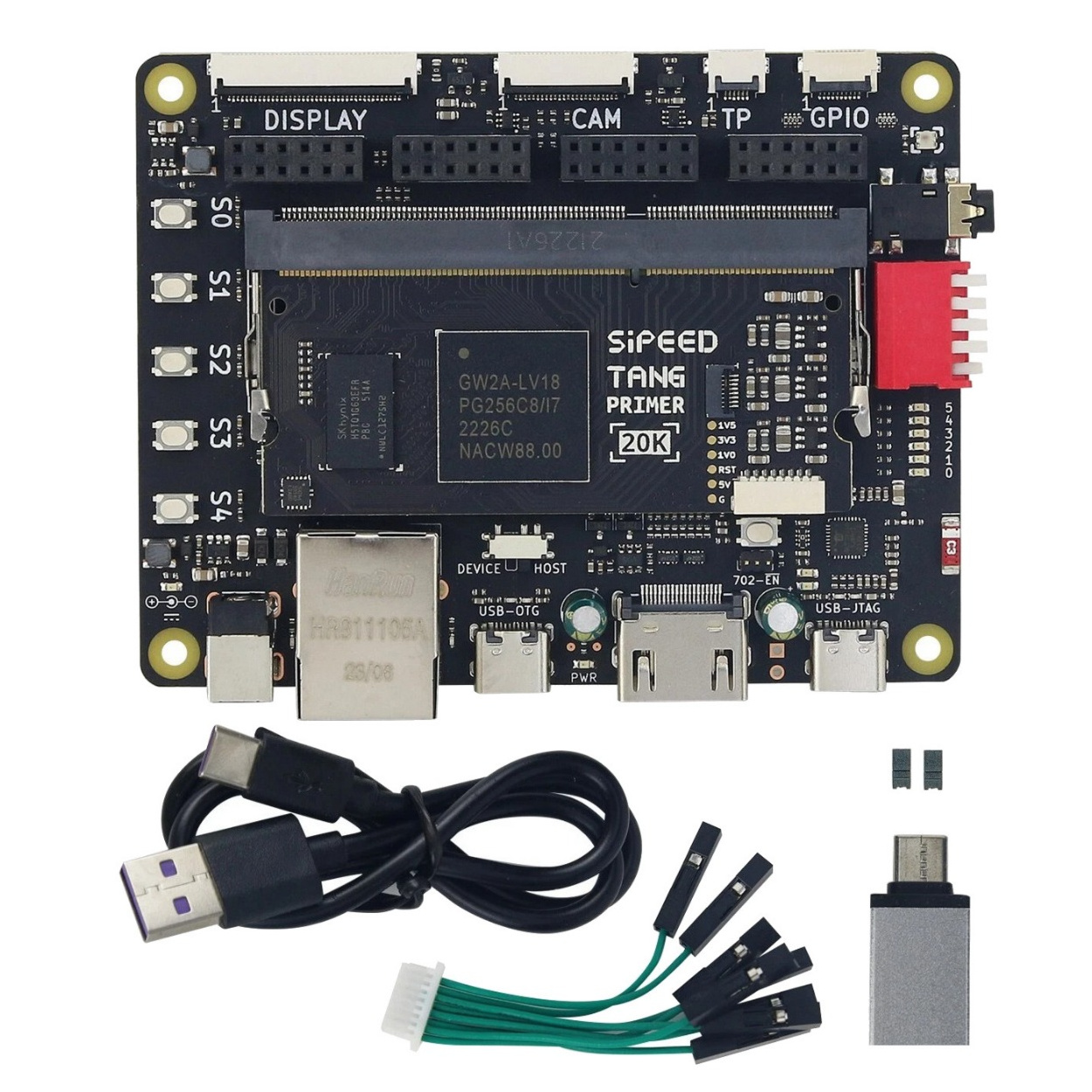
High-Performance Gowin Architecture The heart of this development kit is the Tang Primer 20K System-on-Module (SOM). It is powered by the Gowin GW2A-LV18PG256C8/I7 FPGA chip, delivering 20,736 Look-Up Tables (LUTs) alongside 15,552 flip-flops. This core is paired directly with high-performance dynamic memory (SKhynix H5TC1G63EFR), providing the necessary high-speed RAM required to run full-fledged Linux operating systems via custom synthesizable processors. The modular SOM clips into a high-speed multi-pin card edge socket on the primary baseboard, maintaining excellent signal integrity across all shared traces.
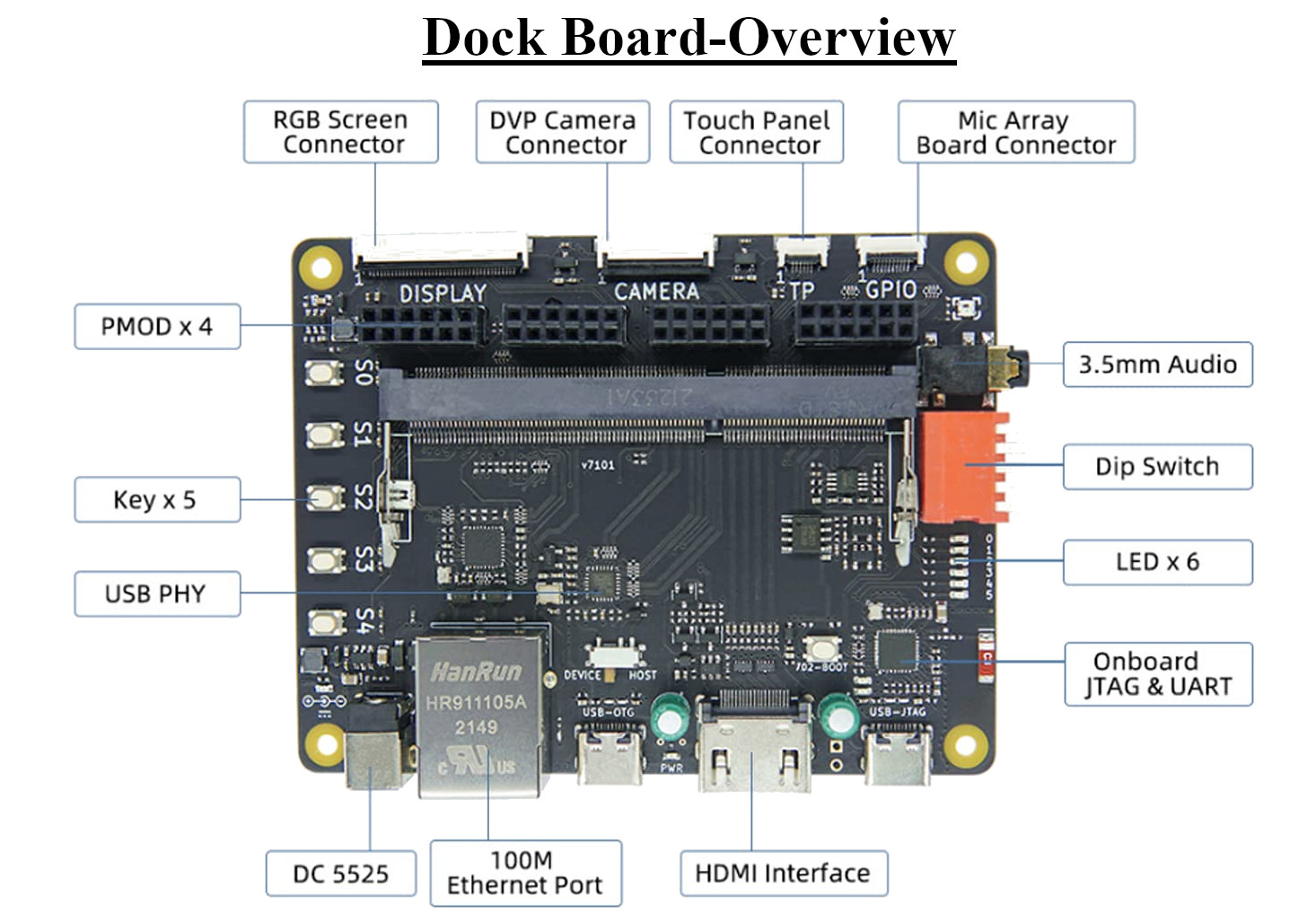
Multimedia and High-Speed Networking The Dock baseboard expands the bare module into a fully fledged laboratory evaluation workstation. For video output, it features a full-sized HDMI connector linked directly to the FPGA's high-speed TMDS differential lanes, supporting native video generation. For physical networking, the board hosts a high-performance HanRun HR911105A 100M/10M Ethernet port, ideal for industrial networking, custom server design, or telnet-based data collection.
Extensive Visual, Audio, and Hardware Interfaces Interface options are plentiful across the front edges of the Dock board. It integrates standalone FPC ribbon connectors for an RGB Screen display, a DVP Camera feed, and a Touch Panel layout. A dedicated 4-pin Micro-JST connector sits right at the bottom edge for a Mic Array expansion panel. For hardware layout debugging, the board includes a line of 5 physical push-buttons (labeled S0 through S4), a 5-position red manual DIP switch bank, an active 6-channel LED array, a 3.5mm stereo audio output jack, and a standalone 3-chip PMOD array (4 ports total) to link custom external sensor modules.
Professional Debugging Architecture The rear silkscreen maps out clear wiring references for external equipment. Power can be provided using either a standard barrel jack port (accepting 6V to 12V DC input) or via standard 5V inputs distributed over the internal USB lines. The board features two separate USB Type-C connections on the side flange: one serves as a USB-OTG port handled by an onboard USB 3317 controller, while the other functions as an onboard driverless JTAG & UART interface handled by an integrated BL702 chip, allowing for immediate programming via the official Gowin IDE.
Specifications
Core FPGA: Gowin GW2A-LV18PG256C8/I7
Logic Capacity: 20,736 LUT4
On-board Memory: 128MB DDR3 SDRAM (SKhynix H5TC1G63EFR)
Video Outputs: 1x Full-Sized HDMI Port
Network Port: 1x 10/100M Ethernet Jack (HanRun HR911105A)
Display/Camera Interfaces: RGB LCD FPC, DVP Camera FPC, Touch Panel FPC
Audio Output: 3.5mm Stereo Out
Onboard I/O Controls: 5x Tactile Switches, 5-Position Red DIP Switch, 6x User LEDs
Expansion IO: 4x Standard PMOD headers (Dual row pitch blocks)
Programming Port: Integrated USB Type-C JTAG/UART (BL702)
Power Inputs: DC Barrel Jack (6V-12V) or USB Type-C (5V)
Key Applications and Projects
Vintage Hardware Emulation: Re-creating classic 8-bit or 16-bit computer processors (like the 6502 or Z80) inside the FPGA logic to play classic computing systems natively over HDMI.
Softcore RISC-V SoC Prototyping: Programming and instantiating custom open-source RISC-V processors inside the logic fabric, complete with attached DDR3 memory control.
Edge Machine Vision Processing: Connecting a DVP camera module to capture frames, processing pixel arrays natively inside custom hardware pipelining, and displaying bounding boxes over an attached RGB display.
Unlock New Capabilities (Project Evolution) The AIoT Ethernet Video Gateway: Stop running your real-time object detection models over slow serial links! By combining the Tang Primer 20K with a DVP camera and the 100M Ethernet port, you can design a standalone, low-latency industrial network camera. Write custom hardware image pipelines in Verilog to perform edge detection or frame compression inside the FPGA fabric. The board will capture high-framerate raw video through the camera interface, cache it inside the fast DDR3 RAM, and stream the custom telemetry packets directly over the hardwired Ethernet port straight to a localized storage server.
1 x Sipeed Tang Primer 20K System-on-Module (SOM)
1 x Sipeed Tang Primer 20K Dock Baseboard
1 x USB Type-A to Type-C Power/Data Cable
1 x Custom 8-Pin Ribbon Jumper Wire Harness
1 x USB Type-A to Type-C Compact Adapter Plug
2 x Standard 2.54mm Shorting Jumpers
1. What specific FPGA chip powers the Tang Primer 20K module? The system runs on the Gowin GW2A-LV18PG256C8/I7 FPGA processor.
2. How many total Look-Up Tables (LUTs) are available for my logic designs? The system features 20,736 total LUT4 logic elements.
3. Does the module feature any dedicated onboard dynamic RAM? Yes, the SOM includes a high-speed SKhynix 128MB DDR3 memory chip.
4. How does the core FPGA module mount onto the Dock board? It installs into a centralized, robust multi-pin card edge socket with retaining side arms.
5. What is the network speed of the physical Ethernet port? The HanRun network jack supports standard 10M/100M fast Ethernet connections.
6. Do I need an external hardware programmer like a USB Blaster to load my code? No, the board features a built-in JTAG & UART system powered by a BL702 chip, allowing direct programming over standard USB-C.
7. How many individual PMOD interfaces are broken out on the headers? The hardware exposes 4 standard PMOD-compatible connection headers along the board edge.
8. Can I plug a camera directly into this development kit? Yes, the board features an integrated FPC connector specifically labeled "CAMERA" for DVP video inputs.
9. What display interfaces are directly accessible via the onboard ribbon slots? The board includes separate FPC slots labeled for an RGB Display interface and a Touch Panel (TP) interface.
10. What type of video connection is available for standard monitors? The board provides a single, full-sized physical HDMI video output jack.
11. What logic levels apply to the exposed GPIO/PMOD pins? The expansion connections operate at standard 3.3V logic levels (3V3), as indicated on the rear silkscreen maps.
12. What are the two distinct USB Type-C ports on the side used for? One port is labeled "USB-JTAG" for code compiling/debugging, while the other is labeled "USB-OTG" for connecting generic USB peripherals via a USB3317 controller.
13. What voltage can I supply to the dedicated DC barrel jack port? The DC barrel input accepts external inputs ranging safely from 6V to 12V DC.
14. What are the functions of the buttons labeled S0 through S4? These are generic user-assignable tactile push-switches linked straight to the FPGA pin fabric for layout input.
15. How many manual input toggles are provided on the red switch bank? The manual red switch module provides a 5-position slide array labeled 1 through 5.
16. Does the board feature any onboard visual indicator LEDs? Yes, it incorporates an array of 6 independent user-programmable diagnostic LEDs.
17. Can I plug headphones or a regular speaker directly into the kit? Yes, a standard 3.5mm stereo analog audio jack is provided right next to the red DIP switch.
18. What software is used to compile code for the Tang Primer 20K? You can use the official Gowin EDA software suite to write, synthesize, and flash your Verilog or VHDL designs.
19. What is the custom white 4-pin port next to the camera jack for? It is a dedicated extension header optimized for custom microphone array sub-boards.
20. What are the shorting block headers included in the accessory pack for? The small black jumpers can be placed onto specific configuration headers to alter power routing or select specific boot modes.
Probots sells every Electronics Part for your next Project. You can order 10,000+ Electronic Parts Online - Arduino, Raspberry Pi, NodeMCU Development Boards, Sensors, Motors, Motor Drivers, SMPS, Plastic Enclosures etc in India directly on probots.co.in
We delivery electronics components and parts throughout India using standard couriers like Bluedart, Delhivery & India Post.
For order related queries contact -
This item is covered by a warranty of 7 days from the date of delivery, against confirmed manufacturing defects only, as verified by Probots' own testing and investigation. In case of a confirmed defect, we will replace the item — a refund is issued only if a replacement can't be supplied (e.g. discontinued or out of stock). Transit damage or a wrong item received must be reported within 3 days of delivery.
If the product shows signs of misuse, tampering, physical damage, static discharge, liquid or fire damage, use of unapproved chemicals, or has been soldered or physically altered in any way.
China
Probots sells every Electronics Part for your next Project. You can order 10,000+ Electronic Parts Online - Arduino, Raspberry Pi, NodeMCU Development Boards, Sensors, Motors, Motor Drivers, SMPS, Plastic Enclosures etc in India directly on probots.co.in
We offer specialized services for Bulk, Wholesale & B2B Customers like discounted prices, additional shipping options, customised products, etc . Customer with large quantity & regular orders qualify for the specialised discounted rates.
We also offer dedicated sales team to assist you with the order process by providing sales quotations, PI, technical support for choosing products, etc.
Note: Business Orders are processed manually and usually take 1-3 days to process compared to placing the order directly on our website. Please plan your purchases accordingly.
Need Help?
For bulk enquiries contact us by -
Probots Electronics is highly regarded for its highly skilled team and knowledgeable staff who provide expert guidance to ensure customers select the right components for their technical projects. The business maintains a strong reputation for prompt service and reliable support, with many clients praising their quick response times and genuine commitment to customer satisfaction.


A very great place for electronics Such a well maintained shop... Felt good shopping here


Nice

For new developments kit available and they will support till working, and I suggest this place strongly


This place has all the electronic parts students will ever need, staff is friendly and the place is organised.


It was a really nice experience! I was happy to find such a wide range of robotics kits for kids, suitable for different age groups and learning levels.

Excellent experience




Good stuff

Buyed them. But no bargain. Helpful staff.


Available all children school project spears parts like electronics


It was good experience




Staff is very patient and helpful

One of the best place for electronics you will get everything you want! With the best and orginal quality

Very helpful staff and the best place to buy components for projects

Wonderful store with expert service and technically strong people.

Prompt delivery, excellent technical support


Large inventory of electronic components and parts. Well trained service personnel and technicians who can quickly identify and rectify product defect if any. They are a reliable and trustworthy online stores.

A very great place for electronics Such a well maintained shop... Felt good shopping here
Nice
For new developments kit available and they will support till working, and I suggest this place strongly
This place has all the electronic parts students will ever need, staff is friendly and the place is organised.
It was a really nice experience! I was happy to find such a wide range of robotics kits for kids, suitable for different age groups and learning levels.
Excellent experience
Good stuff
Buyed them. But no bargain. Helpful staff.
Available all children school project spears parts like electronics
It was good experience
Staff is very patient and helpful
One of the best place for electronics you will get everything you want! With the best and orginal quality
Very helpful staff and the best place to buy components for projects
Wonderful store with expert service and technically strong people.
Prompt delivery, excellent technical support
Large inventory of electronic components and parts. Well trained service personnel and technicians who can quickly identify and rectify product defect if any. They are a reliable and trustworthy online stores.
● 20 min readVol. 56 | The Heavyweight DC Drivetrain Duel Reliability isn’t optional when you’re designing actuators that need to move actual steel or
Read Article → ● 13 min read
Workbench Vol. 49 🚀 The Project Trifecta: 3 Builds to Start Today We don’t just stock parts; we curate ecosystems. This week’s arrivals are desi
Read Article → ● 18 min read
Vol. 59 | The Battle of the Bite-Sized Boards Picture a project that needs full Linux, networking, and GPIO—but has almost no room for a conventional
Read Article →