















 ● 20 min read
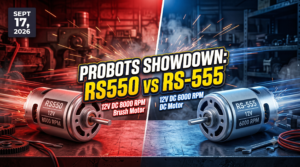
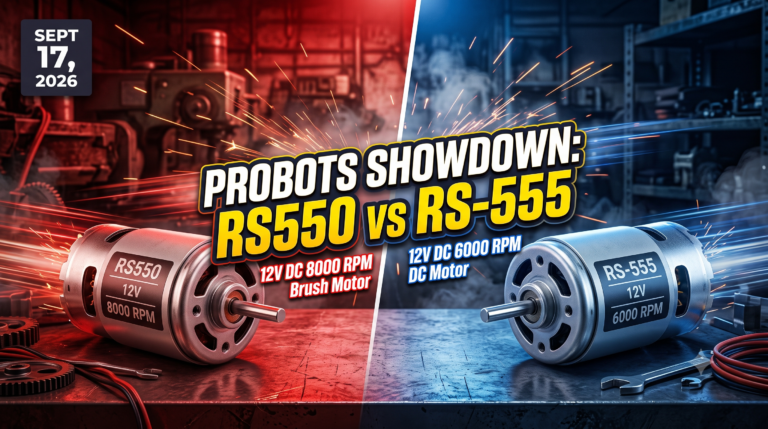
Showdown: RS550 12V DC 8000 vs RS-555 12V DC 6000 RPM DC Motor
Vol. 56 | The Heavyweight DC Drivetrain Duel Reliability isn’t optional when you’re designing actuators that need to move actual steel or
Read Article →
| Bulk Pricing | ||
|---|---|---|
| QTY | Unit Price(Inlc. GST) | |
| 25+ | ₹97.02 ₹ 82.22 + 14.8 GST | |
| 50+ | ₹96.03 ₹ 81.38 + 14.65 GST | |
| 75+ | ₹95.04 ₹ 80.54 + 14.5 GST | |
| 100+ | ₹93.06 ₹ 78.86 + 14.19 GST | |
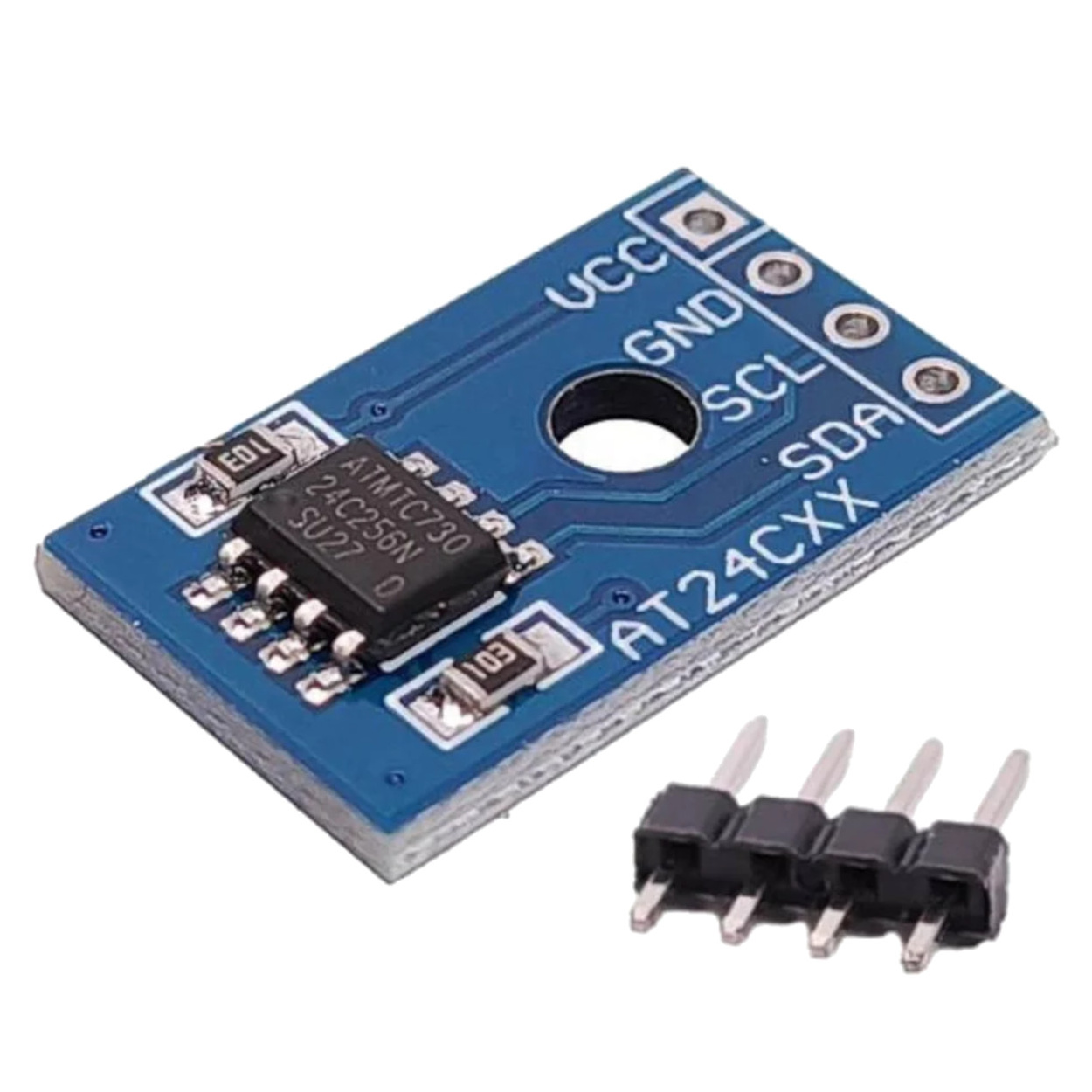
Add permanent data storage to your projects! This compact AT24C256 EEPROM module utilizes I2C to provide 256Kb (32KB) of non-volatile memory. Perfect for saving configuration settings, sensor logs, and variables through power losses.
Rock-Solid Non-Volatile Security When an Arduino is reset or loses power, standard RAM is instantly wiped clean, erasing all current variables. EEPROM (Electrically Erasable Programmable Read-Only Memory) solves this problem. Data written to the AT24C256 chip is permanently burned into the silicon and will survive completely intact even if the module is disconnected from power for decades. This makes it the absolute best hardware choice for storing user settings, WiFi passwords, calibration offsets, or the "highest score" on a custom arcade machine.
256Kb High-Capacity Storage While many microcontrollers have a tiny sliver of internal EEPROM (an Arduino Uno only has 1KB), this module dramatically expands your capacity. The AT24C256 provides 256 Kilo-bits of storage, which translates to a highly practical 32 KiloBytes (32,768 individual 8-bit bytes). This is enough space to store thousands of sensor data points or extensive strings of text without running out of room.
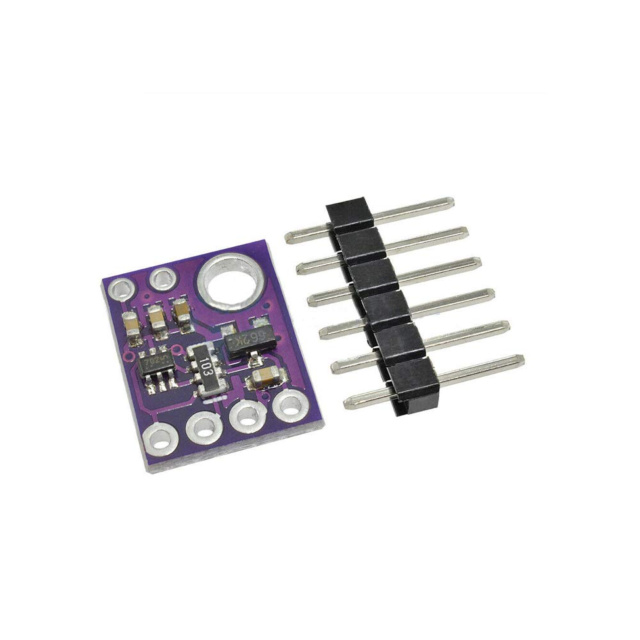
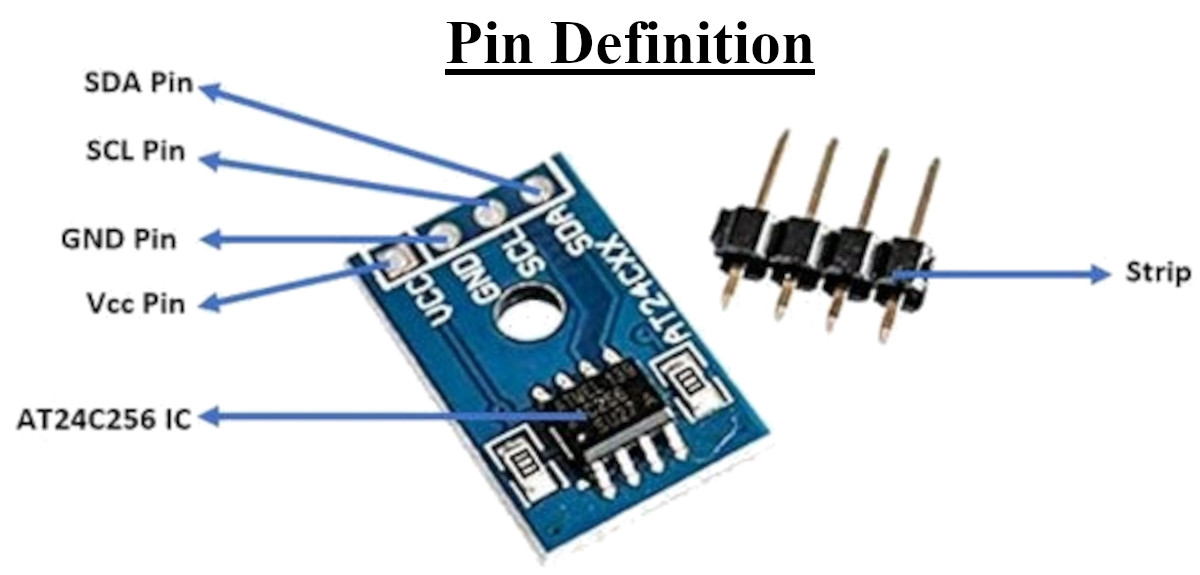
Simplified I2C Architecture Wasting your valuable digital pins on bulky SD card SPI modules is inefficient. This EEPROM board uses the I2C bus, requiring only two wires: Serial Data (SDA) and Serial Clock (SCL). Furthermore, the board features integrated 10K Ohm (marked 103) pull-up resistors on the I2C lines, ensuring a clean, stable communication signal. You simply supply power (VCC and GND), hook up the two data lines, and your microcontroller can instantly read and write data arrays.
Specifications
Memory IC: AT24C256
Memory Type: EEPROM (Non-Volatile)
Storage Capacity: 256 Kilo-bits (32 KiloBytes / 32,768 x 8 bits)
Communication Interface: I2C (SCL, SDA)
Operating Voltage: 2.7V to 5.5V DC (3.3V and 5V Logic Compatible)
I2C Clock Speed: 100 kHz (Standard Mode) / 400 kHz (Fast Mode)
Write Endurance: 1,000,000 Write Cycles
Data Retention: >100 Years
Onboard Components: 10K Ohm I2C Pull-up Resistors
Pinout: VCC, GND, SCL, SDA
Board Dimensions: ~19mm x 11mm
Key Applications and Projects
Weather Station Data Logging: Taking temperature and humidity readings every hour and saving the data points to the EEPROM so they are not lost if the station's battery temporarily dies.
IoT Device Configuration: Storing user-inputted WiFi SSIDs, passwords, and API keys securely so the device can reboot and automatically reconnect to the network.
Robotics Calibration: Saving complex PID tuning variables and servo "zero" positions so the robot doesn't have to be recalibrated every time you turn it on.
Unlock New Capabilities (Project Evolution) The Offline Black-Box Flight Recorder: SD card modules can suffer from file-system corruption if power is pulled mid-write during a drone crash. EEPROM does not use a file system; it stores raw bytes. Evolve your custom drone or RC plane! Wire this lightweight module to your flight controller. Write a script to continuously overwrite the EEPROM with the last 10 seconds of GPS coordinates, altitude, and pitch angles. If your drone crashes and the battery ejects, simply recover the board, plug it into a laptop, and dump the EEPROM to see exactly what happened in the moments before the crash!
1 x AT24C256 EEPROM Storage Module
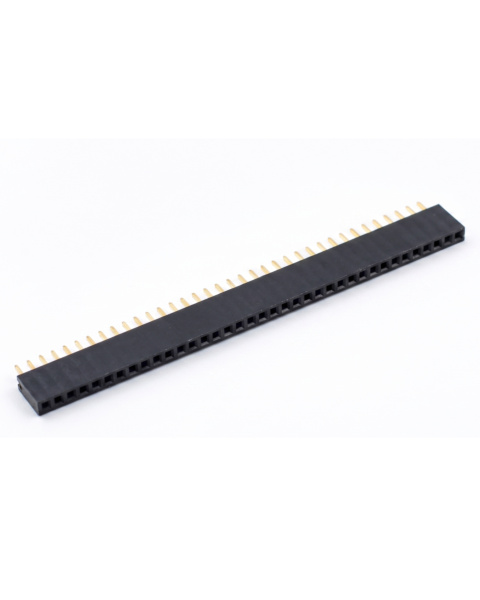
1 x 4-Pin Straight Male Header (Unsoldered)
1. What exactly is EEPROM? EEPROM stands for Electrically Erasable Programmable Read-Only Memory. It is a type of non-volatile memory chip that retains its data even when power is completely removed from the circuit.
2. What does 256Kb mean in actual bytes? Memory chips are rated in "bits" (lowercase b). 256 Kilo-bits divided by 8 equals 32 KiloBytes (KB) of actual usable storage capacity.
3. What happens to the data if the power goes out? Absolutely nothing. Because it is non-volatile memory, the data is physically trapped in the silicon and will remain there safely until you overwrite it or erase it.
4. What voltage does this module operate on? The AT24C256 chip natively supports a wide operating voltage range, typically from 2.7V up to 5.5V DC, making it highly versatile.
5. Can I use this with a 3.3V microcontroller like an ESP32 or Raspberry Pi? Yes! Because it operates happily at 3.3V, you can wire VCC to 3.3V and connect the I2C lines directly to your ESP32 or Pi without needing a logic level shifter.
6. Does this module use I2C or SPI communication? This module utilizes the I2C (Inter-Integrated Circuit) protocol, requiring only the SCL (Clock) and SDA (Data) pins.
7. Do I need to add external pull-up resistors for the I2C lines? No. If you look closely at the board, there are two tiny black surface-mount resistors marked "103" (10K Ohms). These are onboard pull-up resistors for the SDA and SCL lines.
8. What is the default I2C address for this module? For the AT24C256, the default I2C address is usually 0x50.
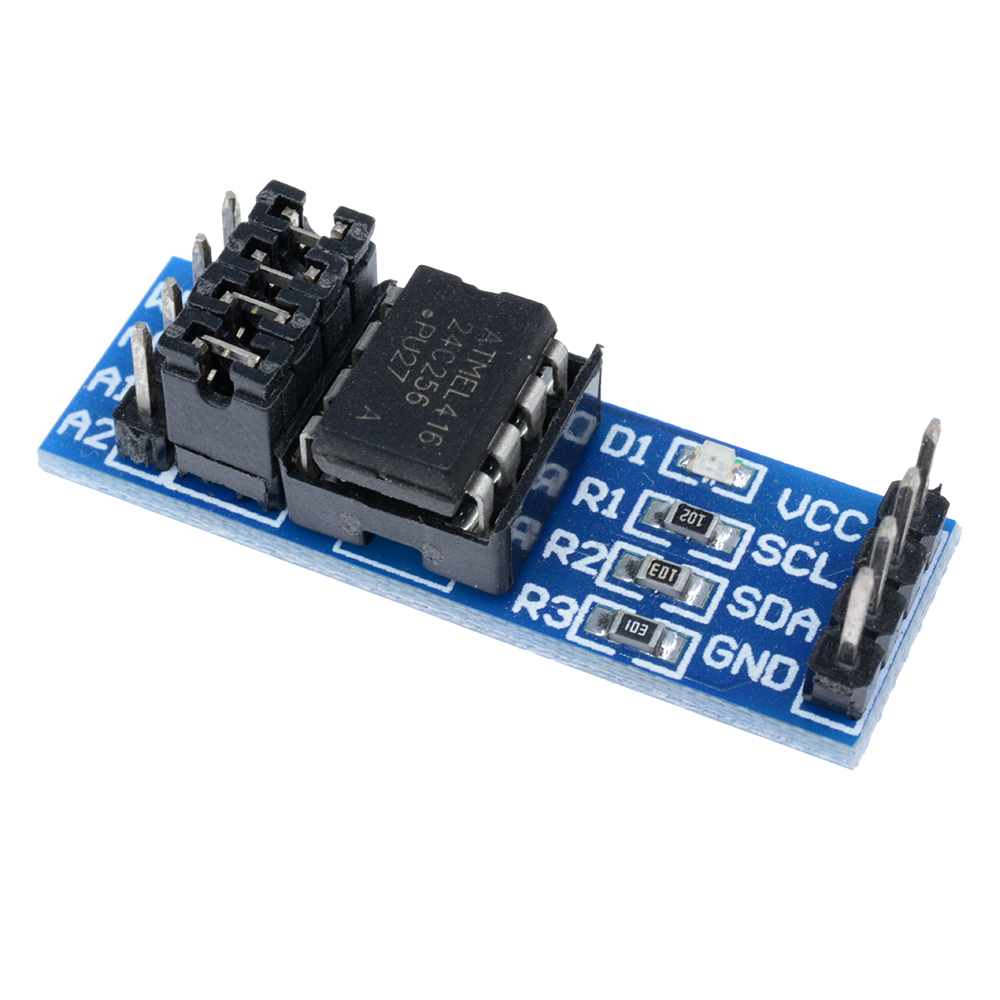
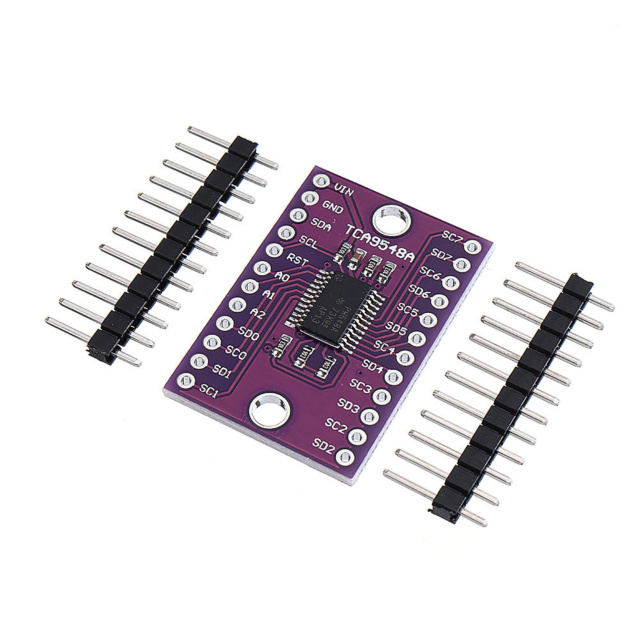
9. Can I change the I2C address to use multiple modules on the same board? Unlike some larger EEPROM breakout boards, this specific minimalist 4-pin module does not break out the A0, A1, and A2 address pins. They are hardwired on the PCB. To use multiple of these specific 4-pin modules, you would need an I2C multiplexer (like the TCA9548A).
10. How many times can I write data to this memory? The chip is rated for approximately 1,000,000 write cycles per memory block.
11. Is there a limit to how many times I can READ the data? No. Reading data causes virtually zero wear on the silicon. You can read the data billions of times without degrading the chip.
12. How long will the memory hold its data? The AT24C256 is rated for a data retention lifespan of over 100 years.
13. Do I need to solder the header pins? Yes. The module ships with a loose 4-pin male header strip. You will need a soldering iron to attach it to the main PCB to plug it into a breadboard.
14. Can I store text or strings on this module? Yes, but EEPROM only understands raw bytes. To store a string of text (like a password), you simply convert the characters into their ASCII byte equivalents and store them in sequential memory addresses.
15. What Arduino library should I use? You can use the standard Arduino <Wire.h> library for basic I2C communication, but downloading a dedicated EEPROM library (like extEEPROM or AT24C256 from the Library Manager) makes writing and reading data much easier.
16. How fast is the I2C interface? The chip supports standard mode (100 kHz) and fast mode (400 kHz) I2C clock frequencies.
17. What is the hole in the middle of the board for? That is a mechanical mounting hole. It allows you to securely bolt the tiny module to your robot chassis or 3D-printed enclosure so it doesn't bounce around on its wires.
18. Why would I use this instead of an SD Card module? SD cards require significantly more power, use complex file systems that can easily corrupt if power is lost during a write, and require more pins (SPI). EEPROM is much simpler, vastly more reliable, and perfect for small amounts of critical data.
19. Does it matter which way the header pins are soldered? You can solder them sticking up from the component side or pointing down from the flat bottom side, depending on how you intend to mount it in your project. Pointing down is best for breadboard use.
20. What is "Page Writing"? The AT24C256 supports a 64-byte Page Write. This means instead of sending a slow write command for every single byte, you can load 64 bytes into a buffer and write them to the memory simultaneously, significantly speeding up data logging.
| Technical Details |
|---|
Probots sells every Electronics Part for your next Project. You can order 10,000+ Electronic Parts Online - Arduino, Raspberry Pi, NodeMCU Development Boards, Sensors, Motors, Motor Drivers, SMPS, Plastic Enclosures etc in India directly on probots.co.in
We delivery electronics components and parts throughout India using standard couriers like Bluedart, Delhivery & India Post.
For order related queries contact -
This item is covered by a warranty of 7 days from the date of delivery, against confirmed manufacturing defects only, as verified by Probots' own testing and investigation. In case of a confirmed defect, we will replace the item — a refund is issued only if a replacement can't be supplied (e.g. discontinued or out of stock). Transit damage or a wrong item received must be reported within 3 days of delivery.
If the product shows signs of misuse, tampering, physical damage, static discharge, liquid or fire damage, use of unapproved chemicals, or has been soldered or physically altered in any way.
China
Probots sells every Electronics Part for your next Project. You can order 10,000+ Electronic Parts Online - Arduino, Raspberry Pi, NodeMCU Development Boards, Sensors, Motors, Motor Drivers, SMPS, Plastic Enclosures etc in India directly on probots.co.in
We offer specialized services for Bulk, Wholesale & B2B Customers like discounted prices, additional shipping options, customised products, etc . Customer with large quantity & regular orders qualify for the specialised discounted rates.
We also offer dedicated sales team to assist you with the order process by providing sales quotations, PI, technical support for choosing products, etc.
Note: Business Orders are processed manually and usually take 1-3 days to process compared to placing the order directly on our website. Please plan your purchases accordingly.
Need Help?
For bulk enquiries contact us by -

Probots Electronics is highly regarded for its highly skilled team and knowledgeable staff who provide expert guidance to ensure customers select the right components for their technical projects. The business maintains a strong reputation for prompt service and reliable support, with many clients praising their quick response times and genuine commitment to customer satisfaction.


A very great place for electronics Such a well maintained shop... Felt good shopping here


Nice

For new developments kit available and they will support till working, and I suggest this place strongly


This place has all the electronic parts students will ever need, staff is friendly and the place is organised.


It was a really nice experience! I was happy to find such a wide range of robotics kits for kids, suitable for different age groups and learning levels.

Excellent experience




Good stuff

Buyed them. But no bargain. Helpful staff.


Available all children school project spears parts like electronics


It was good experience




Staff is very patient and helpful

One of the best place for electronics you will get everything you want! With the best and orginal quality

Very helpful staff and the best place to buy components for projects

Wonderful store with expert service and technically strong people.

Prompt delivery, excellent technical support


Large inventory of electronic components and parts. Well trained service personnel and technicians who can quickly identify and rectify product defect if any. They are a reliable and trustworthy online stores.

A very great place for electronics Such a well maintained shop... Felt good shopping here
Nice
For new developments kit available and they will support till working, and I suggest this place strongly
This place has all the electronic parts students will ever need, staff is friendly and the place is organised.
It was a really nice experience! I was happy to find such a wide range of robotics kits for kids, suitable for different age groups and learning levels.
Excellent experience
Good stuff
Buyed them. But no bargain. Helpful staff.
Available all children school project spears parts like electronics
It was good experience
Staff is very patient and helpful
One of the best place for electronics you will get everything you want! With the best and orginal quality
Very helpful staff and the best place to buy components for projects
Wonderful store with expert service and technically strong people.
Prompt delivery, excellent technical support
Large inventory of electronic components and parts. Well trained service personnel and technicians who can quickly identify and rectify product defect if any. They are a reliable and trustworthy online stores.
● 20 min readVol. 56 | The Heavyweight DC Drivetrain Duel Reliability isn’t optional when you’re designing actuators that need to move actual steel or
Read Article → ● 13 min read
Workbench Vol. 49 🚀 The Project Trifecta: 3 Builds to Start Today We don’t just stock parts; we curate ecosystems. This week’s arrivals are desi
Read Article → ● 18 min read
Vol. 59 | The Battle of the Bite-Sized Boards Picture a project that needs full Linux, networking, and GPIO—but has almost no room for a conventional
Read Article →