



















 ● 20 min read
Showdown: RS550 12V DC 8000 vs RS-555 12V DC 6000 RPM DC Motor
Vol. 56 | The Heavyweight DC Drivetrain Duel Reliability isn’t optional when you’re designing actuators that need to move actual steel or
Read Article →
| Bulk Pricing | ||
|---|---|---|
| QTY | Unit Price(Inlc. GST) | |
| 10+ | ₹1,969.02 ₹ 1668.66 + 300.36 GST | |
| 20+ | ₹1,959.02 ₹ 1660.19 + 298.83 GST | |
| 30+ | ₹1,939.03 ₹ 1643.25 + 295.79 GST | |
| 50+ | ₹1,899.05 ₹ 1609.36 + 289.68 GST | |
Interface your computer or Raspberry Pi with any CAN network! The UCAN V1.0 adapter features a reliable STM32F072 MCU, a modern USB-C port, and a standard 3-pin screw terminal for CAN_H and CAN_L. Perfect for Klipper 3D printer upgrades and automotive diagnostics.
Reliable STM32 Architecture At the heart of the UCAN V1.0 is the highly regarded STM32F072C8T6 microcontroller. This specific MCU features built-in hardware CAN support, meaning it doesn't rely on sluggish software emulation to process messages. It provides a lightning-fast, hardware-level bridge between the USB data stream and the onboard CAN transceiver chip. This ensures zero dropped packets even on high-speed, heavily congested 1Mbit/s CAN networks.
Plug-and-Play Connectivity Connecting to your network is straightforward. On one end, a modern USB Type-C port handles data transfer and draws 5V power directly from your host computer or Raspberry Pi. On the opposite end, a sturdy green 3-pin screw terminal provides secure, vibration-resistant connections for your CAN network wires. Flipping the board over reveals clear silkscreen labels for the terminal: CAN_H (High), CAN_L (Low), and GND (Ground).
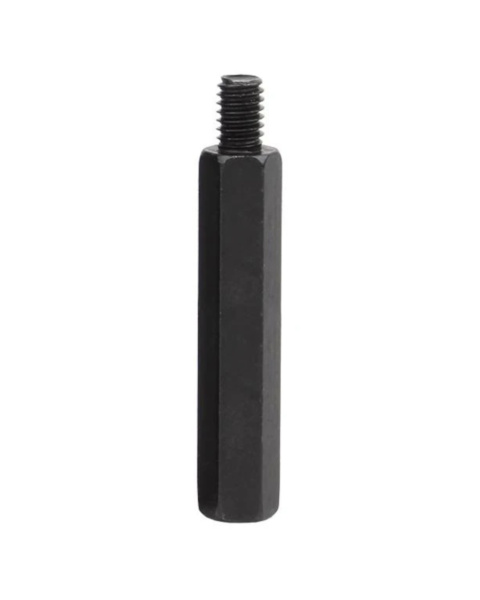
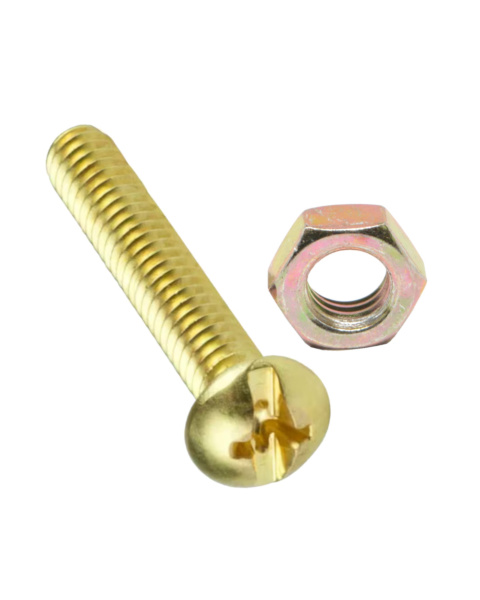
Ultra-Compact & Mountable Space is often at a premium in control boxes and 3D printer electronics bays. The UCAN board is incredibly narrow, measuring just 63.5mm long and 15.5mm wide. Furthermore, the PCB features four semi-circular cutouts along its edges (spaced 54.5mm apart horizontally) allowing you to securely mount it to a chassis using M3 standoffs and screws.
Microcontroller: STM32F072C8T6
Host Interface: USB Type-C (USB 2.0 Full Speed)
CAN Interface: 3-Pin Screw Terminal (3.5 mm or 3.81 mm pitch)
Terminal Pinout: CAN_L, CAN_H, GND
Operating Voltage: 5V (Powered via USB)
Logic Level: 3.3V internal logic
Dimensions: 63.5mm x 15.5mm
Mounting Cutout Spacing: 54.5mm
Firmware Compatibility: Cangaroo (Windows), SocketCAN (Linux), Klipper CAN bridge
Klipper 3D Printers: Serving as the central USB-to-CAN bridge on a Raspberry Pi to communicate with lightweight CAN toolhead boards (like the BTT EBB36), eliminating massive, heavy wiring harnesses running to the extruder.
Automotive Diagnostics: Interfacing with a vehicle's OBD-II port to sniff, inject, or log real-time CAN bus data from the Engine Control Unit (ECU).
Industrial Automation: Troubleshooting and monitoring custom PLC networks or servo motor arrays operating on the CAN protocol.
Unlock New Capabilities (Project Evolution)
The Single-Wire Toolhead Upgrade: Sick of wire breaks causing your 3D printer to fail? Evolve your build to the modern era! Plug this UCAN adapter into your Raspberry Pi via USB. Run just four wires (24V Power, Ground, CAN_H, CAN_L) up to a CAN-enabled toolhead board on your extruder. The UCAN handles all the complex data routing via SocketCAN, leaving you with a beautifully clean, lightweight, and break-resistant 3D printer!
⚠️ Safety Warning: Ensure the CAN High (H) and CAN Low (L) lines are not shorted to high-voltage power rails (above 24V) to avoid damaging the transceiver.
Pin Mapping:
Package Includes:
What does this board actually do? It translates standard USB serial data into the differential signal protocol required by a CAN (Controller Area Network) bus, allowing your computer to talk to CAN devices.
What chip does the UCAN V1.0 use? It utilizes an STMicroelectronics STM32F072C8T6 ARM Cortex-M0 microcontroller.
Is this compatible with Klipper for 3D printing? Yes! This is widely used in the Klipper community as a USB-to-CAN bridge, allowing a Raspberry Pi to control CAN toolhead boards.
Does this work with Linux / Raspberry Pi? Yes. With the correct firmware (like CANable/slcan), it shows up as a native network interface (e.g., can0) via SocketCAN in Linux.
Does it work with Windows? Yes. It can be flashed with firmware compatible with Windows-based CAN sniffer software like Cangaroo.
What kind of USB cable do I need? It requires a standard USB Type-C data cable. Ensure your cable supports data transfer, as "charge-only" cables will not work.
What do the labels on the back mean? The back indicates the screw terminal pinout: CAN_L (CAN Low), CAN_H (CAN High), and GND (Ground).
Does this board have a 120-ohm termination resistor? Most CAN bridge boards like this feature a 120-ohm termination resistor across CAN_H and CAN_L by default, as the bridge usually acts as one physical end of the CAN bus.
What are the small silver pads on the back for? The pads labeled RX, TX, CK, DO, RES, BO, etc., are exposed debugging and flashing pins (UART and SWD). They are only used by advanced developers to flash bootloaders or debug the STM32 chip directly.
Do I need to supply external power to the screw terminals? No. The UCAN board and its transceiver are powered entirely by the 5V provided through the USB-C connection.
Can I use this to flash a firmware update to my car's ECU? While the hardware is capable of transmitting CAN packets to an OBD-II port, ECU flashing requires highly specific proprietary software and knowledge. Use at your own risk.
What kind of wire should I use for CAN_H and CAN_L? You must use twisted-pair wire. Twisting the High and Low wires together is critical for rejecting electromagnetic interference on a CAN bus.
Are the mounting holes fully enclosed? No, they are semi-circular cutouts (castellations) on the edges of the board. You mount it by trapping the edge of the board under the head of an M3 screw.
What are the physical dimensions? The board is 63.5mm long (including the connectors) and 15.5mm wide.
Does it include the USB cable? No, this listing is for the UCAN V1.0 PCBA only. Cables must be purchased separately.

Probots sells every Electronics Part for your next Project. You can order 10,000+ Electronic Parts Online - Arduino, Raspberry Pi, NodeMCU Development Boards, Sensors, Motors, Motor Drivers, SMPS, Plastic Enclosures etc in India directly on probots.co.in
We delivery electronics components and parts throughout India using standard couriers like Bluedart, Delhivery & India Post.
For order related queries contact -
This item is covered by a warranty of 7 days from the date of delivery, against confirmed manufacturing defects only, as verified by Probots' own testing and investigation. In case of a confirmed defect, we will replace the item — a refund is issued only if a replacement can't be supplied (e.g. discontinued or out of stock). Transit damage or a wrong item received must be reported within 3 days of delivery.
If the product shows signs of misuse, tampering, physical damage, static discharge, liquid or fire damage, use of unapproved chemicals, or has been soldered or physically altered in any way.
China
Probots sells every Electronics Part for your next Project. You can order 10,000+ Electronic Parts Online - Arduino, Raspberry Pi, NodeMCU Development Boards, Sensors, Motors, Motor Drivers, SMPS, Plastic Enclosures etc in India directly on probots.co.in
We offer specialized services for Bulk, Wholesale & B2B Customers like discounted prices, additional shipping options, customised products, etc . Customer with large quantity & regular orders qualify for the specialised discounted rates.
We also offer dedicated sales team to assist you with the order process by providing sales quotations, PI, technical support for choosing products, etc.
Note: Business Orders are processed manually and usually take 1-3 days to process compared to placing the order directly on our website. Please plan your purchases accordingly.
Need Help?
For bulk enquiries contact us by -


Probots Electronics is highly regarded for its highly skilled team and knowledgeable staff who provide expert guidance to ensure customers select the right components for their technical projects. The business maintains a strong reputation for prompt service and reliable support, with many clients praising their quick response times and genuine commitment to customer satisfaction.


A very great place for electronics Such a well maintained shop... Felt good shopping here


Nice

For new developments kit available and they will support till working, and I suggest this place strongly


This place has all the electronic parts students will ever need, staff is friendly and the place is organised.


It was a really nice experience! I was happy to find such a wide range of robotics kits for kids, suitable for different age groups and learning levels.

Excellent experience




Good stuff

Buyed them. But no bargain. Helpful staff.


Available all children school project spears parts like electronics


It was good experience




Staff is very patient and helpful

One of the best place for electronics you will get everything you want! With the best and orginal quality

Very helpful staff and the best place to buy components for projects

Wonderful store with expert service and technically strong people.

Prompt delivery, excellent technical support


Large inventory of electronic components and parts. Well trained service personnel and technicians who can quickly identify and rectify product defect if any. They are a reliable and trustworthy online stores.

A very great place for electronics Such a well maintained shop... Felt good shopping here
Nice
For new developments kit available and they will support till working, and I suggest this place strongly
This place has all the electronic parts students will ever need, staff is friendly and the place is organised.
It was a really nice experience! I was happy to find such a wide range of robotics kits for kids, suitable for different age groups and learning levels.
Excellent experience
Good stuff
Buyed them. But no bargain. Helpful staff.
Available all children school project spears parts like electronics
It was good experience
Staff is very patient and helpful
One of the best place for electronics you will get everything you want! With the best and orginal quality
Very helpful staff and the best place to buy components for projects
Wonderful store with expert service and technically strong people.
Prompt delivery, excellent technical support
Large inventory of electronic components and parts. Well trained service personnel and technicians who can quickly identify and rectify product defect if any. They are a reliable and trustworthy online stores.
● 20 min readVol. 56 | The Heavyweight DC Drivetrain Duel Reliability isn’t optional when you’re designing actuators that need to move actual steel or
Read Article → ● 13 min read
Workbench Vol. 49 🚀 The Project Trifecta: 3 Builds to Start Today We don’t just stock parts; we curate ecosystems. This week’s arrivals are desi
Read Article → ● 18 min read
Vol. 59 | The Battle of the Bite-Sized Boards Picture a project that needs full Linux, networking, and GPIO—but has almost no room for a conventional
Read Article →