










 ● 20 min read
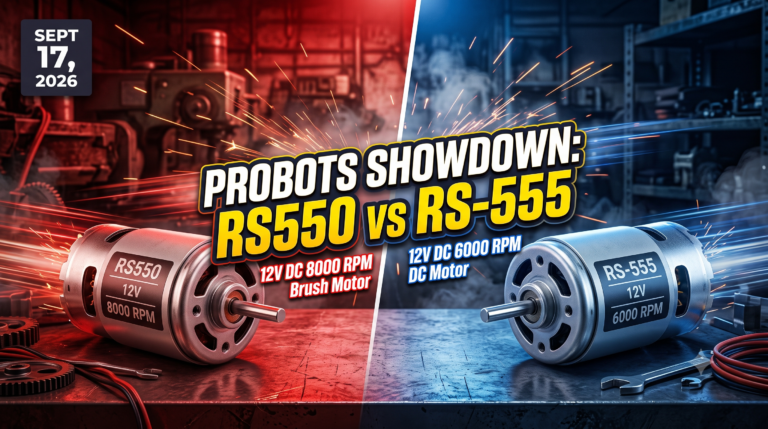
Showdown: RS550 12V DC 8000 vs RS-555 12V DC 6000 RPM DC Motor
Vol. 56 | The Heavyweight DC Drivetrain Duel Reliability isn’t optional when you’re designing actuators that need to move actual steel or
Read Article →
| Bulk Pricing | ||
|---|---|---|
| QTY | Unit Price(Inlc. GST) | |
| 25+ | ₹1,469.02 ₹ 1244.93 + 224.09 GST | |
| 50+ | ₹1,454.03 ₹ 1232.23 + 221.8 GST | |
| 75+ | ₹1,439.04 ₹ 1219.53 + 219.52 GST | |
| 100+ | ₹1,409.06 ₹ 1194.12 + 214.94 GST | |
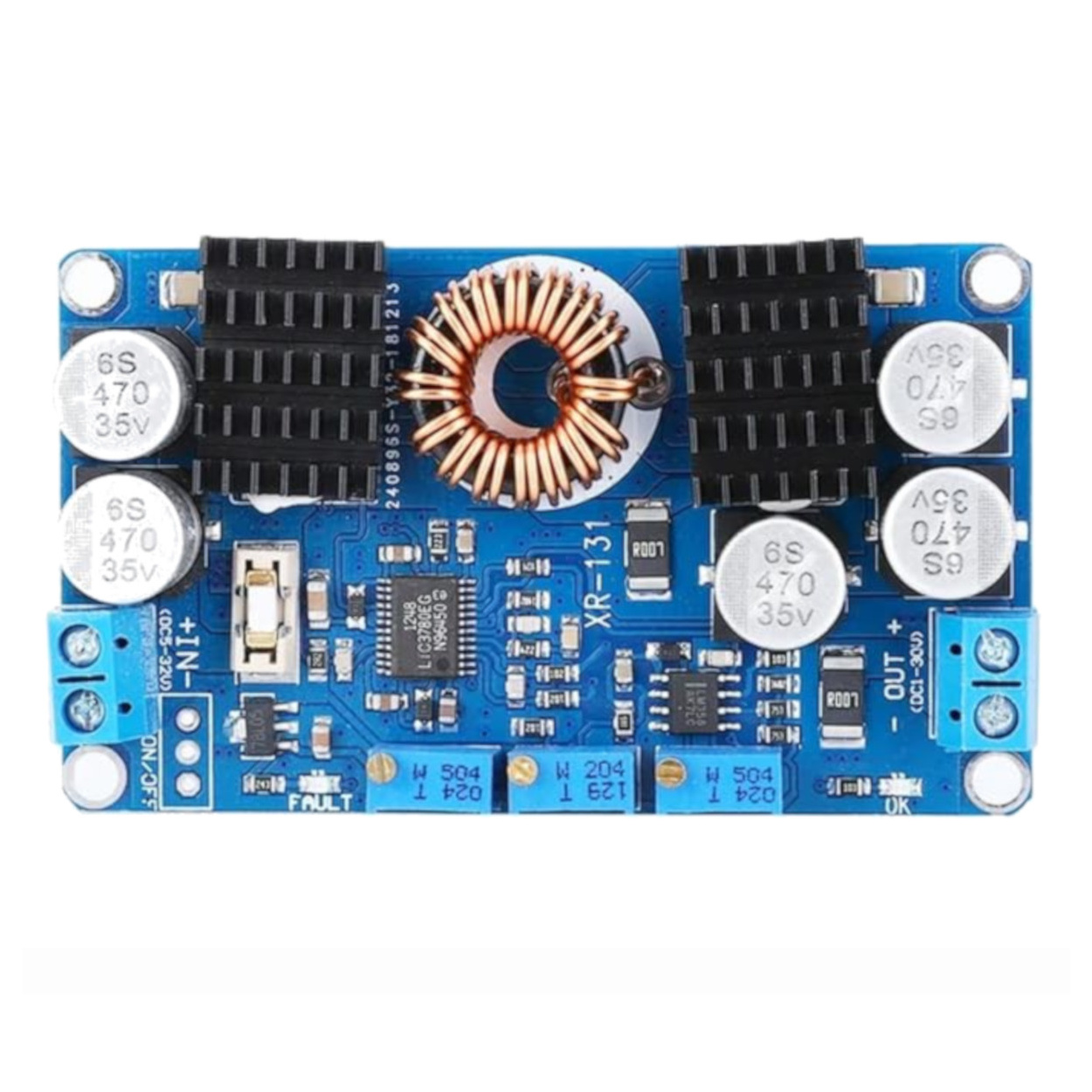
Uninterrupted, stable power! The LTC3780 seamlessly transitions between stepping up and stepping down voltage. Features 10A max output, CC/CV adjustment, and undervoltage protection. Perfect for solar arrays and automotive PCs.
The Buck-Boost Advantage Standard power modules are either strict "Buck" (step-down) or strict "Boost" (step-up) converters. This poses a massive problem in automotive environments. If you need a stable 12V to run a sensitive computer monitor in your car, your car's battery fluctuates between 14.4V (when the alternator is running) down to 10.5V (when cranking the engine). A standard module would drop the voltage and shut down your monitor. The LTC3780 acts as a seamless bridge. It will automatically step the 14.4V down to 12V, and instantly switch to stepping the 10.5V up to 12V, providing a flawless, uninterrupted 12V output regardless of input fluctuations.
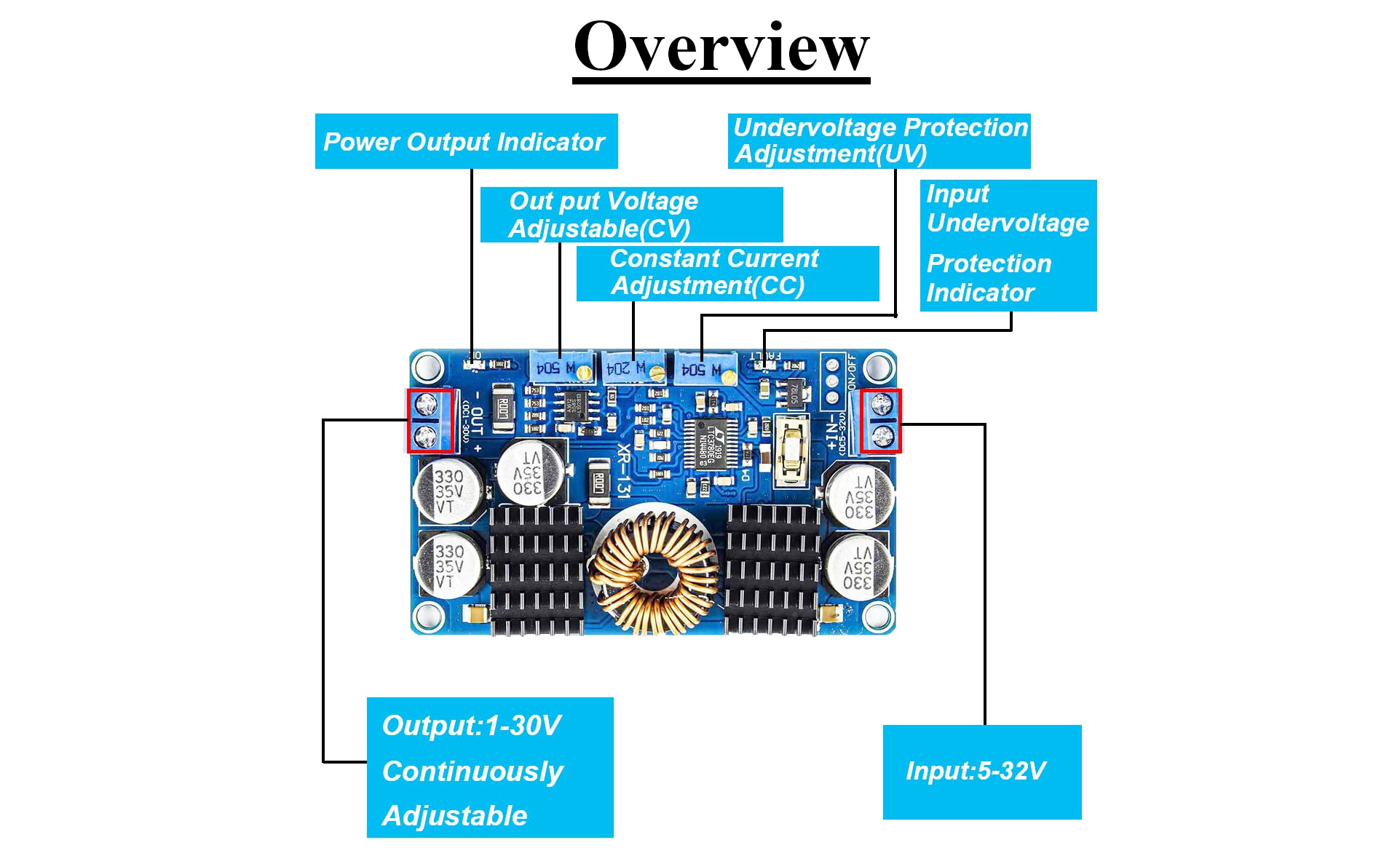
Precision CC/CV Control This module features three distinct blue multi-turn potentiometers. The CV (Constant Voltage) pot sets your desired output voltage. The CC (Constant Current) pot allows you to set a hard limit on how many Amps the board will deliver. This is an absolutely mandatory feature if you are building a custom battery charger (to prevent over-charging a lithium cell) or driving massive 100W LED chips (which will draw infinite current and burn themselves out without a CC limit).
Integrated Undervoltage Protection (UVLO) If you run a power module directly off a lead-acid or lithium battery, the module will continue sucking the battery dry until the voltage drops so low that the battery is permanently damaged. The LTC3780 includes a dedicated UV (Undervoltage) potentiometer. You can set a strict cutoff limit—for example, 10.5V. If your input battery drops below 10.5V, the FAULT LED illuminates and the board safely shuts down the output, protecting your expensive batteries from deep-discharge damage.
Specifications
Controller IC: Linear Technology LTC3780
Module Architecture: Automatic Non-Isolated Buck-Boost (Step-Up/Step-Down)
Input Voltage Range: 5.0V to 32V DC
Output Voltage Range: 1.0V to 30V DC (Continuously Adjustable)
Output Current: 10A Maximum (8A continuous recommended without forced air cooling)
Output Power: 80W continuous, 130W peak (Requires active cooling above 80W)
Conversion Efficiency: Up to 98% (Dependent on input/output differential)
Switching Frequency: 200 KHz to 400 KHz
Onboard Protection: Short-Circuit (Replaceable Fuse), Undervoltage Lockout (UVLO)
Potentiometers: CV (Voltage), CC (Current), UV (Undervoltage)
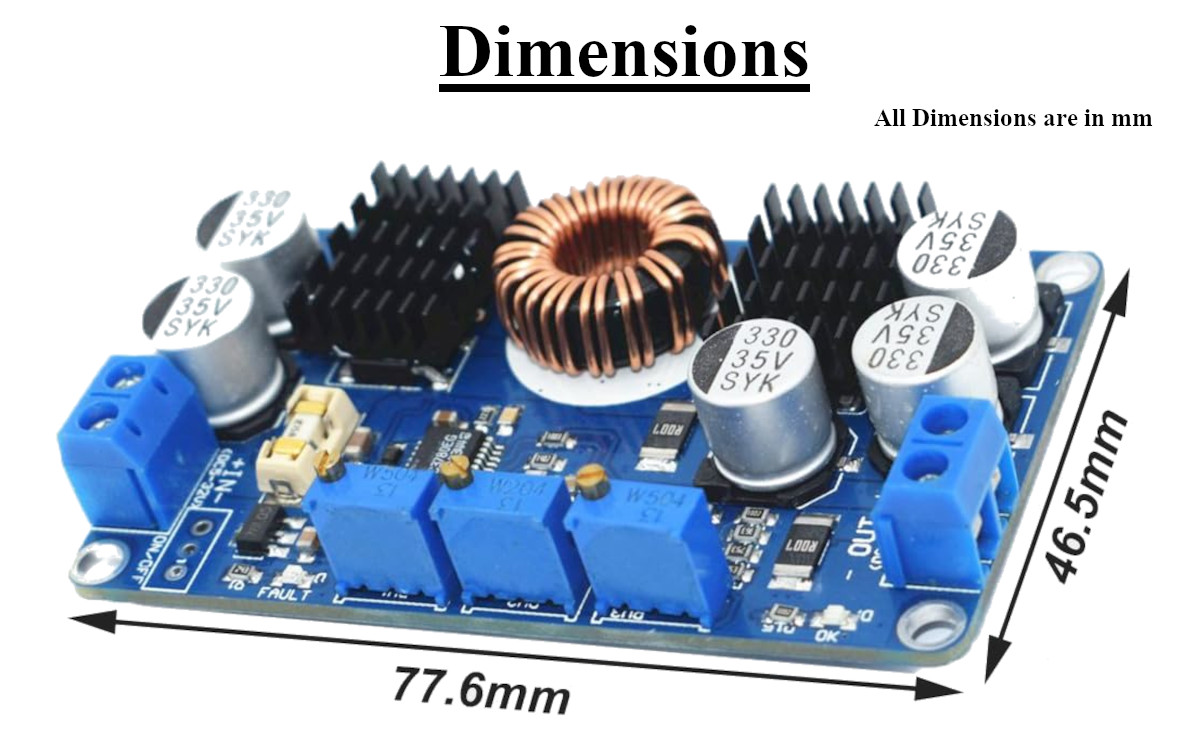
Dimensions: 77.6mm (L) x 46.5mm (W) x 15mm (H)
Key Applications and Projects
Automotive PC Power Supplies: Conditioning the erratic 10V-15V power of a car battery into a perfectly clean, stable 12V output for delicate in-car entertainment systems.
DIY Solar Charge Controllers: Taking fluctuating 18V-22V solar panel output and conditioning it with CC/CV limits to safely charge a 12V lead-acid battery bank.
High-Power LED Drivers: Providing the exact voltage and strict current limiting required to power massive 50W and 100W Chip-On-Board (COB) LED arrays without thermal runaway.
Unlock New Capabilities (Project Evolution) The Universal Field Power Station: Do you fly RC drones or drive RC rovers? You often need 5V for receivers, 12V for battery chargers, and 24V for heavy tools out in the field. Build a universal power station! Wire the input of this LTC3780 to a cheap 18V drill battery adapter (like a Makita or DeWalt dock). Mount the board inside an ammo crate with a digital voltmeter screen and external knobs connected to the CV and CC pots. You have just created a portable, heavy-duty laboratory bench power supply that can deliver any voltage from 1V to 30V using your existing cordless tool batteries!
1 x LTC3780 10A Buck-Boost Converter Module
1. What is a Buck-Boost converter? It is a power supply that can automatically step up (boost) or step down (buck) the input voltage to maintain your target output voltage. It bridges the gap when your input voltage fluctuates above and below your required output.
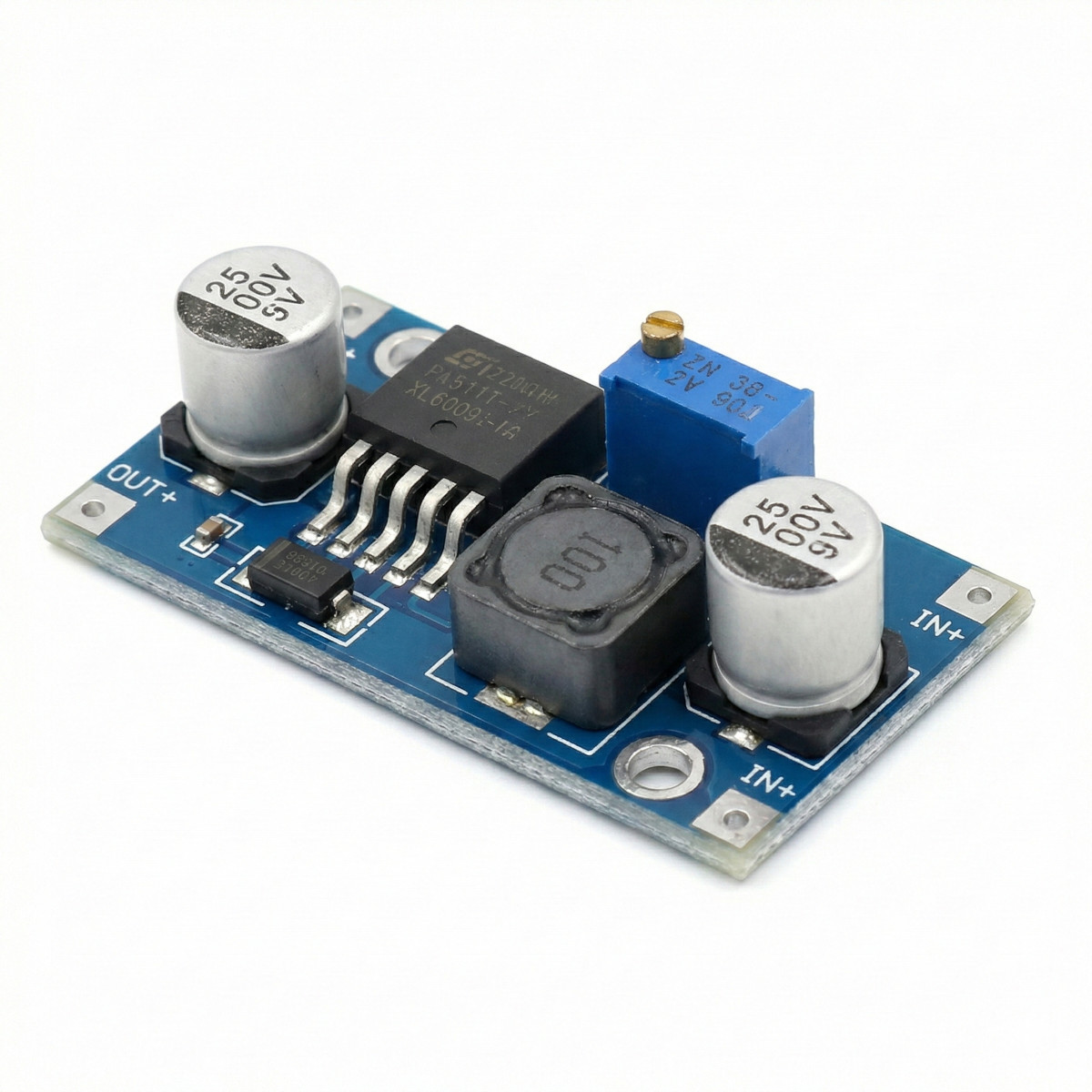
2. How is this different from a standard LM2596 module? The LM2596 is strictly a step-down (buck) converter and can only output a voltage lower than its input. The LTC3780 can output a voltage higher, lower, or exactly the same as its input.
3. What do the three blue potentiometers do?
CV (Constant Voltage): Adjusts the output voltage up or down.
CC (Constant Current): Sets the maximum allowable current limit to protect batteries or LEDs.
UV (Undervoltage): Sets the minimum input voltage limit. If the input drops below this, the module shuts down to protect your input battery from dying completely.
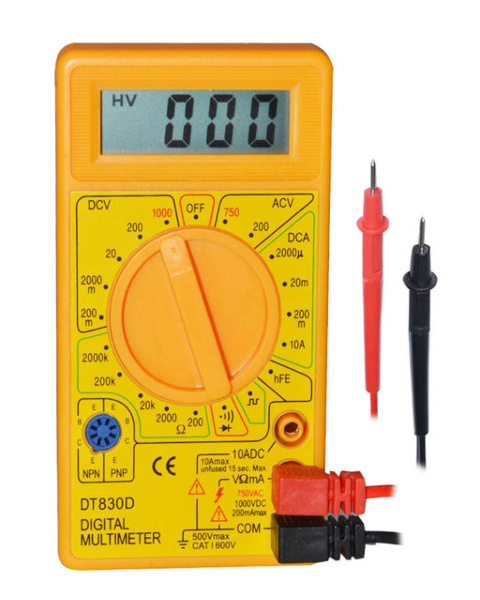
4. How do I properly set the CC (Constant Current) limit? First, set the CV pot to your desired voltage without a load. Next, turn the CC pot fully counter-clockwise (lowest setting). Short the output terminals briefly with a multimeter set to the 10A Amperage range. Slowly turn the CC pot clockwise until the multimeter reads your exact desired current limit. Remove the short.
5. How do I set the UV (Undervoltage) protection? Provide your exact "cutoff" voltage to the input (e.g., dial a bench power supply to 10.5V). Connect a small load to the output. Turn the UV pot until the FAULT LED turns on and the output voltage drops to zero. Now, if your real battery ever hits 10.5V, the board will shut off.
6. What is the maximum wattage this board can handle? The board is generally rated for 80W of continuous power in still air. It can handle bursts up to 130W, but you MUST add a cooling fan blowing over the black heatsinks if operating above 80W for extended periods.
7. Does it have short-circuit protection? Yes. The CC limit will protect against basic overcurrent, and the board features a replaceable automotive-style blade fuse on the PCB for catastrophic short-circuit events.
8. Can I use this to charge lithium batteries? Yes. Because it features proper Constant Current (CC) and Constant Voltage (CV) controls, you can tune it to exact charging profiles (like 12.6V / 2A for a 3S LiPo pack).
9. Can I tie the input and output grounds together? Yes. This is a non-isolated converter. The IN- and OUT- terminals share a common electrical ground plane across the PCB.
10. What does the FAULT LED indicate? The red FAULT LED usually indicates that the input voltage has dropped below the threshold set by the UV potentiometer, or that a severe short-circuit has occurred.
11. Why does my output voltage drop when I connect my load? You are hitting your Constant Current (CC) limit. When a load tries to draw more current than you have allowed via the CC pot, the board intentionally drops the voltage to ensure the current stays at your exact limit.
12. Does it matter which way I turn the potentiometers? Generally, turning the small brass screw on the potentiometer clockwise increases the value (higher voltage/current), and turning it counter-clockwise decreases the value.
13. What is the input voltage range? It requires a minimum of 5V to power the logic chips and can accept up to a maximum of 32V DC.
14. What happens if I connect the input power backward? Do not do this! The standard version of this board does not have reverse-polarity protection on the input. Reversing the positive and negative input wires will instantly destroy the main control chip.
15. Can I use this with solar panels? Yes, it is excellent for taking the fluctuating 15V-22V output of a 50W/100W solar panel and stabilizing it to exactly 14.4V to charge a 12V battery array.
16. What kind of wire should I use for the terminals? If you are pushing the module to its 10A limit, you should use thick, high-quality 14AWG or 12AWG silicone wire. Thin jumper wires will melt under that load.
17. Can I put two of these modules in parallel to get 20 Amps? No. You should never wire switching regulators in parallel. Microscopic differences in their output voltages will cause one module to back-feed into the other, creating a feedback loop that will overheat and destroy both boards.
18. Why is there a switch or jumper pins labeled "ON/OFF"? The board usually breaks out a logic-level enable pin. You can wire a small toggle switch to this pin to turn the high-power output on and off remotely, without having to switch the massive 10A main power wire directly.
19. Are the black heatsinks electrically live? In many buck/boost designs, the metal tabs of the MOSFETs attached to the heatsinks can carry voltage. Do not let the heatsinks touch a metal enclosure, or you will cause a short circuit.
20. Will the board emit noise? The LTC3780 switches at high frequencies (up to 400KHz), which is completely silent to human ears. If you hear a high-pitched whining noise, your input power supply is likely too weak and the voltage is collapsing, causing sub-harmonic vibrations in the inductor.
Probots sells every Electronics Part for your next Project. You can order 10,000+ Electronic Parts Online - Arduino, Raspberry Pi, NodeMCU Development Boards, Sensors, Motors, Motor Drivers, SMPS, Plastic Enclosures etc in India directly on probots.co.in
We delivery electronics components and parts throughout India using standard couriers like Bluedart, Delhivery & India Post.
For order related queries contact -
This item is covered by a warranty of 7 days from the date of delivery, against confirmed manufacturing defects only, as verified by Probots' own testing and investigation. In case of a confirmed defect, we will replace the item — a refund is issued only if a replacement can't be supplied (e.g. discontinued or out of stock). Transit damage or a wrong item received must be reported within 3 days of delivery.
If the product shows signs of misuse, tampering, physical damage, static discharge, liquid or fire damage, use of unapproved chemicals, or has been soldered or physically altered in any way.
China
Probots sells every Electronics Part for your next Project. You can order 10,000+ Electronic Parts Online - Arduino, Raspberry Pi, NodeMCU Development Boards, Sensors, Motors, Motor Drivers, SMPS, Plastic Enclosures etc in India directly on probots.co.in
We offer specialized services for Bulk, Wholesale & B2B Customers like discounted prices, additional shipping options, customised products, etc . Customer with large quantity & regular orders qualify for the specialised discounted rates.
We also offer dedicated sales team to assist you with the order process by providing sales quotations, PI, technical support for choosing products, etc.
Note: Business Orders are processed manually and usually take 1-3 days to process compared to placing the order directly on our website. Please plan your purchases accordingly.
Need Help?
For bulk enquiries contact us by -

Probots Electronics is highly regarded for its highly skilled team and knowledgeable staff who provide expert guidance to ensure customers select the right components for their technical projects. The business maintains a strong reputation for prompt service and reliable support, with many clients praising their quick response times and genuine commitment to customer satisfaction.


A very great place for electronics Such a well maintained shop... Felt good shopping here


Nice

For new developments kit available and they will support till working, and I suggest this place strongly


This place has all the electronic parts students will ever need, staff is friendly and the place is organised.


It was a really nice experience! I was happy to find such a wide range of robotics kits for kids, suitable for different age groups and learning levels.

Excellent experience




Good stuff

Buyed them. But no bargain. Helpful staff.


Available all children school project spears parts like electronics


It was good experience




Staff is very patient and helpful

One of the best place for electronics you will get everything you want! With the best and orginal quality

Very helpful staff and the best place to buy components for projects

Wonderful store with expert service and technically strong people.

Prompt delivery, excellent technical support


Large inventory of electronic components and parts. Well trained service personnel and technicians who can quickly identify and rectify product defect if any. They are a reliable and trustworthy online stores.

A very great place for electronics Such a well maintained shop... Felt good shopping here
Nice
For new developments kit available and they will support till working, and I suggest this place strongly
This place has all the electronic parts students will ever need, staff is friendly and the place is organised.
It was a really nice experience! I was happy to find such a wide range of robotics kits for kids, suitable for different age groups and learning levels.
Excellent experience
Good stuff
Buyed them. But no bargain. Helpful staff.
Available all children school project spears parts like electronics
It was good experience
Staff is very patient and helpful
One of the best place for electronics you will get everything you want! With the best and orginal quality
Very helpful staff and the best place to buy components for projects
Wonderful store with expert service and technically strong people.
Prompt delivery, excellent technical support
Large inventory of electronic components and parts. Well trained service personnel and technicians who can quickly identify and rectify product defect if any. They are a reliable and trustworthy online stores.
● 20 min readVol. 56 | The Heavyweight DC Drivetrain Duel Reliability isn’t optional when you’re designing actuators that need to move actual steel or
Read Article → ● 13 min read
Workbench Vol. 49 🚀 The Project Trifecta: 3 Builds to Start Today We don’t just stock parts; we curate ecosystems. This week’s arrivals are desi
Read Article → ● 18 min read
Vol. 59 | The Battle of the Bite-Sized Boards Picture a project that needs full Linux, networking, and GPIO—but has almost no room for a conventional
Read Article →