















 ● 20 min read
Showdown: RS550 12V DC 8000 vs RS-555 12V DC 6000 RPM DC Motor
Vol. 56 | The Heavyweight DC Drivetrain Duel Reliability isn’t optional when you’re designing actuators that need to move actual steel or
Read Article →
| Bulk Pricing | ||
|---|---|---|
| QTY | Unit Price(Inlc. GST) | |
| 5+ | ₹685.02 ₹ 580.53 + 104.5 GST | |
| 10+ | ₹678.03 ₹ 574.6 + 103.43 GST | |
| 15+ | ₹671.04 ₹ 568.68 + 102.36 GST | |
| 20+ | ₹657.06 ₹ 556.83 + 100.23 GST | |
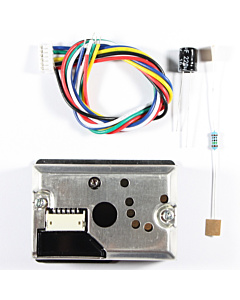
Monitor your indoor air quality with the GP2Y1014AU0F optical dust sensor. An upgraded replacement for the classic 1010 model, it accurately detects PM2.5 particles like smoke and dust. Kit includes the required 6-pin cable, resistor, and capacitor.
Advanced Optical Detection Unlike chemical gas sensors, the GP2Y1014AU0F detects physical particles. Inside the black plastic housing, an infrared (IR) emitting diode and a phototransistor are arranged diagonally. As air flows through the large hole in the center of the metal shield, the IR light reflects off any dust or smoke particles currently in the chamber. The phototransistor detects this reflected light and outputs a corresponding analog voltage. The more dust in the air, the higher the voltage output.
The "Update Vision" Advantage If you are following an older Arduino tutorial, you might see references to the GP2Y1010AU0F. The GP2Y1014AU0F is the direct, upgraded replacement. It features an optimised internal layout and improved electronics that yield better linearity, less noise interference, and higher sensitivity, particularly when detecting the microscopic PM2.5 particles commonly found in cigarette smoke and smog.
Complete Integration Kit This sensor cannot simply be plugged directly into a 5V power source. The internal IR LED must be pulsed rapidly (turned on and off very quickly) to take accurate readings without burning out. This specific pulsing requires an external RC (Resistor-Capacitor) circuit. To save you the headache of hunting down specific components, this kit includes the exact 150 Ohm resistor and 220uF electrolytic capacitor recommended by the Sharp datasheet, alongside a flexible 6-pin pigtail wire harness.
Operating Voltage: 5V to 7V DC (5V Recommended)
Operating Current: 20mA (Max)
Detectable Particle Size: PM2.5 / PM10 (Dust, Smoke)
Detection Range: Up to 0.8 mg/m³
Sensitivity: 0.5V / (0.1 mg/m³)
Output Signal: Analog Voltage (Proportional to dust density)
Operating Temperature: -10°C to +65°C
DIY Air Purifiers: Wiring the sensor to an Arduino to automatically trigger HEPA filter fans when the room's dust density rises above a comfortable threshold.
HVAC Monitoring: Installing the sensor inside an air conditioning return duct to alert homeowners when it is time to change their physical air filters.
Cleanroom & Workshop Validation: Monitoring the air quality in a DIY spray-painting booth or woodworking shop to ensure exhaust systems are clearing fine particulates effectively.
Unlock New Capabilities (Project Evolution)
The IoT Environmental Dashboard: Don't just look at raw numbers on a screen. Evolve your project! Pair this dust sensor with a BME280 (Temp/Humidity) sensor and an MQ-135 (Gas) sensor, and wire them all to an ESP32 microcontroller. Using the ESP32's built-in Wi-Fi, you can push all of this data to a free cloud dashboard like ThingSpeak or Blynk. You now have a commercial-grade, remote-accessible smart home environmental monitor!
1 x GP2Y1014AU0F Optical Dust Sensor
1 x 6-Pin Connecting Wire Harness
1 x 150 Ohm Resistor
1 x 220uF Electrolytic Capacitor

What does this sensor actually measure? It measures the density of physical particulate matter in the air, specifically dust, smoke, and PM2.5 particles.
What is PM2.5? PM2.5 refers to microscopic particulate matter that is 2.5 microns in width or smaller. These particles are small enough to be inhaled deep into the lungs, making them a key metric for air quality.
How is the GP2Y1014AU0F different from the older GP2Y1010AU0F? The 1014 model is the upgraded "Update Vision" version. It has the same physical footprint but features improved internal sensors for better linearity and accuracy.
What kind of data does it output? It outputs a fluctuating analog voltage. You must connect the output pin to an Analog (ADC) pin on your microcontroller to read it.
Why does the kit include a separate resistor and capacitor? The internal infrared LED needs to be pulsed on and off very quickly to take a reading. The included resistor and capacitor are required to build a drive circuit that safely pulses the LED without browning out your Arduino.
Can I just wire it straight to 5V without the resistor/capacitor? No. Failing to use the RC circuit will likely result in inaccurate readings, overheating, and permanent damage to the internal IR LED.
What voltage does the sensor require? The sensor is designed to operate optimally at 5V DC.
Can I use this with a 3.3V board like a Raspberry Pi or ESP32? The sensor itself needs 5V to power the IR LED. However, the analog output voltage can approach 3.6V. If using a strict 3.3V board, you should use a simple voltage divider (two resistors) on the output line to protect your 3.3V analog pins.
What is the large hole in the center for? That is the optical sensing chamber. Air naturally flows through this hole, and the internal sensors measure the light bouncing off the dust passing through it.
Does the sensor have a built-in fan to pull air in? No, it relies on passive air currents in the room. For faster, more accurate environmental sampling, many users place a small 5V PC fan nearby to force air through the hole.
Why is there a shiny metal cover on the front? The metal shield serves two purposes: it blocks ambient room light from interfering with the optical sensor, and it acts as an electromagnetic shield against radio interference.
Can it detect hazardous gases like Carbon Monoxide or Methane? No. This is purely an optical sensor for physical particles. It cannot "smell" or detect chemical gases. You need an MQ-series gas sensor for that.
Is there a specific way I should mount it? Yes. It is highly recommended to mount the sensor vertically (standing up). This allows heavy dust to fall straight down through the hole rather than settling and accumulating on the internal lenses.
Why do my readings jump around so much? Dust density in the air varies from second to second. In your Arduino code, you should take several readings over a 10 to 30-second period and average them together to get a stable, accurate number.
How long should I pulse the LED for a reading? The manufacturer datasheet specifies that the IR LED should be pulsed ON for exactly 0.32 milliseconds, and the analog reading should be taken 0.28 milliseconds into that pulse.
What do the 6 pins on the connector do? Pin 1 (V-LED), Pin 2 (LED-GND), Pin 3 (LED), Pin 4 (S-GND), Pin 5 (Vo / Analog Out), Pin 6 (Vcc / 5V).
Is this sensor waterproof? No. It has an open hole exposing delicate electronics. It must be kept away from rain, heavy condensation, and moisture.
Can I use this outdoors? It is primarily designed for indoor air purifiers. You can use it outdoors for weather stations, provided it is housed in a ventilated, weatherproof Stevenson screen that blocks rain and direct sunlight.
How do I clean the sensor if dust builds up inside? Do not blow high-pressure compressed air into it, as it can damage the optics. A gentle puff of air from a manual bulb duster is usually enough to clear it.
Who manufactures this sensor? The sensor is manufactured by Sharp Electronics, and the model number is stamped onto the back of the black casing.
| Operating Voltage: | 5 V |
|---|---|
| Measured Parameter: | Particulate Matter (PM) |
| Interface Type: | Analog |
Probots sells every Electronics Part for your next Project. You can order 10,000+ Electronic Parts Online - Arduino, Raspberry Pi, NodeMCU Development Boards, Sensors, Motors, Motor Drivers, SMPS, Plastic Enclosures etc in India directly on probots.co.in
We delivery electronics components and parts throughout India using standard couriers like Bluedart, Delhivery & India Post.
For order related queries contact -
This item is covered by a warranty of 7 days from the date of delivery, against confirmed manufacturing defects only, as verified by Probots' own testing and investigation. In case of a confirmed defect, we will replace the item — a refund is issued only if a replacement can't be supplied (e.g. discontinued or out of stock). Transit damage or a wrong item received must be reported within 3 days of delivery.
If the product shows signs of misuse, tampering, physical damage, static discharge, liquid or fire damage, use of unapproved chemicals, or has been soldered or physically altered in any way.
China
Probots sells every Electronics Part for your next Project. You can order 10,000+ Electronic Parts Online - Arduino, Raspberry Pi, NodeMCU Development Boards, Sensors, Motors, Motor Drivers, SMPS, Plastic Enclosures etc in India directly on probots.co.in
We offer specialized services for Bulk, Wholesale & B2B Customers like discounted prices, additional shipping options, customised products, etc . Customer with large quantity & regular orders qualify for the specialised discounted rates.
We also offer dedicated sales team to assist you with the order process by providing sales quotations, PI, technical support for choosing products, etc.
Note: Business Orders are processed manually and usually take 1-3 days to process compared to placing the order directly on our website. Please plan your purchases accordingly.
Need Help?
For bulk enquiries contact us by -

Probots Electronics is highly regarded for its highly skilled team and knowledgeable staff who provide expert guidance to ensure customers select the right components for their technical projects. The business maintains a strong reputation for prompt service and reliable support, with many clients praising their quick response times and genuine commitment to customer satisfaction.


A very great place for electronics Such a well maintained shop... Felt good shopping here


Nice

For new developments kit available and they will support till working, and I suggest this place strongly


This place has all the electronic parts students will ever need, staff is friendly and the place is organised.


It was a really nice experience! I was happy to find such a wide range of robotics kits for kids, suitable for different age groups and learning levels.

Excellent experience




Good stuff

Buyed them. But no bargain. Helpful staff.


Available all children school project spears parts like electronics


It was good experience




Staff is very patient and helpful

One of the best place for electronics you will get everything you want! With the best and orginal quality

Very helpful staff and the best place to buy components for projects

Wonderful store with expert service and technically strong people.

Prompt delivery, excellent technical support


Large inventory of electronic components and parts. Well trained service personnel and technicians who can quickly identify and rectify product defect if any. They are a reliable and trustworthy online stores.

A very great place for electronics Such a well maintained shop... Felt good shopping here
Nice
For new developments kit available and they will support till working, and I suggest this place strongly
This place has all the electronic parts students will ever need, staff is friendly and the place is organised.
It was a really nice experience! I was happy to find such a wide range of robotics kits for kids, suitable for different age groups and learning levels.
Excellent experience
Good stuff
Buyed them. But no bargain. Helpful staff.
Available all children school project spears parts like electronics
It was good experience
Staff is very patient and helpful
One of the best place for electronics you will get everything you want! With the best and orginal quality
Very helpful staff and the best place to buy components for projects
Wonderful store with expert service and technically strong people.
Prompt delivery, excellent technical support
Large inventory of electronic components and parts. Well trained service personnel and technicians who can quickly identify and rectify product defect if any. They are a reliable and trustworthy online stores.
● 20 min readVol. 56 | The Heavyweight DC Drivetrain Duel Reliability isn’t optional when you’re designing actuators that need to move actual steel or
Read Article → ● 13 min read
Workbench Vol. 49 🚀 The Project Trifecta: 3 Builds to Start Today We don’t just stock parts; we curate ecosystems. This week’s arrivals are desi
Read Article →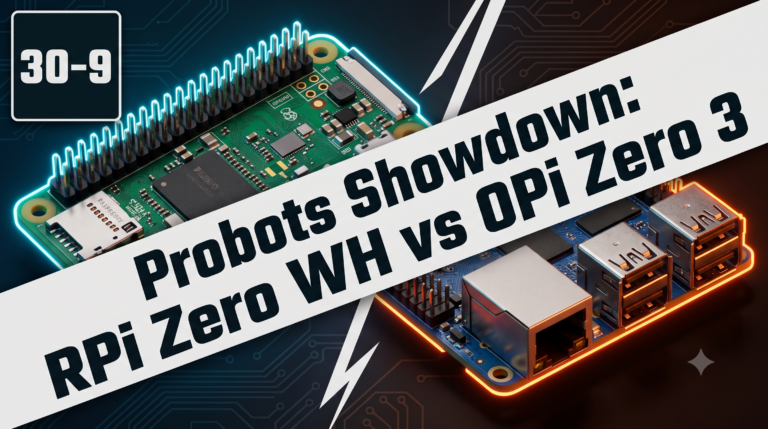 ● 18 min read
Vol. 59 | The Battle of the Bite-Sized Boards Picture a project that needs full Linux, networking, and GPIO—but has almost no room for a conventional
Read Article →