















 ● 20 min read
Showdown: RS550 12V DC 8000 vs RS-555 12V DC 6000 RPM DC Motor
Vol. 56 | The Heavyweight DC Drivetrain Duel Reliability isn’t optional when you’re designing actuators that need to move actual steel or
Read Article →
| Bulk Pricing | ||
|---|---|---|
| QTY | Unit Price(Inlc. GST) | |
| 25+ | ₹38.22 ₹ 32.39 + 5.83 GST | |
| 50+ | ₹37.83 ₹ 32.06 + 5.77 GST | |
| 75+ | ₹37.44 ₹ 31.73 + 5.71 GST | |
| 100+ | ₹36.66 ₹ 31.07 + 5.59 GST | |
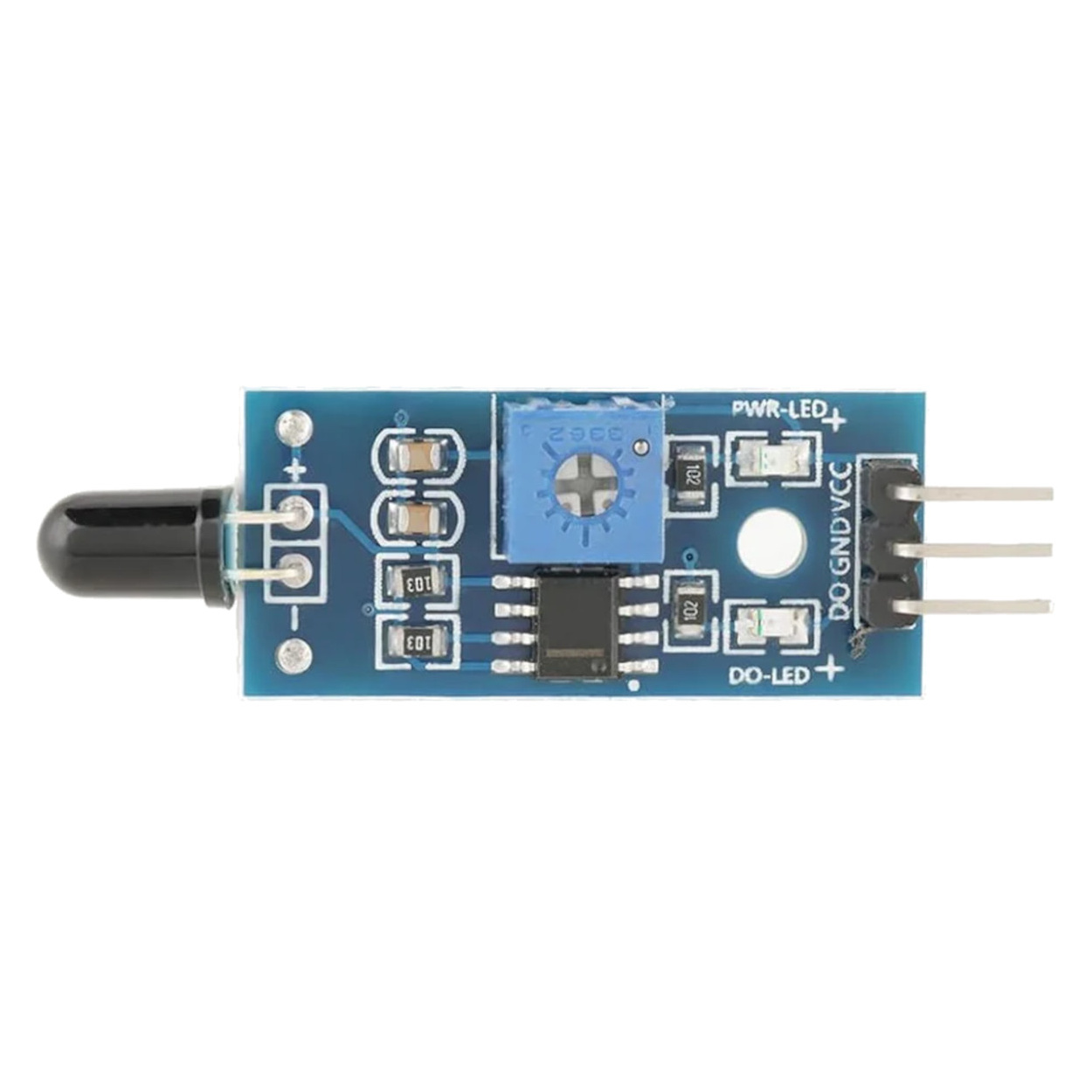
Instantly detect open flames with this 3-Pin IR Flame Sensor Module. Designed to recognize infrared wavelengths between 760nm and 1100nm, it features an adjustable sensitivity dial and a reliable LM393 digital output. Perfect for firefighting robots.
The Speed of Light Detection Standard thermal sensors (like thermistors) require ambient heat to rise before they trigger, which can take critical minutes during a fire. This IR Flame Sensor works completely differently. The large, black LED-like component protruding from the front is an infrared photodiode. Flames naturally emit a massive amount of infrared radiation in the 760nm to 1100nm wavelength range. The dark epoxy casing of the photodiode acts as a filter, blocking out visible daylight while allowing these specific fire-indicating IR wavelengths to pass through. This means the sensor detects a flame the exact millisecond it ignites.
LM393 Precision & Adjustable Sensitivity Reading raw, fluctuating analog data from a photodiode can be tricky. This breakout board handles the hard work for you by incorporating an LM393 voltage comparator chip. It takes the raw signal and translates it into a sharp, definitive digital High or Low. Even better, you can dictate exactly when that trigger happens by turning the crosshead screw on the blue potentiometer. Turn it one way, and it will only trigger for a massive bonfire. Turn it the other, and it can detect the tiny flame of a lighter from almost a meter away!
Simple 3-Pin Integration. This module is strictly a digital sensor, making it incredibly easy to use. It features three pins: VCC, GND, and DO (Digital Out). Simply power it with 3.3V or 5V, connect the DO pin to any digital pin on your Arduino, and use a basic digitalRead() command in your code. The board also features two onboard surface-mount LEDs: a Power LED to confirm the board is on, and a DO-LED that lights up exactly when the trigger threshold is crossed, allowing you to calibrate the sensor without even looking at your computer screen.
Operating Voltage: 3.3V to 5V DC
Detection Range: 760nm to 1100nm (Infrared)
Detection Angle: Approximately 60 degrees
Detection Distance: ~80cm (for a standard lighter flame)
Output Type: Digital (DO) - High/Low
Comparator Chip: LM393
Sensitivity: Adjustable via onboard blue potentiometer
Autonomous Firefighting Robots: Mounting three of these sensors in a fan shape on the front of a robot chassis, allowing the robot to accurately track and steer toward a flame to extinguish it with a mini water pump.
Instant Fire Alarms: Pairing this sensor with an active buzzer to create a rapid-response fire alarm for a workshop laser cutter enclosure.
Smart Home Safety: Wiring the sensor to an ESP8266 or ESP32 to send an emergency push notification to your phone if a fire breaks out in the kitchen.
Unlock New Capabilities (Project Evolution)
The Ultimate Environmental Monitor: A flame sensor is excellent, but it cannot "see" through walls or around corners. Evolve your safety system! Combine this IR flame sensor with an MQ-2 Gas/Smoke Sensor. While the IR sensor will instantly catch a flash fire in its direct line of sight, the MQ-2 will detect the thick, smoldering smoke of a hidden electrical fire before it even produces a flame. Combining both gives your Arduino project a foolproof, commercial-grade safety net!
1 x IR Fire Detector Sensor Module (3-Pin Digital)
What exactly does this sensor do? It detects the presence of an open flame or fire by sensing the specific infrared (IR) light wavelengths that fires emit.
Can it detect smoke or dangerous gases? No. This is purely an optical (light-based) sensor. It cannot smell smoke or gas. You would need an MQ-series sensor for that.
What is the black, bulbous component on the front? That is the IR photodiode receiver. It is the actual component that "sees" the infrared light.
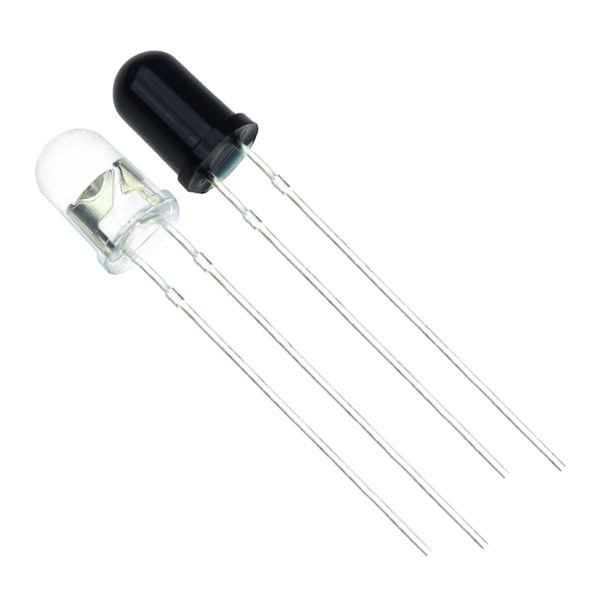
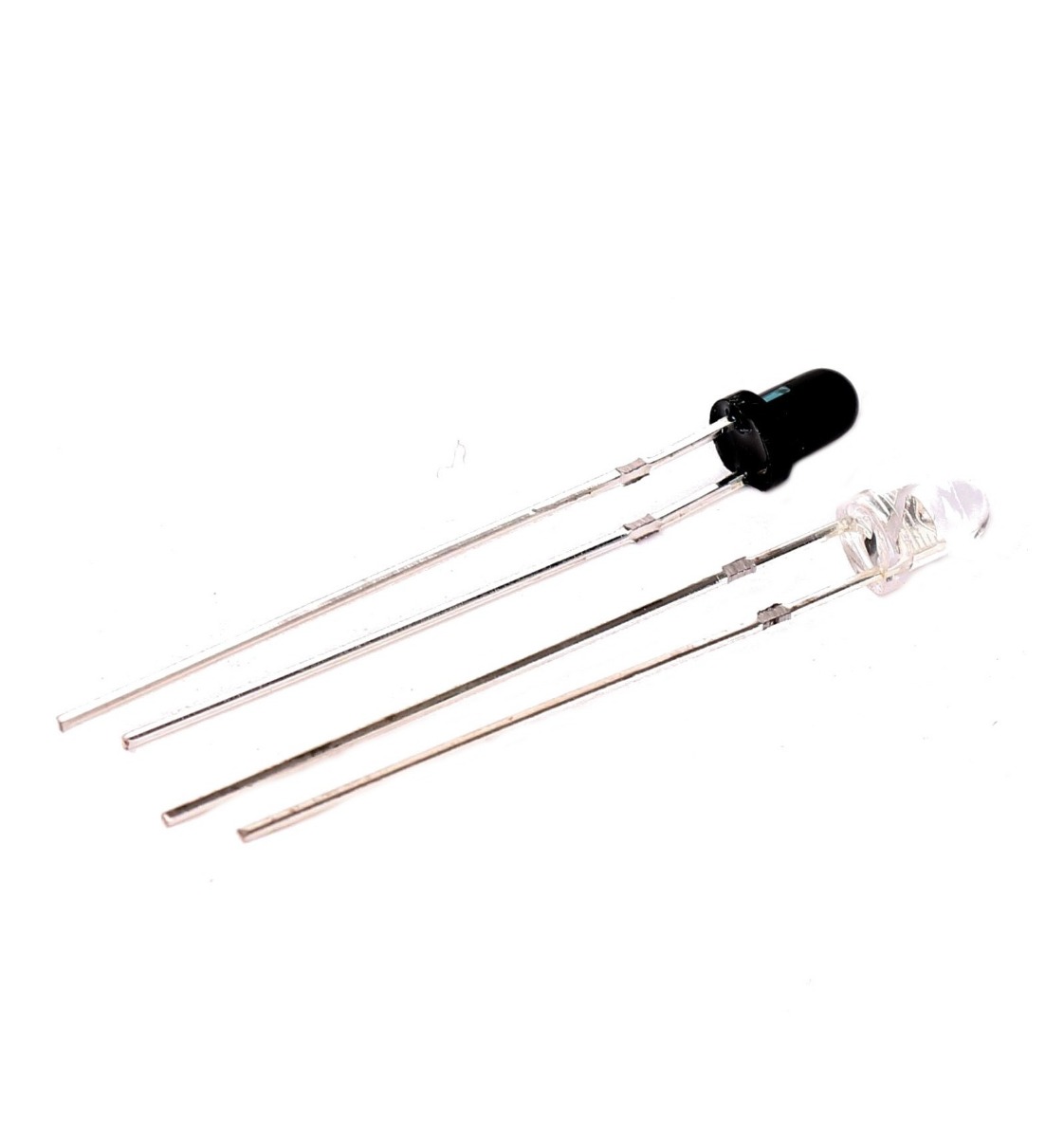
Why is the photodiode black instead of clear like a normal LED? The black epoxy is a specialized daylight filter. It blocks out standard visible light from lightbulbs so the sensor isn't constantly giving false alarms, allowing only infrared light to pass through.
How far away can it detect a fire? It depends heavily on the size of the fire. It can detect a small cigarette lighter flame from about 80cm (roughly 2.5 feet) away. A larger fire can be detected from much further away.
What is the blue box with the cross-slot on top? That is a potentiometer (a variable resistor). You turn it with a small screwdriver to adjust the sensitivity (how large or close a fire needs to be to trigger the sensor).
What do the three pins do? VCC is for positive power, GND is for ground, and DO is the Digital Output signal that goes to your microcontroller.
Does this output an analog signal? No. This specific 3-pin version only outputs a Digital (DO) High/Low signal. It tells the Arduino "Yes, there is a fire" or "No, there is not a fire."
What does the LM393 chip do? The LM393 is a voltage comparator. It compares the raw analog voltage from the photodiode to the voltage set by your blue potentiometer. When the photodiode voltage crosses that threshold, the chip snaps the digital output pin cleanly on or off.
What voltage does this board require? It operates safely on anything between 3.3V and 5V DC.
Can I use this with a 3.3V Raspberry Pi or ESP32? Yes! Because it supports 3.3V power, the digital output will also be a safe 3.3V logic level, meaning it won't damage your Raspberry Pi or ESP32 pins.
Do I need a special library to use this with Arduino? No special library is required. You simply use the standard pinMode(pin, INPUT) and digitalRead(pin) commands.
Will sunlight set off a false alarm? Yes, it is very possible. The sun is a massive source of infrared radiation. If direct, intense sunlight hits the black sensor, it may trigger a false positive. This sensor is best utilized indoors or in shaded environments.
What are the two tiny LEDs on the board for? One is a "PWR-LED" that stays on as long as the board has power. The other is a "DO-LED" that lights up immediately when the sensor detects a flame.
How do I calibrate it without coding? Power the board with 5V and GND. Hold a lighter in front of it at your desired detection distance. Turn the blue potentiometer screw until the DO-LED just barely lights up. The sensor is now calibrated to that distance!
Is this sensor waterproof? No, the exposed PCB and components will short out if exposed to water.
Can I place the sensor directly inside or very close to a fire? NO. The sensor detects the light of the fire, not the heat. If you put it too close to an actual flame, the plastic photodiode and the circuit board will quickly melt and be destroyed.
What is the "viewing angle" of the sensor? The black photodiode has a viewing angle of approximately 60 degrees. It acts like a cone projecting forward. It will not easily detect a fire directly behind it.
How can a robot find the direction of a fire if the angle is only 60 degrees? Robot builders typically mount 3 to 5 of these sensors in a curved array (left, center, right). By checking which specific sensor is triggered, the robot knows which way to turn.
Why are there extra solder pads near the photodiode on some boards? Some generic board blanks are designed to accommodate different types of sensors. The circuitry is perfectly fine as built from the factory.
Probots sells every Electronics Part for your next Project. You can order 10,000+ Electronic Parts Online - Arduino, Raspberry Pi, NodeMCU Development Boards, Sensors, Motors, Motor Drivers, SMPS, Plastic Enclosures etc in India directly on probots.co.in
We delivery electronics components and parts throughout India using standard couriers like Bluedart, Delhivery & India Post.
For order related queries contact -
This item is covered by a warranty of 7 days from the date of delivery, against confirmed manufacturing defects only, as verified by Probots' own testing and investigation. In case of a confirmed defect, we will replace the item — a refund is issued only if a replacement can't be supplied (e.g. discontinued or out of stock). Transit damage or a wrong item received must be reported within 3 days of delivery.
If the product shows signs of misuse, tampering, physical damage, static discharge, liquid or fire damage, use of unapproved chemicals, or has been soldered or physically altered in any way.
China
Probots sells every Electronics Part for your next Project. You can order 10,000+ Electronic Parts Online - Arduino, Raspberry Pi, NodeMCU Development Boards, Sensors, Motors, Motor Drivers, SMPS, Plastic Enclosures etc in India directly on probots.co.in
We offer specialized services for Bulk, Wholesale & B2B Customers like discounted prices, additional shipping options, customised products, etc . Customer with large quantity & regular orders qualify for the specialised discounted rates.
We also offer dedicated sales team to assist you with the order process by providing sales quotations, PI, technical support for choosing products, etc.
Note: Business Orders are processed manually and usually take 1-3 days to process compared to placing the order directly on our website. Please plan your purchases accordingly.
Need Help?
For bulk enquiries contact us by -

Probots Electronics is highly regarded for its highly skilled team and knowledgeable staff who provide expert guidance to ensure customers select the right components for their technical projects. The business maintains a strong reputation for prompt service and reliable support, with many clients praising their quick response times and genuine commitment to customer satisfaction.


A very great place for electronics Such a well maintained shop... Felt good shopping here


Nice

For new developments kit available and they will support till working, and I suggest this place strongly


This place has all the electronic parts students will ever need, staff is friendly and the place is organised.


It was a really nice experience! I was happy to find such a wide range of robotics kits for kids, suitable for different age groups and learning levels.

Excellent experience




Good stuff

Buyed them. But no bargain. Helpful staff.


Available all children school project spears parts like electronics


It was good experience




Staff is very patient and helpful

One of the best place for electronics you will get everything you want! With the best and orginal quality

Very helpful staff and the best place to buy components for projects

Wonderful store with expert service and technically strong people.

Prompt delivery, excellent technical support


Large inventory of electronic components and parts. Well trained service personnel and technicians who can quickly identify and rectify product defect if any. They are a reliable and trustworthy online stores.

A very great place for electronics Such a well maintained shop... Felt good shopping here
Nice
For new developments kit available and they will support till working, and I suggest this place strongly
This place has all the electronic parts students will ever need, staff is friendly and the place is organised.
It was a really nice experience! I was happy to find such a wide range of robotics kits for kids, suitable for different age groups and learning levels.
Excellent experience
Good stuff
Buyed them. But no bargain. Helpful staff.
Available all children school project spears parts like electronics
It was good experience
Staff is very patient and helpful
One of the best place for electronics you will get everything you want! With the best and orginal quality
Very helpful staff and the best place to buy components for projects
Wonderful store with expert service and technically strong people.
Prompt delivery, excellent technical support
Large inventory of electronic components and parts. Well trained service personnel and technicians who can quickly identify and rectify product defect if any. They are a reliable and trustworthy online stores.
● 20 min readVol. 56 | The Heavyweight DC Drivetrain Duel Reliability isn’t optional when you’re designing actuators that need to move actual steel or
Read Article → ● 13 min read
Workbench Vol. 49 🚀 The Project Trifecta: 3 Builds to Start Today We don’t just stock parts; we curate ecosystems. This week’s arrivals are desi
Read Article → ● 18 min read
Vol. 59 | The Battle of the Bite-Sized Boards Picture a project that needs full Linux, networking, and GPIO—but has almost no room for a conventional
Read Article →