


















 ● 20 min read
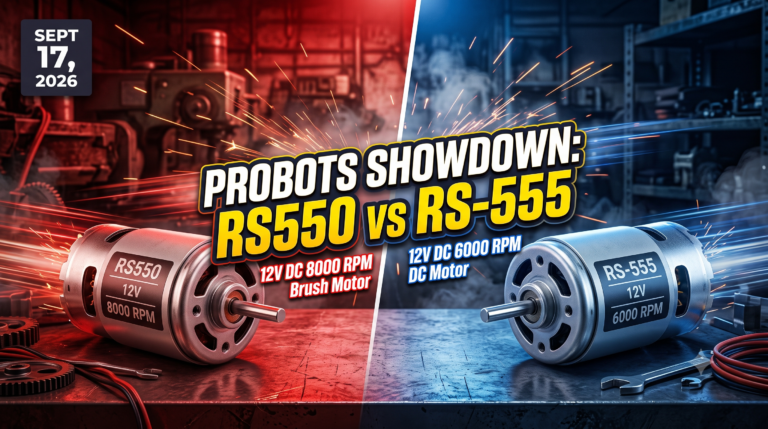
Showdown: RS550 12V DC 8000 vs RS-555 12V DC 6000 RPM DC Motor
Vol. 56 | The Heavyweight DC Drivetrain Duel Reliability isn’t optional when you’re designing actuators that need to move actual steel or
Read Article →
| Bulk Pricing | ||
|---|---|---|
| QTY | Unit Price(Inlc. GST) | |
| 25+ | ₹1,175.02 ₹ 995.78 + 179.24 GST | |
| 50+ | ₹1,163.03 ₹ 985.62 + 177.41 GST | |
| 75+ | ₹1,151.04 ₹ 975.46 + 175.58 GST | |
| 100+ | ₹1,127.06 ₹ 955.14 + 171.93 GST | |
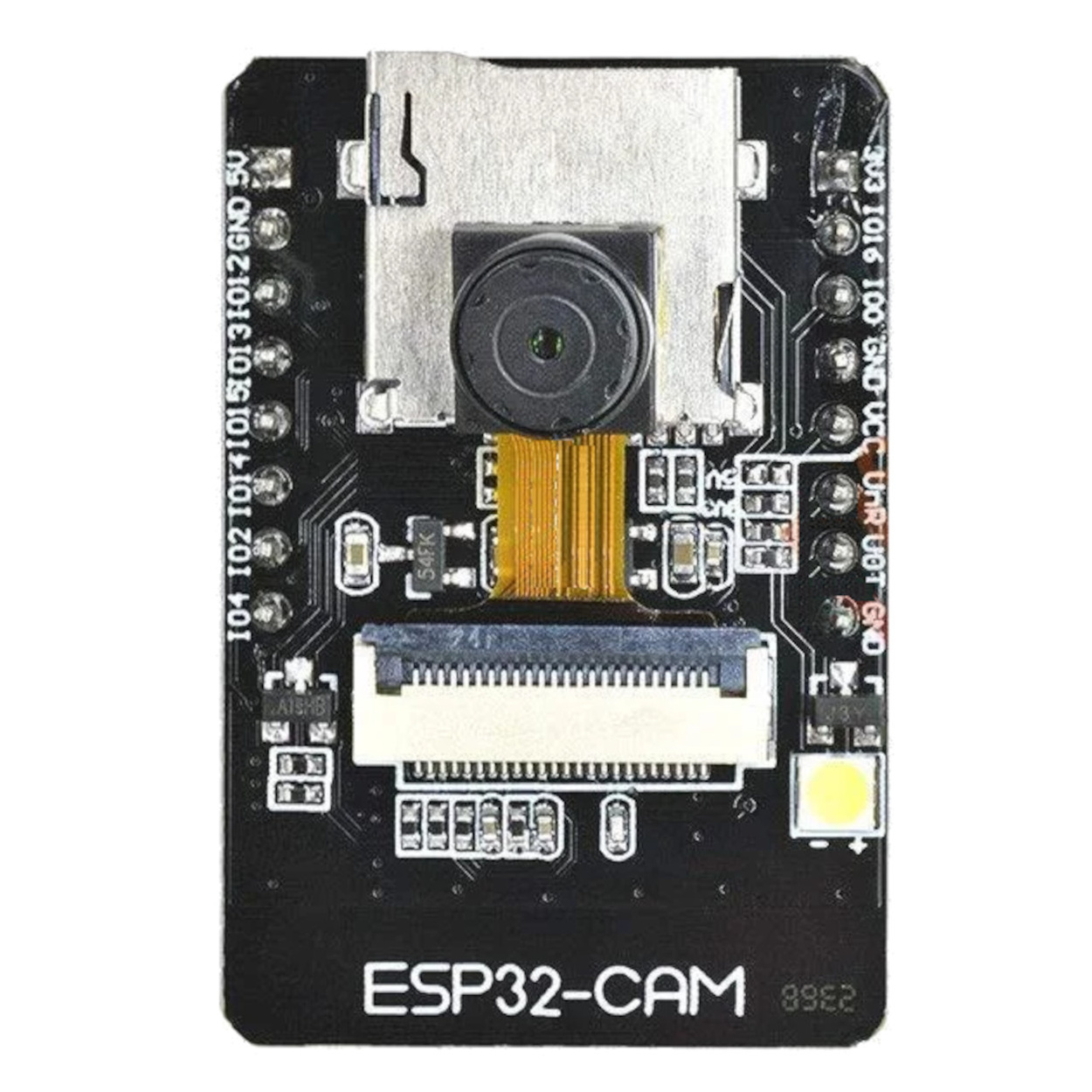
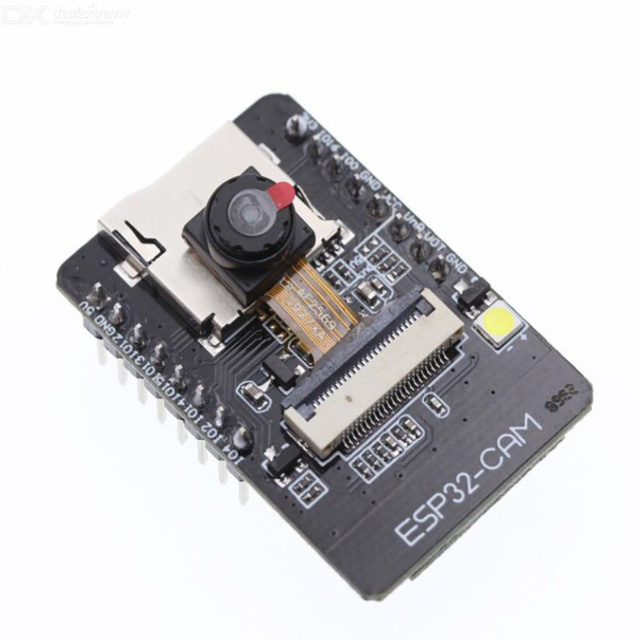
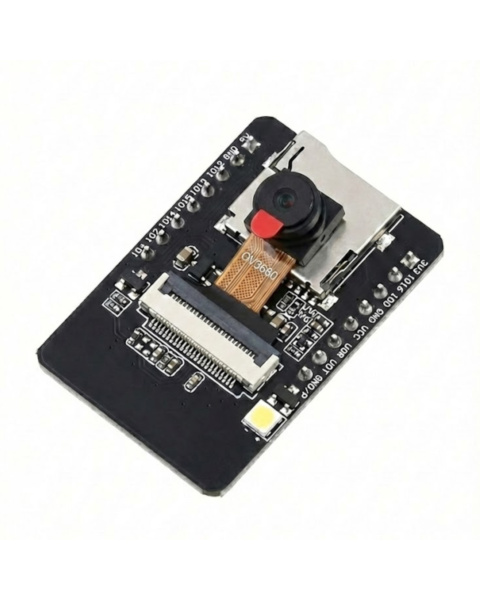
Upgrade your IoT vision! The ESP32-CAM features built-in Wi-Fi, Bluetooth, and a MicroSD slot. This kit includes the upgraded OV5640 5-Megapixel camera module for crystal-clear QSXGA images and video streaming.
The 5-Megapixel Visual Upgrade Standard ESP32-CAM boards are notorious for their grainy, washed-out 2-Megapixel (OV2640) images. This specific kit swaps out the basic lens for a premium OmniVision OV5640 module. Utilizing a 1/4" color CMOS sensor and OmniBSI™ backside illumination technology, the OV5640 captures massive QSXGA (2592 x 1944) images with vastly improved color accuracy and low-light performance. Whether you are reading license plates or analyzing crop health, the extra resolution ensures you don't miss critical details.
Uncompromised Wireless Processing At the heart of the board sits the mighty ESP32 chip. It features a dual-core 32-bit CPU running at up to 240MHz, providing plenty of computational power to capture and compress high-resolution JPEGs on the fly. The built-in 802.11b/g/n Wi-Fi allows you to stream video directly to a web browser, Home Assistant dashboard, or cloud server, while Bluetooth 4.2 (BR/EDR and BLE) opens up possibilities for local beacon tracking and sensor integration.
Integrated Storage and Illumination Streaming isn't your only option. The board features an integrated TF/MicroSD card socket, allowing you to save thousands of high-res photos locally for time-lapse photography or dashcam applications. Furthermore, a high-power surface-mount white LED is wired directly to GPIO 4, acting as an intense flash or a continuous floodlight for capturing images in pitch-black environments.
Specifications
Microcontroller: ESP32-D0WDQ6 (Dual-core 32-bit, up to 240MHz)
Wireless: 802.11b/g/n Wi-Fi + Bluetooth 4.2 / BLE
SRAM / PSRAM: 520 KB internal SRAM / 4MB external PSRAM
Camera Module: OmniVision OV5640 (5 Megapixel)
Maximum Resolution: QSXGA (2592 x 1944 pixels)
Image Sensor Tech: 1/4" CMOS with OmniBSI™
Storage Interface: Built-in TF / MicroSD Card Slot (Supports SPI)
Antenna Options: Onboard PCB Antenna (Default) / IPEX Connector
Board Dimensions: 27mm x 40mm x 4.5mm
Operating Voltage: 5V (via 5V pin) or 3.3V (via 3.3V pin)
Downloads:
Key Applications and Projects
DIY Home Security: Building a hidden, Wi-Fi enabled security camera that integrates seamlessly into Home Assistant or Node-RED.
3D Printer Monitoring: Mounting the camera inside a 3D printer enclosure to stream the printing process and capture incredibly crisp end-of-print time-lapses.
Smart Meter Reading: Aiming the 5MP camera at an analog water or gas meter and using OCR (Optical Character Recognition) to digitize your utility usage.
Unlock New Capabilities (Project Evolution) The AI Smart Doorbell: Why pay for a subscription doorbell when you can build a smarter one? Evolve your ESP32-CAM! Flash the board with the ESP-WHO facial recognition framework. Mount the module at your front door. The camera can stream video to your phone, but more importantly, it can process the faces of visitors locally. You can train the AI to recognize family members, automatically unlocking a smart deadbolt when they arrive, or sending a push notification to your phone with a snapshot of unrecognized strangers!
1 x ESP32-CAM Development Board
1 x OV5640 5MP Camera Module (Pre-attached via FPC ribbon)
1. What is the difference between this and a standard ESP32-CAM? The primary difference is the camera module. Standard boards include a 2MP OV2640 camera. This kit includes the significantly upgraded 5MP OV5640 camera, providing more than double the resolution and better low-light sensitivity.
2. Does this board have a micro-USB or USB-C port? No. To keep the footprint as small as possible, there is no USB port. You must use a separate USB-to-TTL Serial adapter (like an FTDI board) to program it.
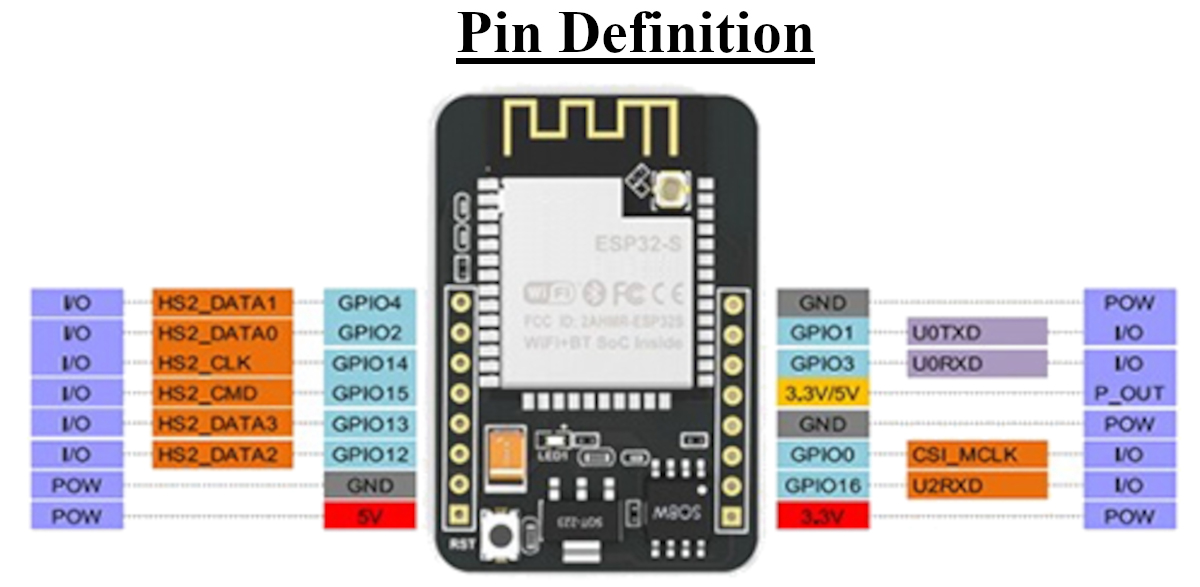
3. How do I put the board into programming mode? Connect your FTDI adapter to the 5V, GND, U0R, and U0T pins. Critically, you must connect the GPIO 0 pin to GND while powering on the board to force it into flashing mode.
4. Why is my board constantly resetting or failing to initialize the camera? This is almost always a power issue. The ESP32 and the 5MP camera draw significant current spikes. You must use a robust 5V power supply capable of delivering at least 2 Amps. Cheap USB ports or thin jumper wires will cause brownouts.
5. Can I use the Arduino IDE to program this? Yes! In the Arduino IDE Board Manager, select the "AI Thinker ESP32-CAM" board profile.
6. Does the board have PSRAM? Yes. To process massive 5-Megapixel images, the board includes a 4MB PSRAM chip. You must ensure "PSRAM" is set to "Enabled" in your Arduino IDE settings, or the camera will fail to initialize.
7. Can I use a MicroSD card and the Wi-Fi at the same time? Yes, but they share some data buses, which can cause slight bottlenecks. The SD card operates over the high-speed SDIO interface.
8. What is the maximum size MicroSD card supported? Officially, the library supports up to 4GB cards. However, many users successfully use 16GB or 32GB cards by ensuring they are formatted to FAT32.
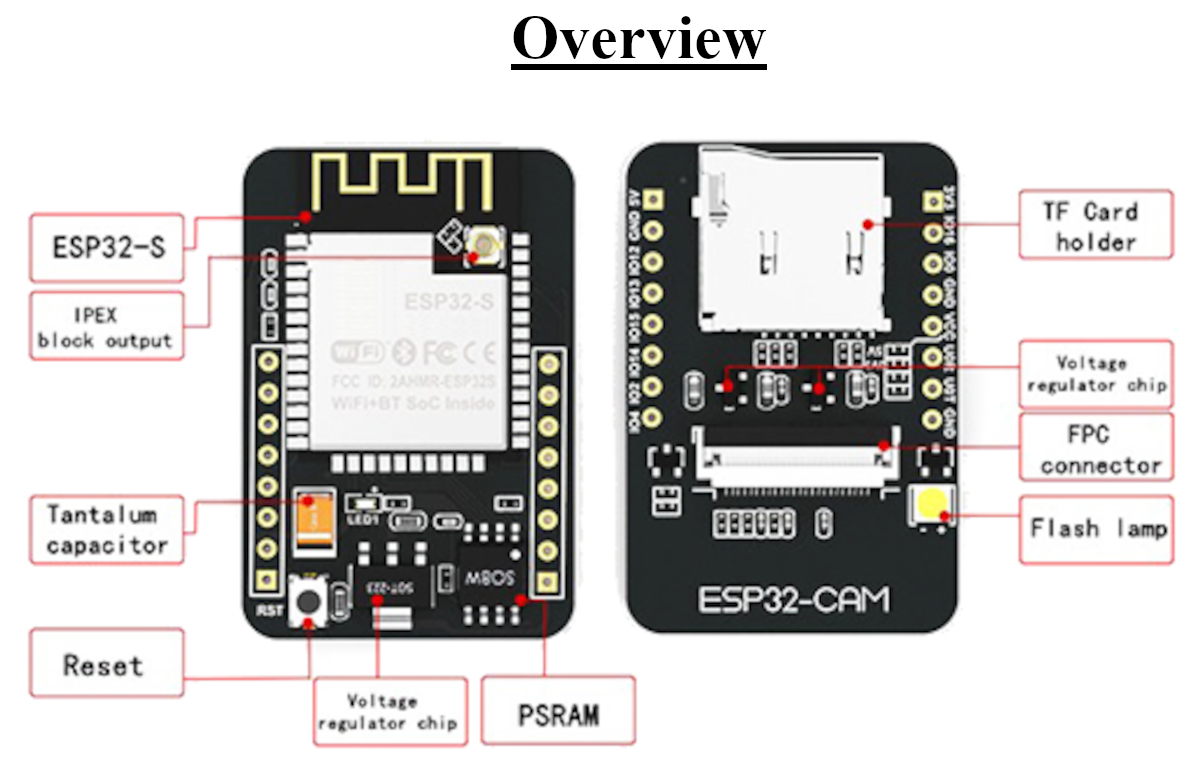
9. Can I attach an external Wi-Fi antenna to get better range? Yes. The board features an IPEX/U.FL connector. However, to use it, you must physically desolder a tiny zero-ohm resistor on the board to disconnect the onboard PCB antenna and route the signal to the IPEX connector.
10. What voltage does this board require? You should supply exactly 5V to the "5V" pin. The board has an onboard voltage regulator that drops this to the 3.3V required by the ESP32 and camera logic.
11. Can I power it with a 3.7V LiPo battery? You cannot connect a LiPo directly to the 5V pin. You can connect it to the 3.3V pin, but a fully charged LiPo (4.2V) might fry the board, and a dying one won't provide enough voltage. You should use a 5V boost converter.
12. Does the OV5640 have autofocus? While the OV5640 sensor chip supports autofocus logic, the physical lens barrel included in these standard hobby kits is usually fixed-focus. You can manually adjust the focus by gently breaking the glue seal and twisting the lens barrel.
13. What is the blindingly bright white LED for? It is a flash LED tied to GPIO 4. You can program it to turn on briefly like a camera flash, or stay on as a flashlight. Be warned: GPIO 4 is also used by the SD card data bus, so the LED will flicker when writing to the SD card.
14. Are all the GPIO pins available to use? No. Most of the ESP32's pins are internally consumed by the camera interface and the SD card reader. Only a few pins (like GPIO 1, 3, 12, 13, 14, 15, 16) are exposed, and several of those are restricted if you are using the SD card.
15. Can I stream video and save to the SD card simultaneously? Yes, but be aware that handling a Wi-Fi stream and SD card writing simultaneously at 5MP resolution will severely reduce your frame rate due to processing limits.
16. Why does the board get so hot during use? It is completely normal. Processing dual-core Wi-Fi tasks while handling a high-speed parallel camera interface generates significant heat. The metal shielding helps dissipate it.
17. Is the camera module permanently attached? No. The OV5640 connects via a small 24-pin FPC (Flexible Printed Circuit) ribbon cable. You flip up the black locking bar on the connector to remove or replace the camera.
18. What is the field of view (FOV)? The standard lens equipped on these OV5640 modules typically provides an FOV of approximately 66 to 70 degrees.
19. How long can the camera ribbon cable be? The camera uses a high-speed parallel interface, which is very susceptible to interference. You should not extend the cable beyond a few inches, or you will experience corrupted images or green pixelation.
20. Can I capture audio with this board? No. There is no built-in microphone on the standard ESP32-CAM board. If you need audio, you would need to wire an external I2S microphone to the few remaining free GPIO pins.
| Core Chipset: | ESP32 |
|---|---|
| Flash Memory: | 4 MB |
| PSRAM: | 8 MB |
| Wireless Connectivity: | WiFi, Bluetooth |
| Antenna Type: | Onboard PCB |
Probots sells every Electronics Part for your next Project. You can order 10,000+ Electronic Parts Online - Arduino, Raspberry Pi, NodeMCU Development Boards, Sensors, Motors, Motor Drivers, SMPS, Plastic Enclosures etc in India directly on probots.co.in
We delivery electronics components and parts throughout India using standard couriers like Bluedart, Delhivery & India Post.
For order related queries contact -
This item is covered by a warranty of 7 days from the date of delivery, against confirmed manufacturing defects only, as verified by Probots' own testing and investigation. In case of a confirmed defect, we will replace the item — a refund is issued only if a replacement can't be supplied (e.g. discontinued or out of stock). Transit damage or a wrong item received must be reported within 3 days of delivery.
If the product shows signs of misuse, tampering, physical damage, static discharge, liquid or fire damage, use of unapproved chemicals, or has been soldered or physically altered in any way.
China
Probots sells every Electronics Part for your next Project. You can order 10,000+ Electronic Parts Online - Arduino, Raspberry Pi, NodeMCU Development Boards, Sensors, Motors, Motor Drivers, SMPS, Plastic Enclosures etc in India directly on probots.co.in
We offer specialized services for Bulk, Wholesale & B2B Customers like discounted prices, additional shipping options, customised products, etc . Customer with large quantity & regular orders qualify for the specialised discounted rates.
We also offer dedicated sales team to assist you with the order process by providing sales quotations, PI, technical support for choosing products, etc.
Note: Business Orders are processed manually and usually take 1-3 days to process compared to placing the order directly on our website. Please plan your purchases accordingly.
Need Help?
For bulk enquiries contact us by -


Probots Electronics is highly regarded for its highly skilled team and knowledgeable staff who provide expert guidance to ensure customers select the right components for their technical projects. The business maintains a strong reputation for prompt service and reliable support, with many clients praising their quick response times and genuine commitment to customer satisfaction.


A very great place for electronics Such a well maintained shop... Felt good shopping here


Nice

For new developments kit available and they will support till working, and I suggest this place strongly


This place has all the electronic parts students will ever need, staff is friendly and the place is organised.


It was a really nice experience! I was happy to find such a wide range of robotics kits for kids, suitable for different age groups and learning levels.

Excellent experience




Good stuff

Buyed them. But no bargain. Helpful staff.


Available all children school project spears parts like electronics


It was good experience




Staff is very patient and helpful

One of the best place for electronics you will get everything you want! With the best and orginal quality

Very helpful staff and the best place to buy components for projects

Wonderful store with expert service and technically strong people.

Prompt delivery, excellent technical support


Large inventory of electronic components and parts. Well trained service personnel and technicians who can quickly identify and rectify product defect if any. They are a reliable and trustworthy online stores.

A very great place for electronics Such a well maintained shop... Felt good shopping here
Nice
For new developments kit available and they will support till working, and I suggest this place strongly
This place has all the electronic parts students will ever need, staff is friendly and the place is organised.
It was a really nice experience! I was happy to find such a wide range of robotics kits for kids, suitable for different age groups and learning levels.
Excellent experience
Good stuff
Buyed them. But no bargain. Helpful staff.
Available all children school project spears parts like electronics
It was good experience
Staff is very patient and helpful
One of the best place for electronics you will get everything you want! With the best and orginal quality
Very helpful staff and the best place to buy components for projects
Wonderful store with expert service and technically strong people.
Prompt delivery, excellent technical support
Large inventory of electronic components and parts. Well trained service personnel and technicians who can quickly identify and rectify product defect if any. They are a reliable and trustworthy online stores.
● 20 min readVol. 56 | The Heavyweight DC Drivetrain Duel Reliability isn’t optional when you’re designing actuators that need to move actual steel or
Read Article →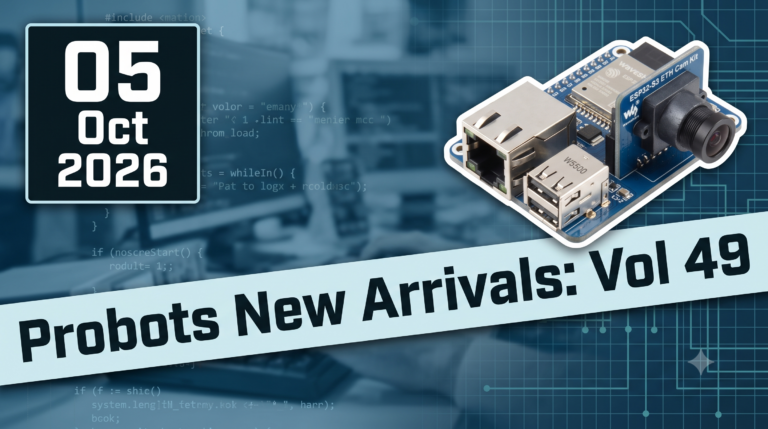 ● 13 min read
Workbench Vol. 49 🚀 The Project Trifecta: 3 Builds to Start Today We don’t just stock parts; we curate ecosystems. This week’s arrivals are desi
Read Article → ● 18 min read
Vol. 59 | The Battle of the Bite-Sized Boards Picture a project that needs full Linux, networking, and GPIO—but has almost no room for a conventional
Read Article →