













 ● 20 min read
Showdown: RS550 12V DC 8000 vs RS-555 12V DC 6000 RPM DC Motor
Vol. 56 | The Heavyweight DC Drivetrain Duel Reliability isn’t optional when you’re designing actuators that need to move actual steel or
Read Article →
| Bulk Pricing | ||
|---|---|---|
| QTY | Unit Price(Inlc. GST) | |
| 25+ | ₹1,273.02 ₹ 1078.83 + 194.19 GST | |
| 50+ | ₹1,260.03 ₹ 1067.82 + 192.21 GST | |
| 75+ | ₹1,247.04 ₹ 1056.81 + 190.23 GST | |
| 100+ | ₹1,221.06 ₹ 1034.8 + 186.26 GST | |
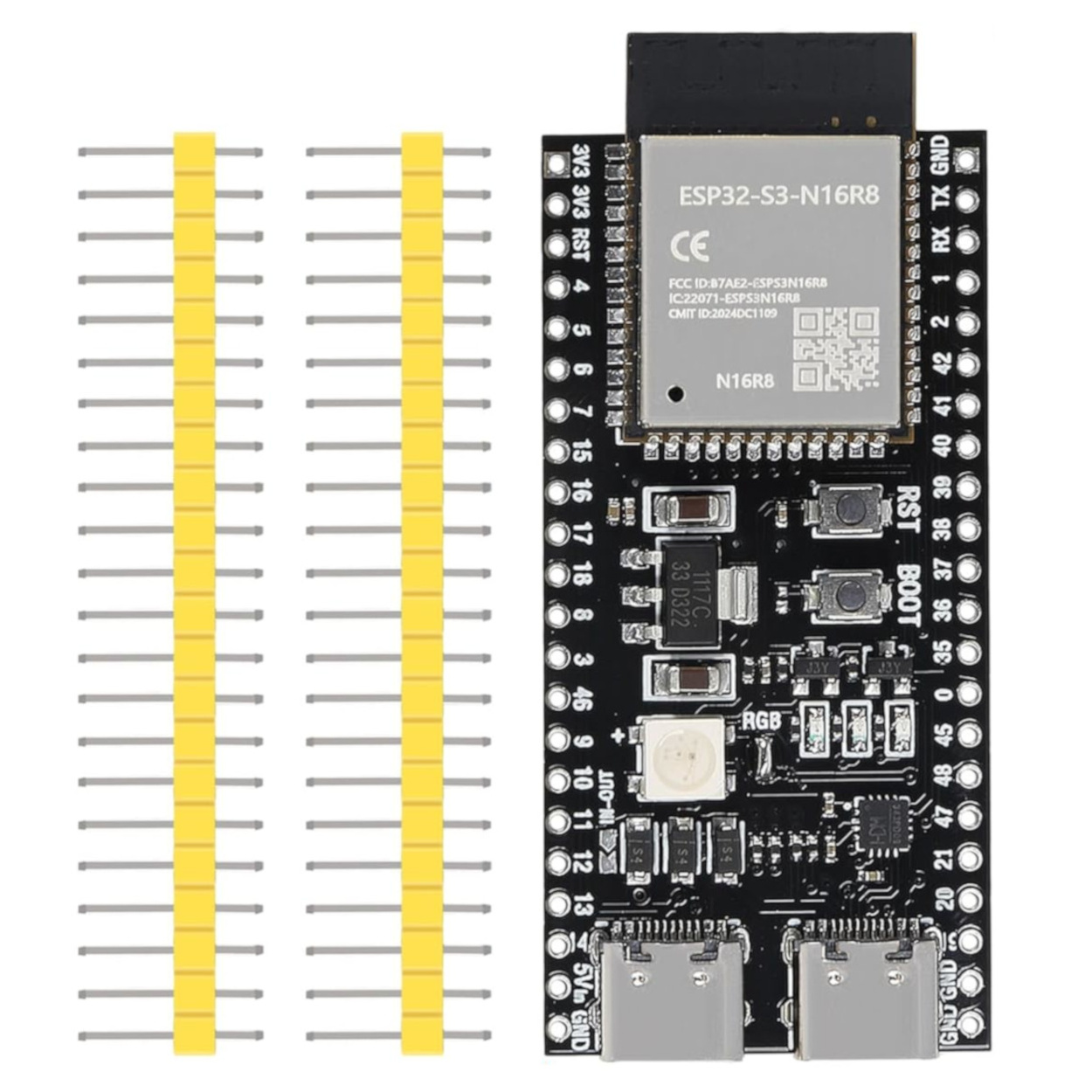
Push the limits of IoT with the ESP32-S3 N16R8! Featuring a dual-core 240MHz processor, 16MB of Flash, 8MB of Octal PSRAM, Wi-Fi, Bluetooth 5 (LE), and dual USB Type-C ports for easy programming and OTG support.
The Memory Monster: N16R8 Explained
Why settle for standard memory limits? The "N16R8" designation is the star of the show here. "N16" means the board is equipped with 16MB of Quad SPI Flash, providing enormous space for large firmware, over-the-air (OTA) update partitions, file systems (LittleFS/SPIFFS), and embedded web server assets. "R8" indicates 8MB of Octal SPI PSRAM. This high-speed, 8-data-line external RAM allows you to buffer massive arrays, manipulate high-resolution audio/video streams, and run complex machine learning models without crashing due to out-of-memory errors.
Dual Core Power meets AI Acceleration
At its heart is the ESP32-S3, featuring a dual-core 32-bit Xtensa LX7 microprocessor running at up to 240 MHz. Unlike its predecessors, the S3 includes vector instructions in the MCU specifically designed to accelerate neural network computing and signal processing. If you are experimenting with edge AI, wake-word detection, or TinyML, the ESP32-S3 is built specifically for your workload.
Modern Dual Type-C Connectivity
Say goodbye to micro-USB and flimsy connectors. This board features two USB Type-C ports:
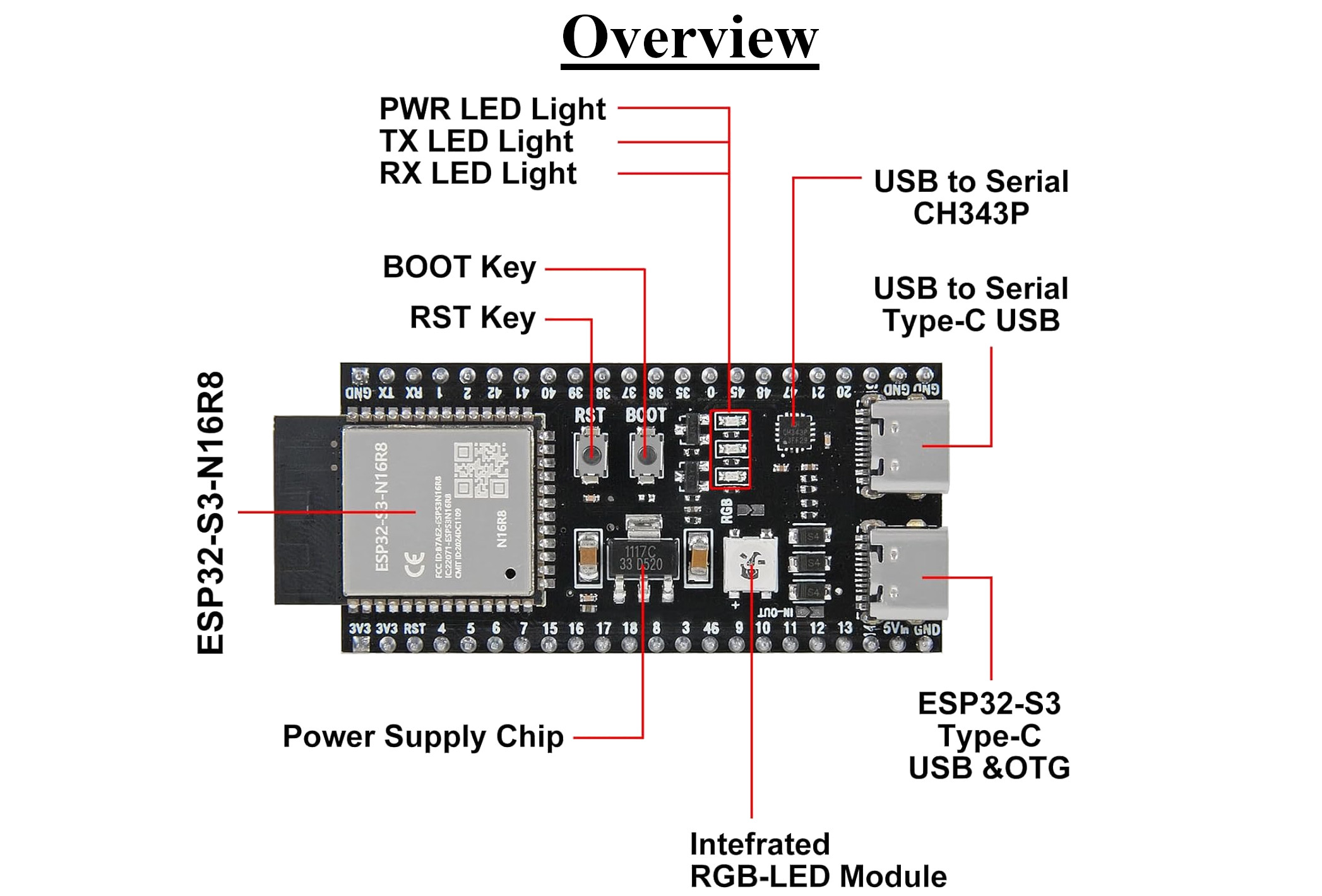
COM / UART Port: Connected to the onboard CH343 (or CP2102) USB-to-Serial converter. Use this for standard serial debugging and traditional flashing.
USB / OTG Port: Connected directly to the ESP32-S3's internal USB peripheral. This allows the board to act as a USB host or device (like a custom mouse, keyboard, or mass storage drive) and enables incredibly fast direct-to-chip flashing and built-in JTAG debugging via USB.
Specifications
Microcontroller: Espressif ESP32-S3 (Dual-core 32-bit Xtensa LX7)
Clock Speed: Up to 240 MHz
Flash Memory: 16 MB (Quad SPI)
PSRAM: 8 MB (Octal SPI)
Wireless: 2.4 GHz Wi-Fi (802.11 b/g/n) & Bluetooth 5 (LE / Mesh)
USB Interfaces: 2x USB Type-C (1x UART, 1x Native USB/OTG)
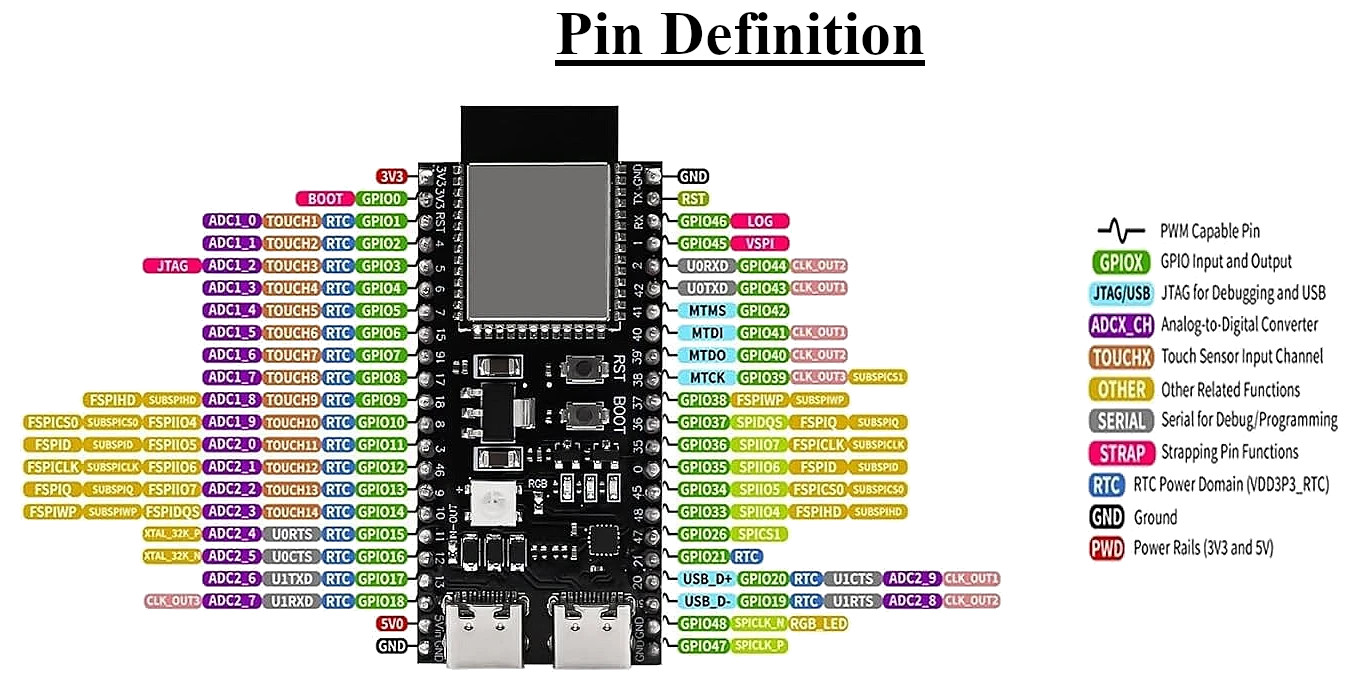
GPIO Pins: Up to 34 available (Supports PWM, ADC, I2C, SPI, UART, I2S)
Operating Voltage: 3.3V logic (Powered via 5V from USB or VIN)
Onboard Features: RGB LED (WS2812B/Neopixel compatible), Reset & Boot Buttons, PCB Antenna.
Downloads:
Unlock New Capabilities (Project Evolution)
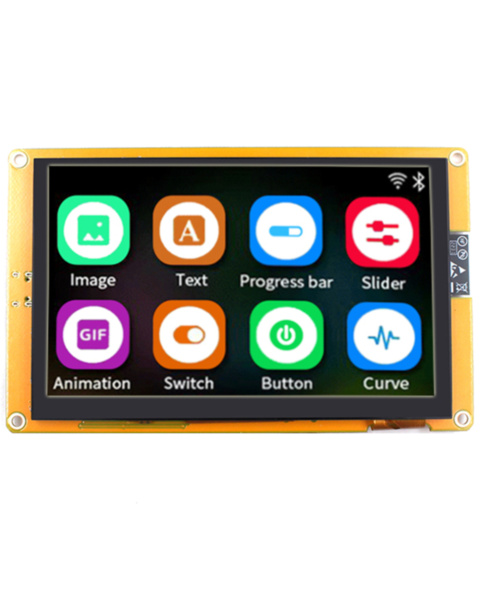
The Ultimate Smart Home Dashboard: Because of the massive 16MB Flash and 8MB Octal PSRAM, this board is the absolute perfect candidate for driving graphical user interfaces. Pair this board with a large capacitive touch TFT display. You can use LVGL (Light and Versatile Graphics Library) to build a stunning, fluid, 60fps graphical dashboard. The 8MB of PSRAM easily handles the large frame buffers required for smooth animations and high-resolution background images, while the 16MB Flash holds all your custom fonts and UI assets. Connect it to Home Assistant via Wi-Fi to control your entire house from a sleek, custom-built touchscreen!
1 x ESP32-S3-WROOM-1 (N16R8) Dual Type-C Development Board
Note: The board comes with male header pins non soldered for immediate breadboard compatibility.
1. What does the "N16R8" stand for?
It dictates the memory configuration of the module. "N16" stands for 16 Megabytes of Flash memory, and "R8" stands for 8 Megabytes of PSRAM.
2. What is the difference between the ESP32 and the ESP32-S3?
The ESP32-S3 is a newer generation. While both are dual-core, the S3 uses a faster LX7 architecture, adds vector instructions for AI/Machine Learning acceleration, upgrades to Bluetooth 5 (LE only, dropping older Bluetooth Classic), and includes a native USB OTG interface.
3. Why are there two USB Type-C ports?
One port (usually labeled COM or UART) is routed through a USB-to-serial chip for standard serial console monitoring and flashing. The other port (labeled USB) connects directly to the ESP32-S3's native USB pins, allowing it to emulate USB devices (keyboards, mice, MIDI) or be debugged via native JTAG.
4. Do I need to hold the "BOOT" button to upload code?
Usually, no. The board features an auto-reset circuit (using DTR/RTS lines via the UART port) that automatically puts the chip into flashing mode. However, if your native USB port crashes or you put the board in deep sleep, you may occasionally need to hold BOOT, tap RESET, and then release BOOT to force it into download mode.
5. Which USB port should I use to program the board in the Arduino IDE?
You can actually use either! However, for beginners, using the "COM / UART" port is recommended because the serial monitor will stay connected consistently, even if your code crashes the main processor.
6. Does this board support 5GHz Wi-Fi?
No. Like almost all microcontrollers in this class, the ESP32-S3 only supports 2.4 GHz Wi-Fi (802.11 b/g/n) to maintain low power consumption and longer range.
7. Can I program this board using MicroPython or CircuitPython?
Absolutely. The massive 16MB of Flash and 8MB of PSRAM make this specific board arguably the best ESP32 variant for MicroPython and CircuitPython, as it provides immense space for your scripts and dynamic memory allocation.
8. Is the PSRAM on this board Quad SPI or Octal SPI?
The 8MB PSRAM on the N16R8 module utilizes the high-speed Octal SPI (OPI) interface, which is significantly faster than the older Quad SPI PSRAM found on standard ESP32 boards.
9. What voltage do the GPIO pins operate at?
The GPIO pins operate strictly at 3.3V. Applying 5V directly to any GPIO pin will permanently damage the ESP32-S3 chip.
10. Can I power this board with a 3.7V LiPo battery?
You can connect a 3.7V battery to the 5V pin (it will drop through the regulator), but it is not highly efficient, and there is no built-in battery charging circuit on this specific barebones dev board. You would need an external charging module (like a TP4056) and a 3.3V LDO for safe, long-term battery operation.
11. What is the onboard RGB LED connected to?
Most of these boards feature an onboard WS2812B (Neopixel-compatible) addressable RGB LED. It is typically wired to GPIO 48, though you should verify the exact pin in your specific board's documentation.
12. Does this board support Bluetooth Classic?
No. The ESP32-S3 dropped support for legacy Bluetooth Classic (BR/EDR). It supports Bluetooth 5 (Low Energy) and Bluetooth Mesh exclusively. If you absolutely need Bluetooth Classic for legacy audio streaming, you need the original ESP32.
13. What happens if I plug cables into both USB ports at the same time?
The board is designed with diode protection on the 5V lines from the USB ports. It is generally safe to have both plugged in simultaneously (e.g., using one for power/serial monitoring and the other to test USB host functionality).
14. Are all the pins on the board usable?
Mostly, yes. However, some pins are used internally to communicate with the integrated Flash and PSRAM (typically GPIO 26-32, though it varies by module). Do not use the pins labeled specifically for internal flash.
15. Does this board support JTAG debugging?
Yes! Because of the native USB interface on the S3, you can perform full JTAG debugging (breakpoints, step-through code, memory inspection) directly over the "USB" Type-C port without needing an expensive external JTAG debugger hardware.
16. I am getting an "Out of Memory" error even though I have 8MB of PSRAM. Why?
By default, the Arduino IDE does not automatically utilize the PSRAM. You must go to Tools > PSRAM and select OPI PSRAM (or enabled) to tell the compiler to utilize the extra memory.
17. Can I attach an external Wi-Fi antenna to this board?
No. The ESP32-S3-WROOM-1 module has a PCB trace antenna printed directly onto the module. If you require an external antenna, you need to purchase a board utilizing the ESP32-S3-WROOM-1U module, which features a U.FL connector.
18. What is the maximum current output of the 3.3V pin?
The onboard 3.3V voltage regulator (usually an AMS1117-3.3 or similar) can typically provide up to 700mA to 800mA. However, the ESP32-S3 itself can draw significant current (up to 350mA during Wi-Fi transmission), so you should not draw more than ~300mA for external components.
19. Is this board breadboard compatible?
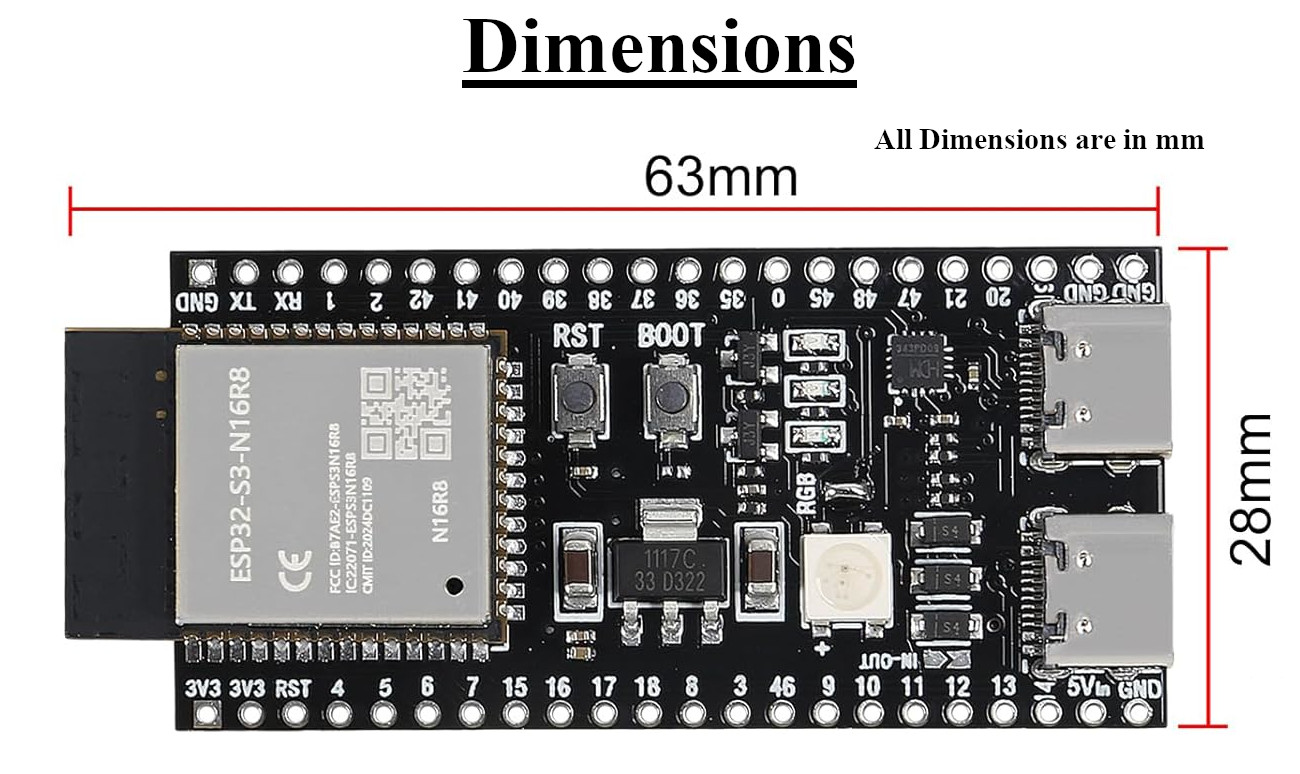
Yes, the board features two rows of standard 2.54mm (0.1") pitch header pins that will slot directly into a standard breadboard, though it is quite wide and may only leave one row of tie-points exposed on one side.
20. Does the ESP32-S3 have a built-in DAC for audio?
No, a major architectural change in the ESP32-S3 is the removal of the internal hardware DACs (Digital-to-Analog Converters) found in the original ESP32. To output high-quality audio, you must use the I2S interface connected to an external DAC chip (like a MAX98357A).
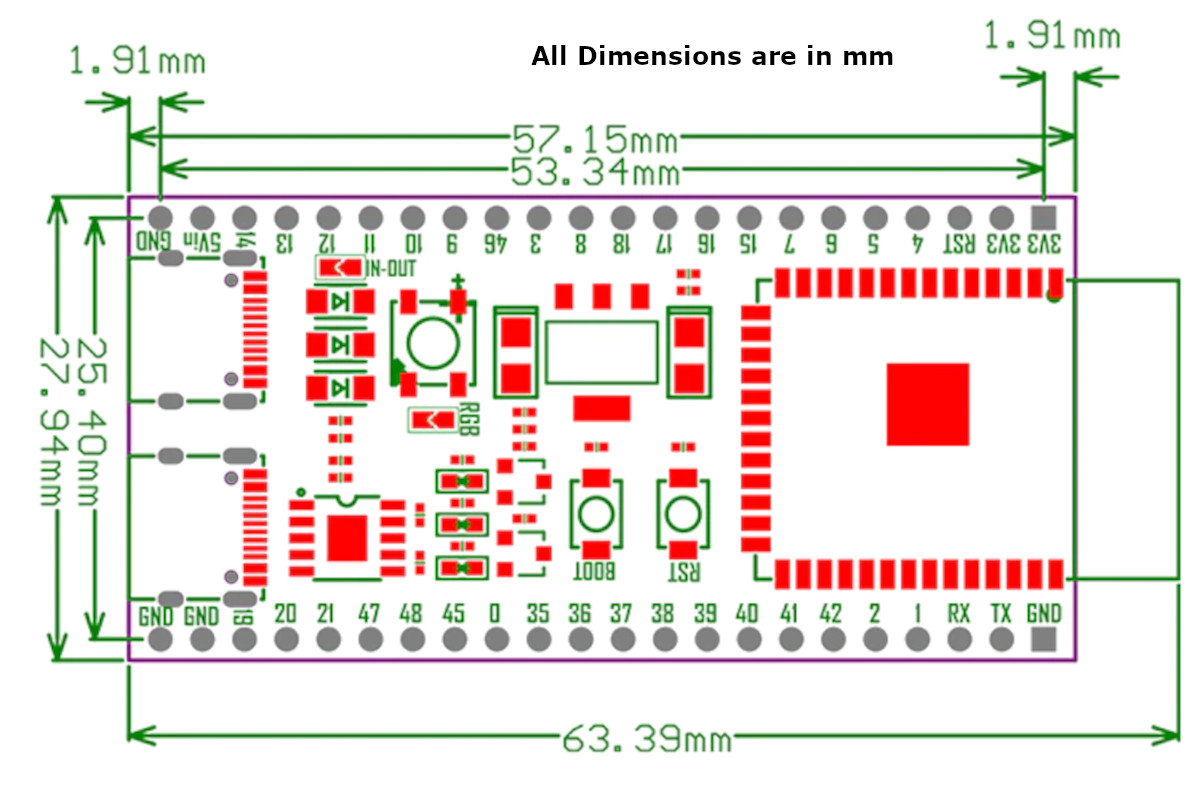
| Technical Details |
Dimensions |
|---|
Probots sells every Electronics Part for your next Project. You can order 10,000+ Electronic Parts Online - Arduino, Raspberry Pi, NodeMCU Development Boards, Sensors, Motors, Motor Drivers, SMPS, Plastic Enclosures etc in India directly on probots.co.in
We delivery electronics components and parts throughout India using standard couriers like Bluedart, Delhivery & India Post.
For order related queries contact -
This item is covered by a warranty of 7 days from the date of delivery, against confirmed manufacturing defects only, as verified by Probots' own testing and investigation. In case of a confirmed defect, we will replace the item — a refund is issued only if a replacement can't be supplied (e.g. discontinued or out of stock). Transit damage or a wrong item received must be reported within 3 days of delivery.
If the product shows signs of misuse, tampering, physical damage, static discharge, liquid or fire damage, use of unapproved chemicals, or has been soldered or physically altered in any way.
China
Probots sells every Electronics Part for your next Project. You can order 10,000+ Electronic Parts Online - Arduino, Raspberry Pi, NodeMCU Development Boards, Sensors, Motors, Motor Drivers, SMPS, Plastic Enclosures etc in India directly on probots.co.in
We offer specialized services for Bulk, Wholesale & B2B Customers like discounted prices, additional shipping options, customised products, etc . Customer with large quantity & regular orders qualify for the specialised discounted rates.
We also offer dedicated sales team to assist you with the order process by providing sales quotations, PI, technical support for choosing products, etc.
Note: Business Orders are processed manually and usually take 1-3 days to process compared to placing the order directly on our website. Please plan your purchases accordingly.
Need Help?
For bulk enquiries contact us by -


Probots Electronics is highly regarded for its highly skilled team and knowledgeable staff who provide expert guidance to ensure customers select the right components for their technical projects. The business maintains a strong reputation for prompt service and reliable support, with many clients praising their quick response times and genuine commitment to customer satisfaction.


A very great place for electronics Such a well maintained shop... Felt good shopping here


Nice

For new developments kit available and they will support till working, and I suggest this place strongly


This place has all the electronic parts students will ever need, staff is friendly and the place is organised.


It was a really nice experience! I was happy to find such a wide range of robotics kits for kids, suitable for different age groups and learning levels.

Excellent experience




Good stuff

Buyed them. But no bargain. Helpful staff.


Available all children school project spears parts like electronics


It was good experience




Staff is very patient and helpful

One of the best place for electronics you will get everything you want! With the best and orginal quality

Very helpful staff and the best place to buy components for projects

Wonderful store with expert service and technically strong people.

Prompt delivery, excellent technical support


Large inventory of electronic components and parts. Well trained service personnel and technicians who can quickly identify and rectify product defect if any. They are a reliable and trustworthy online stores.

A very great place for electronics Such a well maintained shop... Felt good shopping here
Nice
For new developments kit available and they will support till working, and I suggest this place strongly
This place has all the electronic parts students will ever need, staff is friendly and the place is organised.
It was a really nice experience! I was happy to find such a wide range of robotics kits for kids, suitable for different age groups and learning levels.
Excellent experience
Good stuff
Buyed them. But no bargain. Helpful staff.
Available all children school project spears parts like electronics
It was good experience
Staff is very patient and helpful
One of the best place for electronics you will get everything you want! With the best and orginal quality
Very helpful staff and the best place to buy components for projects
Wonderful store with expert service and technically strong people.
Prompt delivery, excellent technical support
Large inventory of electronic components and parts. Well trained service personnel and technicians who can quickly identify and rectify product defect if any. They are a reliable and trustworthy online stores.
● 20 min readVol. 56 | The Heavyweight DC Drivetrain Duel Reliability isn’t optional when you’re designing actuators that need to move actual steel or
Read Article → ● 13 min read
Workbench Vol. 49 🚀 The Project Trifecta: 3 Builds to Start Today We don’t just stock parts; we curate ecosystems. This week’s arrivals are desi
Read Article → ● 18 min read
Vol. 59 | The Battle of the Bite-Sized Boards Picture a project that needs full Linux, networking, and GPIO—but has almost no room for a conventional
Read Article →