













 ● 20 min read
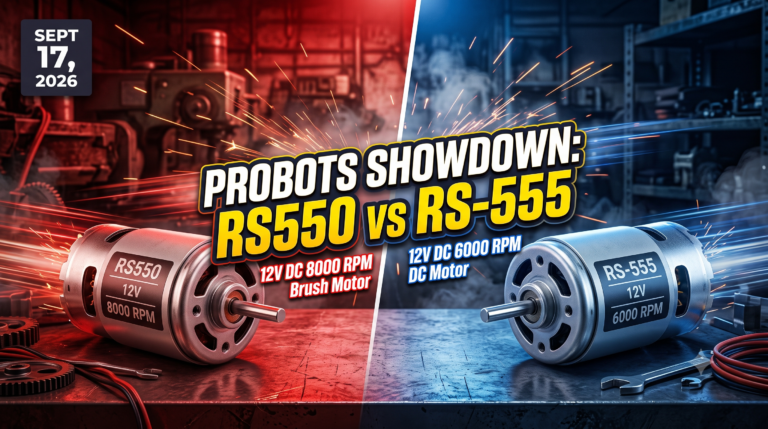
Showdown: RS550 12V DC 8000 vs RS-555 12V DC 6000 RPM DC Motor
Vol. 56 | The Heavyweight DC Drivetrain Duel Reliability isn’t optional when you’re designing actuators that need to move actual steel or
Read Article →
| Bulk Pricing | ||
|---|---|---|
| QTY | Unit Price(Inlc. GST) | |
| 10+ | ₹587.02 ₹ 497.47 + 89.54 GST | |
| 20+ | ₹581.03 ₹ 492.4 + 88.63 GST | |
| 30+ | ₹575.04 ₹ 487.32 + 87.72 GST | |
| 50+ | ₹563.06 ₹ 477.17 + 85.89 GST | |
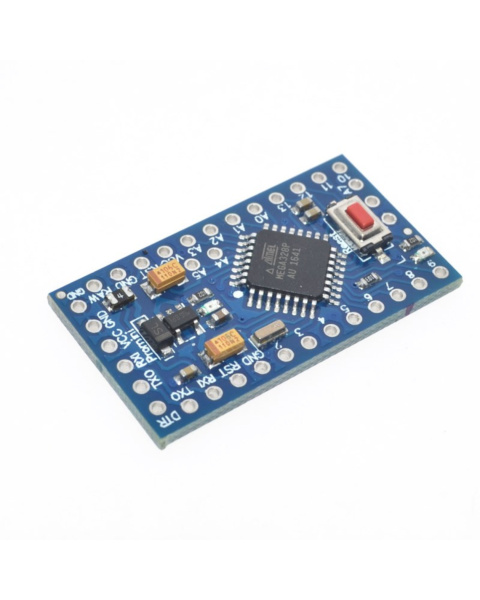
Build custom keyboards, mice, and macro pads! The Pro Micro features the ATmega32U4 chip with built-in USB communication, allowing it to act as a native HID device. Packed with 4 ADCs, 5 PWMs, and operating at a rapid 16MHz on 5V logic.
The Native USB HID Advantage The defining feature of the ATmega32U4 chip is its built-in USB transceiver. When you plug a standard Arduino Uno into a PC, the computer sees a "Virtual COM Port." When you plug the Pro Micro in, you can program the computer to see a standard USB Keyboard, a gaming mouse, or a generic game controller. Using the standard Arduino <Keyboard.h> and <Mouse.h> libraries, you can send keystrokes, combinations (like CTRL+ALT+DEL), or precise X/Y mouse movements directly to the host machine. This makes it the absolute gold standard for DIY peripherals.
Compact yet I/O Heavy Despite its tiny footprint (measuring just 33mm x 18mm), the Pro Micro doesn't compromise on connectivity. It breaks out 18 individual I/O pins. Among these are 5 specialized PWM (Pulse Width Modulation) pins for dimming LEDs or driving servos, and 4 dedicated 10-bit ADC (Analog to Digital Converter) pins for reading potentiometers and environmental sensors. It also features hardware-level I2C, SPI, and UART, ensuring you can connect displays, memory modules, and serial devices effortlessly.
Hardware Serial Independence Because the USB communication is handled internally by the ATmega32U4, the physical RX (Pin 0) and TX (Pin 1) pins are left completely free! This means you get a dedicated, independent Hardware Serial port (Serial1 in code) to communicate with demanding peripherals like GPS modules, Bluetooth transceivers, or MP3 players, without the data traffic interfering with your USB PC connection or code uploads.
The same ATmega32U4 Pro Micro Development Board is also available with a Type C USB Interface. To order click here
Note:
Specifications
Microcontroller: ATmega32U4
Operating Voltage: 5V DC
Clock Speed: 16 MHz
USB Interface: Micro-USB
Digital I/O Pins: 12 (plus 5 PWM)
Analogue Input Pins: 4 dedicated (up to 9 multiplexed)
Flash Memory: 32 KB (of which 4 KB is used by the bootloader)
SRAM: 2.5 KB
EEPROM: 1 KB
Max Current per I/O Pin: 20 mA (recommended), 40 mA (absolute max)
Input Voltage (RAW pin): 6V to 9V recommended (Absolute max 10V)
Dimensions: ~33mm x 18mm
Key Applications and Projects
Custom Mechanical Keyboards: The go-to MCU for hand-wired split keyboards (like the Lily58 or Corne), utilizing the QMK or ZMK firmware ecosystems.
Sim-Racing & Flight Sim Panels: Wiring up arrays of toggle switches, rotary encoders, and sliders to emulate a custom USB joystick controller for games like Microsoft Flight Simulator.
Hardware Password Vaults: Programming the board to automatically type out complex, encrypted passwords at the push of a single physical button.
Automated Testing Jigs: Acting as a rogue mouse to keep a PC awake, or running automated software UI testing by injecting rapid keystrokes.
Unlock New Capabilities (Project Evolution) The Professional Streamer's Macro Deck: Don't pay hundreds of dollars for a commercial stream deck! Evolve your setup by combining this Pro Micro with an array of 12 mechanical cherry MX switches and 2 rotary encoders. Wire the switches in a matrix to the Pro Micro's digital pins. Write a simple Arduino sketch that registers button presses as complex F13-F24 keyboard shortcuts. Map these shortcuts in OBS Studio to switch scenes, mute your mic, or trigger sound effects. Use the rotary encoders for precise, tactile volume control over your desktop audio. Encase it in a 3D-printed housing, and you have a broadcast-grade control surface for a fraction of the cost!
Package Includes:
1 x ATmega32U4 Pro Micro Development Board
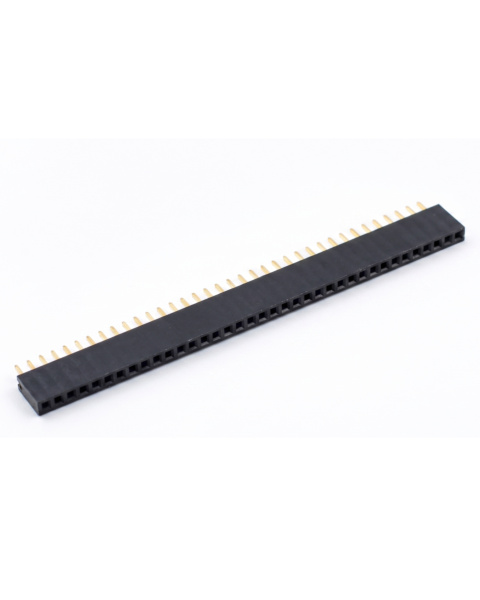
2 x 12-Pin Straight Male Headers (Unsoldered)
Q: What is the difference between the Pro Micro and the Arduino Nano? The Nano uses the ATmega328P chip and requires a separate USB-to-Serial chip to talk to your computer. The Pro Micro uses the ATmega32U4, which has built-in USB communication, allowing it to easily emulate a keyboard or mouse (HID).
Q: What is the difference between the Pro Micro and the Pro Mini? The Pro Mini has absolutely no USB port onboard; you must use an external FTDI programmer to upload code to it. The Pro Micro has a Micro-USB port and can be plugged directly into your PC.
Q: Which board should I select in the Arduino IDE? You can typically select "Arduino Leonardo" or "Arduino Micro". If you have the SparkFun AVR boards package installed, select "SparkFun Pro Micro" and ensure you choose the 5V, 16MHz version.
Q: Do I need to install CH340 or FTDI drivers for this? No. Because it uses native USB, modern operating systems (Windows, Mac, Linux) will automatically recognize it as a generic USB device or an Arduino Leonardo without needing external serial drivers.
Q: What is the difference between the VCC pin and the RAW pin? VCC is a direct connection to the 5V logic line. If powering via USB, this pin outputs 5V. RAW is the input to the onboard voltage regulator. If you are powering the board from a 9V battery, connect the positive wire to RAW, and the board will regulate it down to 5V. Never connect a voltage higher than 5.5V to the VCC pin!
Q: Can I run this board at 3.3V? This specific version is engineered with a 16MHz crystal oscillator and is designed to run at 5V. Running a 16MHz ATmega chip at 3.3V is out of spec and will cause instability. If you are interfacing with 3.3V sensors, you must use logic level shifters.
Q: Why does the COM port disappear and reappear when I upload code? This is normal behavior for the ATmega32U4. Because the USB is handled in software, when the board resets to accept new code, the USB connection drops and a new "bootloader" COM port temporarily appears. The Arduino IDE handles this transition automatically.
Q: I uploaded bad code and now my computer won't recognize the board. Is it bricked? No, it's just stuck. Because your bad code crashed the MCU, the USB software handler also crashed. To fix this: ground the RST (Reset) pin twice in rapid succession (double-tap). This forces the board into bootloader mode for 8 seconds, giving you enough time to upload a blank sketch.
Q: Are the header pins pre-soldered? No. The board comes with two strips of 12-pin male headers that you must solder yourself. This is ideal because it allows you to choose whether to install male headers for breadboarding, or solder wires directly to the pads for a slimmer profile.
Q: Does it have a dedicated Serial port for GPS or Bluetooth modules? Yes! Because USB data does not use pins 0 and 1 on this board, you can use the Serial1 command in Arduino to communicate with UART devices via the RX and TX pins.
Q: Can I emulate a mouse and a keyboard at the same time? Yes. You can include both <Keyboard.h> and <Mouse.h> in your Arduino sketch, allowing the device to move the cursor and type simultaneously.
Q: How many analog pins are available? There are 4 dedicated analog input pins marked as A0, A1, A2, and A3. However, you can also use several digital pins as analog inputs in code (A6, A7, A8, A9, A10) giving you up to 9 total.
Q: How many PWM pins does it have? It features 5 PWM capable pins, marked with a white circle or a silkscreen dot on the back of the board.
Q: What is the maximum voltage I can apply to the RAW pin? While the regulator can technically handle up to 12V, the board is very small and lacks a heatsink. Dissipating that much heat will likely cause the regulator to thermally shut down. It is recommended to keep the RAW input between 6V and 9V.
Q: Can I use this for the QMK or ZMK mechanical keyboard firmware? Yes, the ATmega32U4 Pro Micro is arguably the most widely supported and popular microcontroller for hand-wired mechanical keyboards running QMK firmware.
Q: Does this board have an onboard LED I can control? Yes, it has internal RX and TX LEDs that you can control in software, but they are primarily used to indicate USB traffic.
Q: What type of USB cable do I need? You need a standard Micro-USB cable. Ensure it is a data cable and not a "charge-only" cable, otherwise, your computer will not detect the board.
Q: Can I program this using MicroPython or CircuitPython? No. The ATmega32U4 does not have enough Flash memory or RAM to support Python interpreters. It must be programmed in C/C++ via the Arduino IDE or similar environments.
Probots sells every Electronics Part for your next Project. You can order 10,000+ Electronic Parts Online - Arduino, Raspberry Pi, NodeMCU Development Boards, Sensors, Motors, Motor Drivers, SMPS, Plastic Enclosures etc in India directly on probots.co.in
We delivery electronics components and parts throughout India using standard couriers like Bluedart, Delhivery & India Post.
For order related queries contact -
This item is covered by a warranty of 7 days from the date of delivery, against confirmed manufacturing defects only, as verified by Probots' own testing and investigation. In case of a confirmed defect, we will replace the item — a refund is issued only if a replacement can't be supplied (e.g. discontinued or out of stock). Transit damage or a wrong item received must be reported within 3 days of delivery.
If the product shows signs of misuse, tampering, physical damage, static discharge, liquid or fire damage, use of unapproved chemicals, or has been soldered or physically altered in any way.
China
Probots sells every Electronics Part for your next Project. You can order 10,000+ Electronic Parts Online - Arduino, Raspberry Pi, NodeMCU Development Boards, Sensors, Motors, Motor Drivers, SMPS, Plastic Enclosures etc in India directly on probots.co.in
We offer specialized services for Bulk, Wholesale & B2B Customers like discounted prices, additional shipping options, customised products, etc . Customer with large quantity & regular orders qualify for the specialised discounted rates.
We also offer dedicated sales team to assist you with the order process by providing sales quotations, PI, technical support for choosing products, etc.
Note: Business Orders are processed manually and usually take 1-3 days to process compared to placing the order directly on our website. Please plan your purchases accordingly.
Need Help?
For bulk enquiries contact us by -

Probots Electronics is highly regarded for its highly skilled team and knowledgeable staff who provide expert guidance to ensure customers select the right components for their technical projects. The business maintains a strong reputation for prompt service and reliable support, with many clients praising their quick response times and genuine commitment to customer satisfaction.


A very great place for electronics Such a well maintained shop... Felt good shopping here


Nice

For new developments kit available and they will support till working, and I suggest this place strongly


This place has all the electronic parts students will ever need, staff is friendly and the place is organised.


It was a really nice experience! I was happy to find such a wide range of robotics kits for kids, suitable for different age groups and learning levels.

Excellent experience




Good stuff

Buyed them. But no bargain. Helpful staff.


Available all children school project spears parts like electronics


It was good experience




Staff is very patient and helpful

One of the best place for electronics you will get everything you want! With the best and orginal quality

Very helpful staff and the best place to buy components for projects

Wonderful store with expert service and technically strong people.

Prompt delivery, excellent technical support


Large inventory of electronic components and parts. Well trained service personnel and technicians who can quickly identify and rectify product defect if any. They are a reliable and trustworthy online stores.

A very great place for electronics Such a well maintained shop... Felt good shopping here
Nice
For new developments kit available and they will support till working, and I suggest this place strongly
This place has all the electronic parts students will ever need, staff is friendly and the place is organised.
It was a really nice experience! I was happy to find such a wide range of robotics kits for kids, suitable for different age groups and learning levels.
Excellent experience
Good stuff
Buyed them. But no bargain. Helpful staff.
Available all children school project spears parts like electronics
It was good experience
Staff is very patient and helpful
One of the best place for electronics you will get everything you want! With the best and orginal quality
Very helpful staff and the best place to buy components for projects
Wonderful store with expert service and technically strong people.
Prompt delivery, excellent technical support
Large inventory of electronic components and parts. Well trained service personnel and technicians who can quickly identify and rectify product defect if any. They are a reliable and trustworthy online stores.
● 20 min readVol. 56 | The Heavyweight DC Drivetrain Duel Reliability isn’t optional when you’re designing actuators that need to move actual steel or
Read Article → ● 13 min read
Workbench Vol. 49 🚀 The Project Trifecta: 3 Builds to Start Today We don’t just stock parts; we curate ecosystems. This week’s arrivals are desi
Read Article →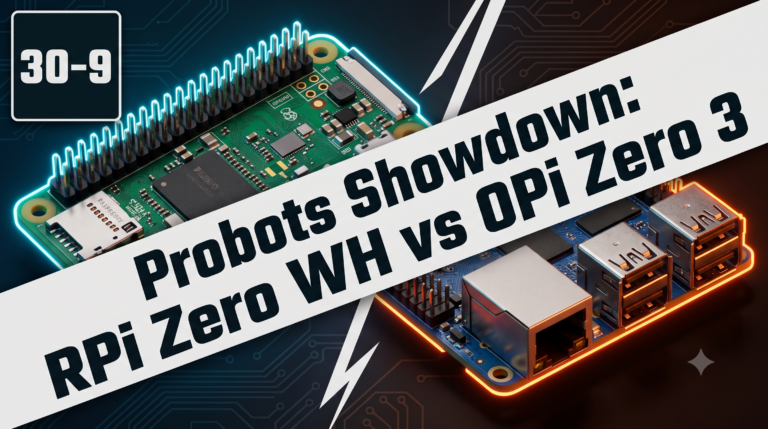 ● 18 min read
Vol. 59 | The Battle of the Bite-Sized Boards Picture a project that needs full Linux, networking, and GPIO—but has almost no room for a conventional
Read Article →