











 ● 20 min read
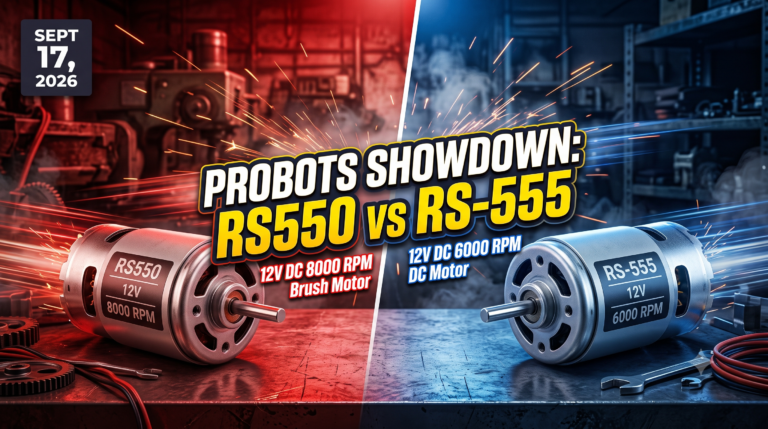
Showdown: RS550 12V DC 8000 vs RS-555 12V DC 6000 RPM DC Motor
Vol. 56 | The Heavyweight DC Drivetrain Duel Reliability isn’t optional when you’re designing actuators that need to move actual steel or
Read Article →
| Bulk Pricing | ||
|---|---|---|
| QTY | Unit Price(Inlc. GST) | |
| 25+ | ₹294.52 ₹ 249.59 + 44.93 GST | |
| 50+ | ₹291.53 ₹ 247.06 + 44.47 GST | |
| 75+ | ₹287.04 ₹ 243.25 + 43.79 GST | |
| 100+ | ₹284.05 ₹ 240.72 + 43.33 GST | |
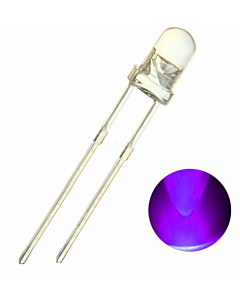
Supercharge your curing and inspection projects! This high-power 3W UV LED emits intense 395nm ultraviolet light. Pre-mounted on a convenient 20mm aluminum star PCB, it is ready to integrate into custom resin curing chambers, counterfeit detectors, and fluorescent displays.
The Power of 395nm UVA Not all ultraviolet light is created equal. This specific LED emits light at a wavelength of 395 nanometers, placing it firmly in the UVA spectrum. This is the optimal "sweet spot" for hobbyist and industrial applications. At 395nm, the light is incredibly effective at initiating the photo-polymerization process required to instantly cure UV resins, LOCA glues, and gel nail polishes. It is also the exact wavelength required to excite fluorescent dyes, making it mandatory for building counterfeit currency detectors, forensic inspection tools, or illuminating uranium glass and fluorescent paints.
The Star PCB Thermal Advantage A raw 3-watt LED chip generates a massive amount of concentrated heat in a footprint smaller than a matchhead. If powered without cooling, it will melt its own internal wire bonds in seconds. This product solves that by pre-soldering the emitter onto a 20mm Aluminum Star PCB. This board acts as a primary heat spreader, pulling thermal energy away from the silicon. Note: While the PCB silkscreen may bear generic commercial branding like "CREE" due to standard factory production templates, this utilizes a high-quality, generic 395nm emitter, providing exceptional value and performance without the premium brand markup.
Driving High-Power LEDs (Constant Current) You cannot simply plug this LED directly into a 5V power supply or a battery! High-power LEDs behave differently than standard electronic components; as they heat up, their internal resistance drops, causing them to draw more and more current until they destroy themselves (thermal runaway). To use this safely, you must drive it with a Constant Current LED Driver (typically rated at 700mA for a 3W LED). This ensures the LED receives exactly the power it needs, regardless of temperature fluctuations.
Note: Components are sourced from various high-quality manufacturers depending on stock. This product does not contain authentic Cree LED brand chips.
Specifications
Power Rating: 3 Watts
Wavelength: 395nm to 400nm (UVA Spectrum)
Forward Voltage (Vf): 3.2V to 3.6V DC
Forward Current (If): ~700mA (Constant Current Required)
Viewing Angle: 120 Degrees (without external lens)
PCB Material: Aluminum Core
PCB Diameter: 20mm (Standard Star base)
Emitting Color: Ultra-Violet (Appears as a deep, visible purple)
Key Applications and Projects
PCB Fabrication: Exposing UV-sensitive photoresist film to etch incredibly precise custom copper traces on raw copper-clad boards.
Fluorescent Inspection: Building custom blacklight flashlights for finding pet stains, identifying scorpions outdoors, or inspecting antique glassware.
Non-Destructive Testing (NDT): Using UV-reactive penetrant dyes to find microscopic cracks in metal mechanical parts and engine blocks.
Aquarium Lighting: Simulating deep-water reef environments to make specific corals fluoresce brightly.
Unlock New Capabilities (Project Evolution) The Automated SLA Resin Curing Chamber: If you own a resin 3D printer, washing and curing your prints in the sun is inconsistent and messy. Build an automated curing oven! Line the inside of a small box with reflective aluminum tape. Mount an array of 6 to 8 of these 3W UV LEDs on aluminum heatsinks around the inside of the box. Wire them in series to a high-voltage Constant Current boost driver. Use an Arduino Nano and a MOSFET to control the driver, and attach a small slow-rpm DC motor to the floor to act as a turntable. You can now place your sticky resin print inside, hit a button, and the Arduino will bathe it in 360-degree, high-intensity 395nm UV light for exactly 3 minutes, resulting in a perfectly hardened, tack-free part every single time!
1 x 3W 395nm Ultraviolet LED (Pre-mounted on 20mm Aluminum Star PCB)

Q: What does 395nm mean? 395nm refers to the wavelength of the light emitted. The human eye can generally see from about 400nm (violet) up to 700nm (red). 395nm is just below human vision in the Ultraviolet-A (UVA) spectrum, commonly referred to as "blacklight."
Q: Why does the light look intensely purple if it is supposed to be invisible UV? While the peak emission is at 395nm (mostly invisible to us), the LED still produces a small "tail" of light that bleeds into the 400nm-410nm range, which our eyes perceive as a very bright, deep violet.
Q: Is this safe for my skin and eyes? While 395nm UVA is significantly safer than UVC (which is used for sterilization), you should never look directly into a 3W UV LED. Prolonged exposure can cause eye strain or damage. UV-blocking safety glasses are highly recommended when working with these LEDs.
Q: Will this kill bacteria and viruses? No. Sterilization and germicidal applications require UVC light (typically around 254nm or 275nm), which destroys DNA. This is a 395nm UVA light, which is meant for curing and fluorescence, not sterilization.
Q: Can I use this to cure UV resin and UV glues? Yes! 395nm is the standard wavelength used to activate the photo-initiators in almost all commercially available UV craft resins, LOCA screen glues, and gel nail polishes.
Q: Why does the board say "CREE" if it isn't an authentic Cree chip? The aluminum star PCBs are manufactured in massive batches using generic silkscreen templates, which often include well-known branding. The LED diode soldered to it is a generic, high-quality emitter, providing excellent performance at a fraction of the cost of a branded chip.
Q: What is the forward voltage (Vf)? The forward voltage drop for this UV LED is typically between 3.2V and 3.6V DC.
Q: What is the maximum current I can run through it? To achieve the full 3 Watts of power, it should be driven at a constant current of 700mA (0.7 Amps).
Q: Can I connect this directly to a 3.7V Lithium-Ion battery? No. A fully charged Li-ion battery rests at 4.2V. If you connect this directly, the LED will draw too much current and burn out. You must use a current-limiting resistor or, ideally, a constant current driver circuit.
Q: Can I hook this up to an Arduino 5V pin? Absolutely not. The Arduino can only supply about 20mA to 40mA per pin. This LED requires 700mA. Attempting to power it directly will instantly destroy your Arduino's microcontroller. You must use a MOSFET or a relay to switch the power from a dedicated power supply.
Q: Does the aluminum star board mean I don't need a heatsink? False! The 20mm star board is only a heat spreader. If you run this LED at a full 3W for more than a few seconds, it will still overheat. You MUST mount the star board onto a larger, finned aluminum heatsink to use it continuously.
Q: How do I attach the star board to a larger heatsink? You should apply a very thin layer of thermal paste to the back of the star board and use small screws to secure it through the semi-circular notches on the edges. Alternatively, you can use thermal adhesive plaster/glue for a permanent bond.
Q: How do I solder wires to this? Because the aluminum board is literally designed to pull heat away, it will cool down your soldering iron very quickly. You need a powerful iron (40W+) with a large tip. Pre-tin the positive and negative pads quickly with high heat, and then attach your wires.
Q: Can I dim this UV LED? Yes, but you cannot dim it by simply lowering the voltage. You must use a Constant Current driver that supports PWM (Pulse Width Modulation) dimming, which turns the LED on and off thousands of times a second to reduce the perceived brightness.
Q: Can I wire multiple LEDs together? Yes. The most efficient way is to wire them in series. If you wire three LEDs in series, you will need a driver capable of supplying 700mA at around 10.5V to 11V (3 x 3.5V).
Q: What is the beam angle? The bare LED on the star board has a wide viewing angle of approximately 120 degrees, producing a wide flood of UV light.
Q: Can I focus the light into a tight beam? Yes! The 20mm star board is specifically sized to accept standard LED collimator lenses. You can purchase a 20mm lens (e.g., 5-degree or 15-degree) and a plastic housing that snaps directly over the LED to create a focused UV spotlight.
Q: Is this LED waterproof? No, the electrical contacts and the LED dome are completely exposed. If you are using it near water (like aquarium lighting), it must be installed inside a sealed, waterproof enclosure.
Q: What gauge wire should I use for the connections? Because it draws nearly an amp of current, standard 22 AWG or 24 AWG stranded hookup wire is perfectly suitable for short runs.
Probots sells every Electronics Part for your next Project. You can order 10,000+ Electronic Parts Online - Arduino, Raspberry Pi, NodeMCU Development Boards, Sensors, Motors, Motor Drivers, SMPS, Plastic Enclosures etc in India directly on probots.co.in
We delivery electronics components and parts throughout India using standard couriers like Bluedart, Delhivery & India Post.
For order related queries contact -
This item is covered by a warranty of 7 days from the date of delivery, against confirmed manufacturing defects only, as verified by Probots' own testing and investigation. In case of a confirmed defect, we will replace the item — a refund is issued only if a replacement can't be supplied (e.g. discontinued or out of stock). Transit damage or a wrong item received must be reported within 3 days of delivery.
If the product shows signs of misuse, tampering, physical damage, static discharge, liquid or fire damage, use of unapproved chemicals, or has been soldered or physically altered in any way.
China
Probots sells every Electronics Part for your next Project. You can order 10,000+ Electronic Parts Online - Arduino, Raspberry Pi, NodeMCU Development Boards, Sensors, Motors, Motor Drivers, SMPS, Plastic Enclosures etc in India directly on probots.co.in
We offer specialized services for Bulk, Wholesale & B2B Customers like discounted prices, additional shipping options, customised products, etc . Customer with large quantity & regular orders qualify for the specialised discounted rates.
We also offer dedicated sales team to assist you with the order process by providing sales quotations, PI, technical support for choosing products, etc.
Note: Business Orders are processed manually and usually take 1-3 days to process compared to placing the order directly on our website. Please plan your purchases accordingly.
Need Help?
For bulk enquiries contact us by -
Probots Electronics is highly regarded for its highly skilled team and knowledgeable staff who provide expert guidance to ensure customers select the right components for their technical projects. The business maintains a strong reputation for prompt service and reliable support, with many clients praising their quick response times and genuine commitment to customer satisfaction.


A very great place for electronics Such a well maintained shop... Felt good shopping here


Nice

For new developments kit available and they will support till working, and I suggest this place strongly


This place has all the electronic parts students will ever need, staff is friendly and the place is organised.


It was a really nice experience! I was happy to find such a wide range of robotics kits for kids, suitable for different age groups and learning levels.

Excellent experience




Good stuff

Buyed them. But no bargain. Helpful staff.


Available all children school project spears parts like electronics


It was good experience




Staff is very patient and helpful

One of the best place for electronics you will get everything you want! With the best and orginal quality

Very helpful staff and the best place to buy components for projects

Wonderful store with expert service and technically strong people.

Prompt delivery, excellent technical support


Large inventory of electronic components and parts. Well trained service personnel and technicians who can quickly identify and rectify product defect if any. They are a reliable and trustworthy online stores.

A very great place for electronics Such a well maintained shop... Felt good shopping here
Nice
For new developments kit available and they will support till working, and I suggest this place strongly
This place has all the electronic parts students will ever need, staff is friendly and the place is organised.
It was a really nice experience! I was happy to find such a wide range of robotics kits for kids, suitable for different age groups and learning levels.
Excellent experience
Good stuff
Buyed them. But no bargain. Helpful staff.
Available all children school project spears parts like electronics
It was good experience
Staff is very patient and helpful
One of the best place for electronics you will get everything you want! With the best and orginal quality
Very helpful staff and the best place to buy components for projects
Wonderful store with expert service and technically strong people.
Prompt delivery, excellent technical support
Large inventory of electronic components and parts. Well trained service personnel and technicians who can quickly identify and rectify product defect if any. They are a reliable and trustworthy online stores.
● 20 min readVol. 56 | The Heavyweight DC Drivetrain Duel Reliability isn’t optional when you’re designing actuators that need to move actual steel or
Read Article → ● 13 min read
Workbench Vol. 49 🚀 The Project Trifecta: 3 Builds to Start Today We don’t just stock parts; we curate ecosystems. This week’s arrivals are desi
Read Article → ● 18 min read
Vol. 59 | The Battle of the Bite-Sized Boards Picture a project that needs full Linux, networking, and GPIO—but has almost no room for a conventional
Read Article →