








 ● 20 min read
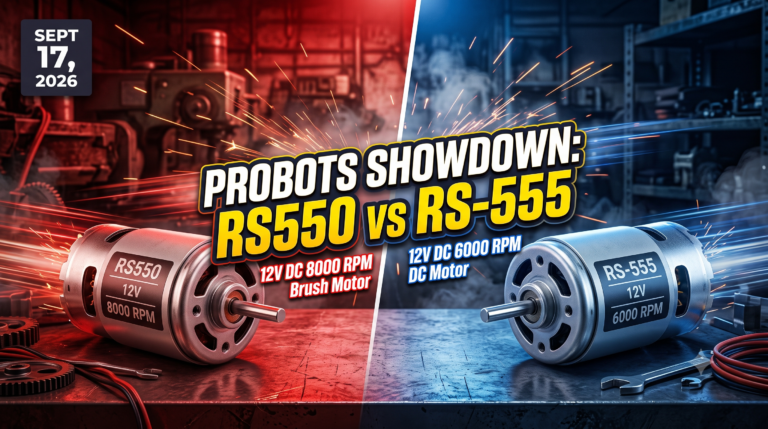
Showdown: RS550 12V DC 8000 vs RS-555 12V DC 6000 RPM DC Motor
Vol. 56 | The Heavyweight DC Drivetrain Duel Reliability isn’t optional when you’re designing actuators that need to move actual steel or
Read Article →
| Bulk Pricing | ||
|---|---|---|
| QTY | Unit Price(Inlc. GST) | |
| 25+ | ₹97.02 ₹ 82.22 + 14.8 GST | |
| 50+ | ₹96.03 ₹ 81.38 + 14.65 GST | |
| 75+ | ₹95.04 ₹ 80.54 + 14.5 GST | |
| 100+ | ₹93.06 ₹ 78.86 + 14.19 GST | |
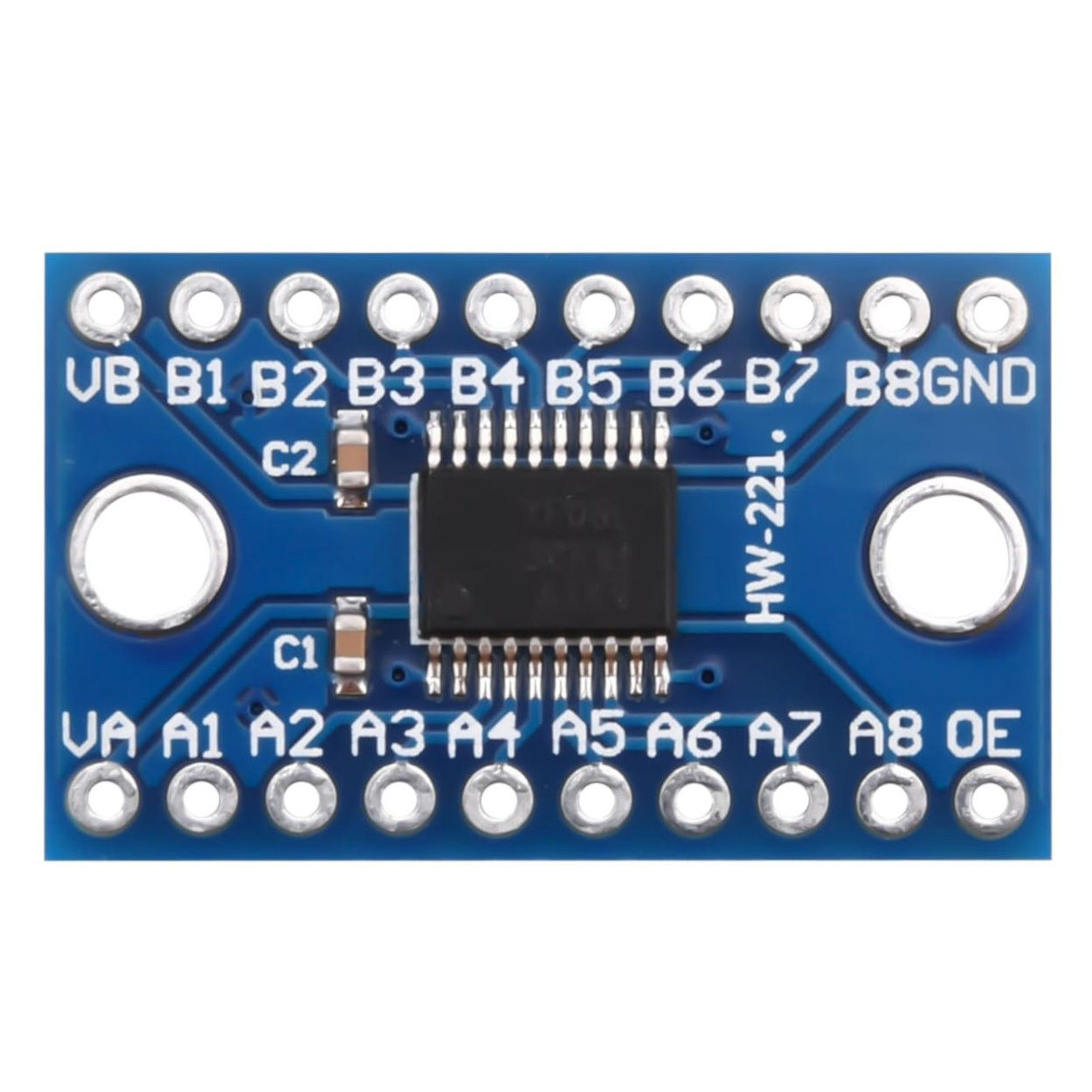
Safely bridge 3.3V and 5V devices! The TXS0108E is a high-speed, 8-channel bidirectional logic-level converter. Features auto-direction sensing and blazing fast data rates, perfect for bridging SPI, I2C, and UART between modern 3.3V microcontrollers and 5V sensors.
Auto-Direction Sensing Architecture Traditional level shifters require a dedicated "DIR" (Direction) pin to tell the chip whether data is flowing from A-to-B or B-to-A. The TXS0108E completely eliminates this hassle. It utilizes an advanced auto-direction sensing architecture on all 8 channels. This means it dynamically detects which side is transmitting and which side is receiving on a microsecond basis. You can mix and match inputs and outputs across the 8 pins without reconfiguring the hardware, making it the most versatile shifter on the market.
High-Speed Data Capabilities Standard MOSFET-based level shifters (like the BSS138) are excellent for slow protocols like I2C, but they choke and distort waveforms when trying to pass high-speed SPI or SD-card data. The TXS0108E is built for speed. When used in a push-pull application (like SPI or UART), it can handle data rates up to an incredible 110 Mbps. When used in open-drain applications (like I2C), it comfortably manages up to 1.2 Mbps, ensuring your high-speed sensors never miss a clock cycle.
The Golden Rule: VCCA vs VCCB To wire this module correctly, you must follow the cardinal rule of the TXS0108E: VCCA must always be a lower (or equal) voltage than VCCB. * Port A (VA / VCCA): Connect to your low-voltage logic power supply (e.g., 1.8V or 3.3V).
Port B (VB / VCCB): Connect to your high-voltage logic power supply (e.g., 5V).
OE (Output Enable): Connect to the VCCA side logic. Pulling this pin HIGH enables the translation. Pulling it LOW forces all pins into a high-impedance state, safely isolating both circuits.
Specifications
Logic IC: TXS0108E
Channel Count: 8 Independent Bidirectional Channels
Low-Voltage Side (VA): 1.2V to 3.6V DC
High-Voltage Side (VB): 1.65V to 5.5V DC
VCCA to VCCB Constraint: VCCA must be <= VCCB
Max Data Rate (Push-Pull): 110 Mbps
Max Data Rate (Open-Drain): 1.2 Mbps
Output Enable (OE): Active High (Referenced to VCCA)
Pin Spacing: Standard 2.54mm (0.1 inch) pitch
Dimensions: 26mm x 16mm
Key Applications and Projects
Raspberry Pi Interfacing: Protecting the Pi's fragile 3.3V GPIO pins when reading data from standard 5V Arduino-ecosystem ultrasonic sensors or relays.
SD Card Readers: Stepping down standard 5V microcontroller logic to the strict 3.3V logic required by MicroSD cards for high-speed SPI data logging.
Complex I2C/SPI Buses: Acting as a central hub to safely daisy-chain 1.8V, 3.3V, and 5V devices onto the same communication bus.
Unlock New Capabilities (Project Evolution) The 32-Bit Arcade Cabinet Brain Swap: Are you restoring a vintage 1980s arcade cabinet? The original mechanical coin mechs, heavy-duty joysticks, and illuminated buttons all operate on harsh 5V to 12V logic pulses. If you try to wire these directly into a modern 3.3V Raspberry Pi running RetroPie, you will destroy the Pi instantly. Evolve your restoration! By routing all those legacy 5V signals through the B-side of the TXS0108E, the module will flawlessly step them down to clean, safe 3.3V signals on the A-side. Your modern microcontroller can now read decades-old hardware with zero latency and absolute safety!
1 x TXS0108E 8-Channel Logic Level Converter Module
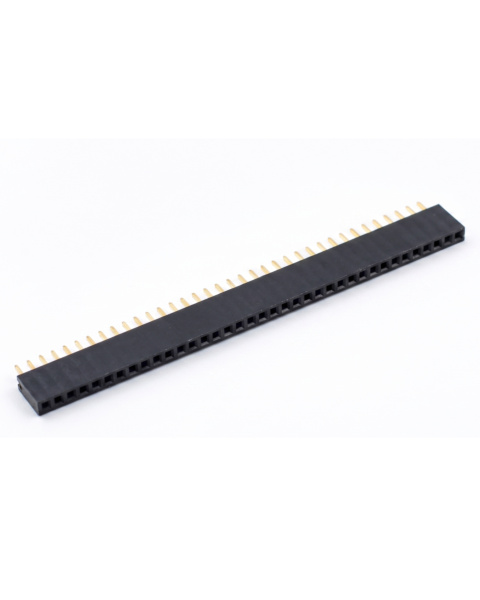
2 x 10-Pin Straight Male Headers (Unsoldered)

1. What does this module do? It acts as a digital translator between two electronic devices that speak at different voltages. It takes a low-voltage signal (like 3.3V) and boosts it to a high voltage (like 5V), or takes a 5V signal and safely steps it down to 3.3V.
2. What does "Bidirectional" mean? It means data can flow in both directions simultaneously on any channel. It automatically senses if a 3.3V device is sending data to a 5V device, or if a 5V device is sending data back to the 3.3V device, without needing a dedicated "direction switch" pin.
3. What is the difference between Port A (VA) and Port B (VB)? Port A (VA) is the low-voltage side. Port B (VB) is the high-voltage side. VCCA must always be a lower voltage than VCCB.
4. Can I hook up 5V to Port A and 3.3V to Port B? No! Doing this violates the physical architecture of the TXS0108E chip. Port A must always be the lower voltage side. Reversing this will cause the module to fail or overheat.
5. What is the "OE" pin for? OE stands for Output Enable. To make the module work, this pin must be pulled HIGH (connected to your VCCA voltage). If you pull it LOW (to Ground), the chip disables all pins, effectively disconnecting the two sides from each other.
6. Do I need to connect grounds on both sides? Yes. You must connect the ground from your 3.3V circuit to the GND pin on Port A, and the ground from your 5V circuit to the GND pin on Port B to establish a common electrical reference.
7. Does this work with the I2C protocol? Yes, it fully supports open-drain protocols like I2C (SDA/SCL) and will easily handle the standard 100kHz and 400kHz speeds.
8. Does this work with the SPI protocol? Yes, this is where the TXS0108E excels. Because it can handle push-pull speeds up to 110 Mbps, it is ideal for high-speed SPI interfaces like SD card readers and TFT displays.
9. Does it work with UART (Serial TX/RX)? Yes, it works flawlessly for stepping down 5V UART signals to safely communicate with a 3.3V ESP8266 or ESP32.
10. Is it compatible with a Raspberry Pi? Absolutely. It is the perfect companion for a Raspberry Pi, allowing its fragile 3.3V GPIO pins to safely interact with standard 5V modules.
11. Can I use this with 1.8V sensors? Yes. The VCCA side supports voltages down to 1.2V. You can supply 1.8V to VA, and 3.3V to VB, to bridge a 1.8V sensor to a 3.3V microcontroller.
12. Can this module step down analog signals (like audio or potentiometers)? No. This is strictly a digital logic level converter. It only understands HIGH (1) and LOW (0) states. It cannot translate variable analog voltages.
13. Does this chip have internal pull-up resistors? Yes, the TXS0108E features integrated pull-up resistors (typically around 40k Ohm) on all data pins.
14. Can I use this to power a 5V motor or relay directly? No. This module is designed to transfer data signals at very low currents (a few milliamps). It is not a power supply and will burn out immediately if you try to use a data pin to drive a motor or heavy load.
15. Why use this instead of a standard 4-channel BSS138 converter? The standard BSS138 converter is built using simple MOSFETs and external resistors. It is quite slow and struggles with fast SPI data. The TXS0108E is an active IC designed specifically for high-speed data integrity.
16. Are the header pins pre-soldered? No. The module ships with the two 10-pin male headers loose in the package. You will need a soldering iron to attach them to the board.
17. Is it breadboard compatible? Yes, once you solder the included headers onto the module, the 2.54mm pitch pins will plug perfectly into any standard prototyping breadboard.
18. What should I do if the module isn't translating signals? First, ensure that VCCA <= VCCB. Second, ensure that both Grounds are connected. Third, explicitly verify that you have tied the OE (Output Enable) pin to VCCA. If OE is floating or LOW, the module will not transmit.
19. Can I leave unused channels disconnected? Yes, you do not need to use all 8 channels. Unused channels can safely be left floating (unconnected).
20. Will adding this module introduce delay/latency into my circuit? Technically yes, as the signal must pass through silicon gates, but the propagation delay is measured in nanoseconds (billionths of a second). For microcontroller applications like Arduino or Raspberry Pi, this delay is completely imperceptible and irrelevant.

Probots sells every Electronics Part for your next Project. You can order 10,000+ Electronic Parts Online - Arduino, Raspberry Pi, NodeMCU Development Boards, Sensors, Motors, Motor Drivers, SMPS, Plastic Enclosures etc in India directly on probots.co.in
We delivery electronics components and parts throughout India using standard couriers like Bluedart, Delhivery & India Post.
For order related queries contact -
This item is covered by a warranty of 7 days from the date of delivery, against confirmed manufacturing defects only, as verified by Probots' own testing and investigation. In case of a confirmed defect, we will replace the item — a refund is issued only if a replacement can't be supplied (e.g. discontinued or out of stock). Transit damage or a wrong item received must be reported within 3 days of delivery.
If the product shows signs of misuse, tampering, physical damage, static discharge, liquid or fire damage, use of unapproved chemicals, or has been soldered or physically altered in any way.
China
Probots sells every Electronics Part for your next Project. You can order 10,000+ Electronic Parts Online - Arduino, Raspberry Pi, NodeMCU Development Boards, Sensors, Motors, Motor Drivers, SMPS, Plastic Enclosures etc in India directly on probots.co.in
We offer specialized services for Bulk, Wholesale & B2B Customers like discounted prices, additional shipping options, customised products, etc . Customer with large quantity & regular orders qualify for the specialised discounted rates.
We also offer dedicated sales team to assist you with the order process by providing sales quotations, PI, technical support for choosing products, etc.
Note: Business Orders are processed manually and usually take 1-3 days to process compared to placing the order directly on our website. Please plan your purchases accordingly.
Need Help?
For bulk enquiries contact us by -
Probots Electronics is highly regarded for its highly skilled team and knowledgeable staff who provide expert guidance to ensure customers select the right components for their technical projects. The business maintains a strong reputation for prompt service and reliable support, with many clients praising their quick response times and genuine commitment to customer satisfaction.


A very great place for electronics Such a well maintained shop... Felt good shopping here


Nice

For new developments kit available and they will support till working, and I suggest this place strongly


This place has all the electronic parts students will ever need, staff is friendly and the place is organised.


It was a really nice experience! I was happy to find such a wide range of robotics kits for kids, suitable for different age groups and learning levels.

Excellent experience




Good stuff

Buyed them. But no bargain. Helpful staff.


Available all children school project spears parts like electronics


It was good experience




Staff is very patient and helpful

One of the best place for electronics you will get everything you want! With the best and orginal quality

Very helpful staff and the best place to buy components for projects

Wonderful store with expert service and technically strong people.

Prompt delivery, excellent technical support


Large inventory of electronic components and parts. Well trained service personnel and technicians who can quickly identify and rectify product defect if any. They are a reliable and trustworthy online stores.

A very great place for electronics Such a well maintained shop... Felt good shopping here
Nice
For new developments kit available and they will support till working, and I suggest this place strongly
This place has all the electronic parts students will ever need, staff is friendly and the place is organised.
It was a really nice experience! I was happy to find such a wide range of robotics kits for kids, suitable for different age groups and learning levels.
Excellent experience
Good stuff
Buyed them. But no bargain. Helpful staff.
Available all children school project spears parts like electronics
It was good experience
Staff is very patient and helpful
One of the best place for electronics you will get everything you want! With the best and orginal quality
Very helpful staff and the best place to buy components for projects
Wonderful store with expert service and technically strong people.
Prompt delivery, excellent technical support
Large inventory of electronic components and parts. Well trained service personnel and technicians who can quickly identify and rectify product defect if any. They are a reliable and trustworthy online stores.
● 20 min readVol. 56 | The Heavyweight DC Drivetrain Duel Reliability isn’t optional when you’re designing actuators that need to move actual steel or
Read Article → ● 13 min read
Workbench Vol. 49 🚀 The Project Trifecta: 3 Builds to Start Today We don’t just stock parts; we curate ecosystems. This week’s arrivals are desi
Read Article → ● 18 min read
Vol. 59 | The Battle of the Bite-Sized Boards Picture a project that needs full Linux, networking, and GPIO—but has almost no room for a conventional
Read Article →