




















 ● 20 min read
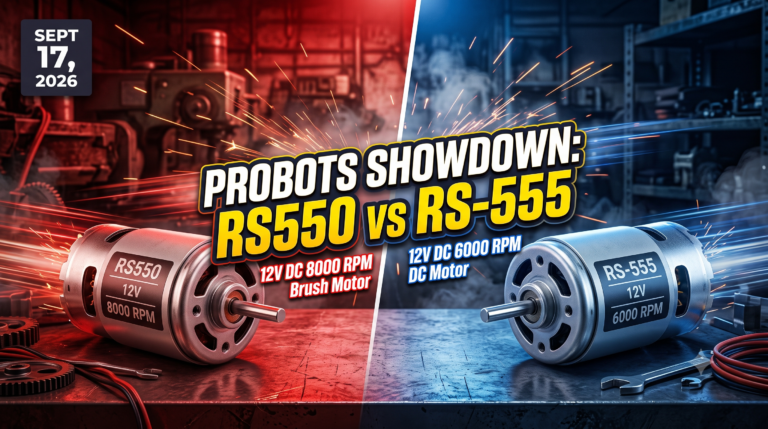
Showdown: RS550 12V DC 8000 vs RS-555 12V DC 6000 RPM DC Motor
Vol. 56 | The Heavyweight DC Drivetrain Duel Reliability isn’t optional when you’re designing actuators that need to move actual steel or
Read Article →
| Bulk Pricing | ||
|---|---|---|
| QTY | Unit Price(Inlc. GST) | |
| 2+ | ₹2,792.02 ₹ 2366.12 + 425.9 GST | |
| 4+ | ₹2,763.53 ₹ 2341.97 + 421.55 GST | |
| 6+ | ₹2,735.04 ₹ 2317.83 + 417.21 GST | |
| 10+ | ₹2,678.06 ₹ 2269.54 + 408.52 GST | |
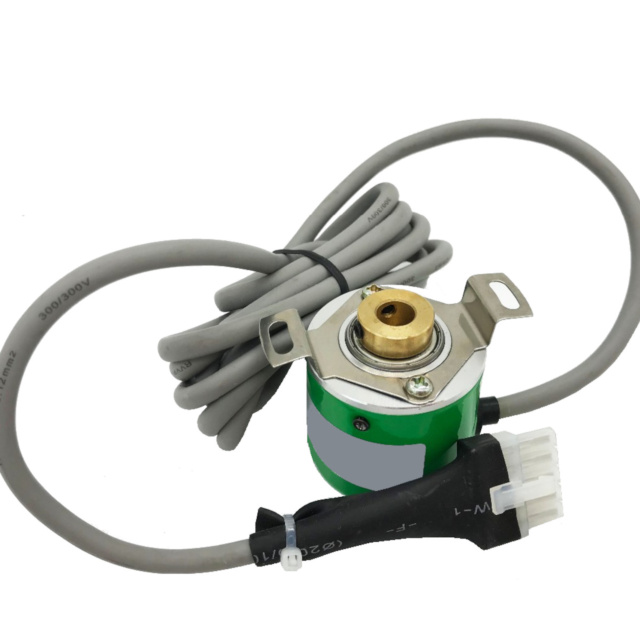
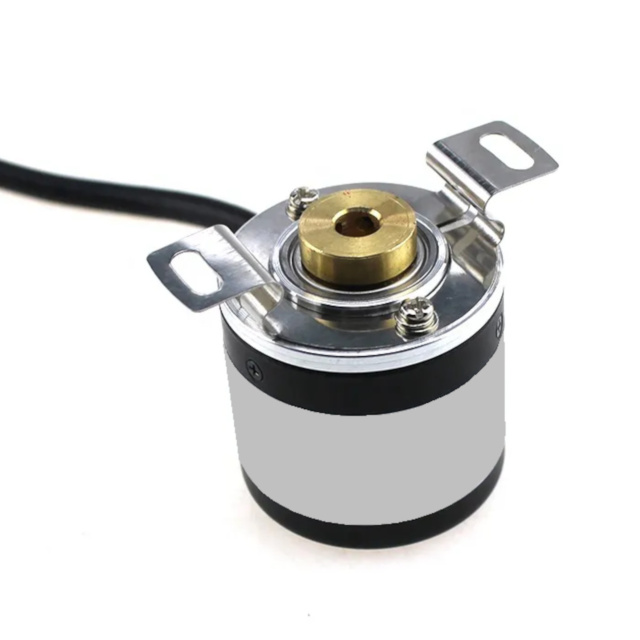
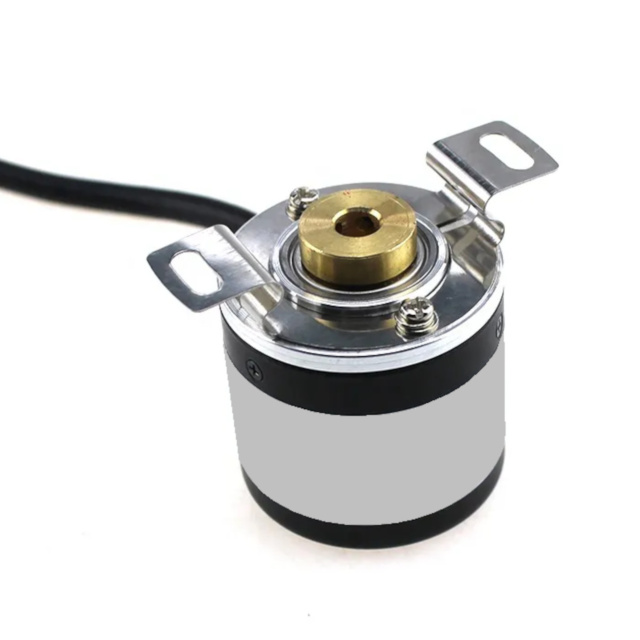
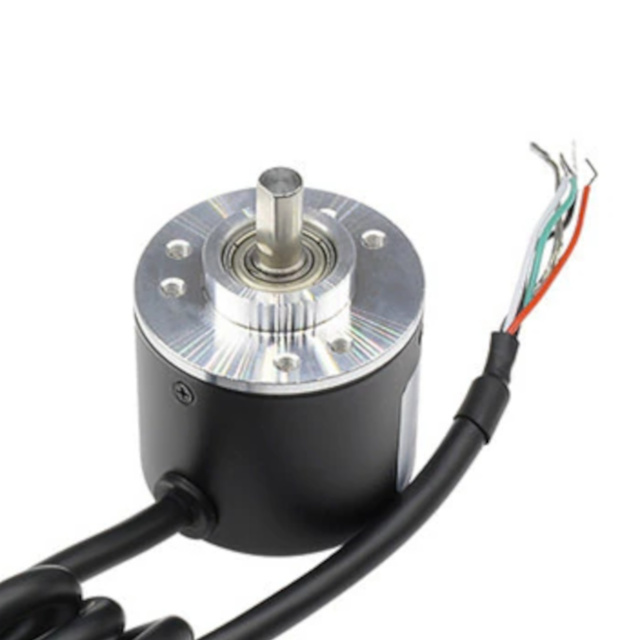
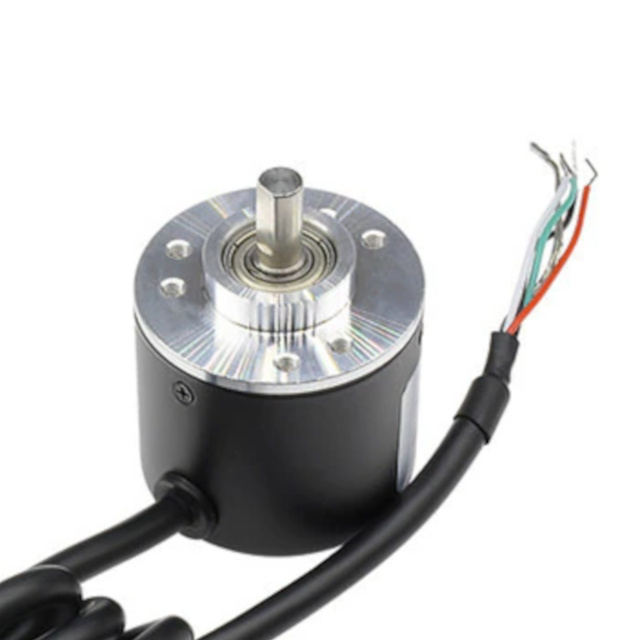
Achieve zero-backlash precision! This ultra-compact hollow-shaft encoder slides directly over an 8mm shaft, locking via a dual-screw clamping collar. Features 1000 Pulses Per Revolution, an anti-rotation tether bracket, and a versatile 5-24V NPN output.
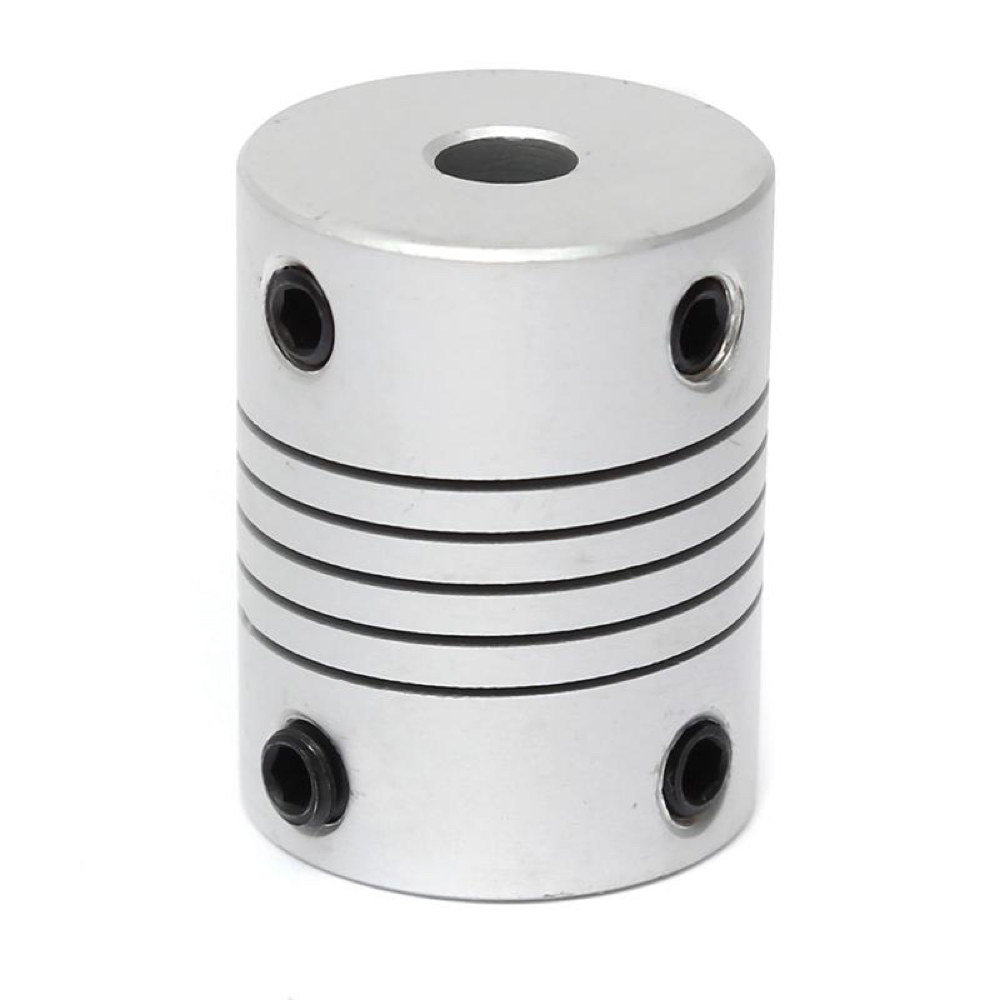 5mm to 8mm Flexible Coupler for 3D Printer CNC Shaft Metal ₹149.00 5mm to 5mm Flexible Coupler for 3D Printer CNC Shaft Metal ₹149.00
  Isolator Cam Operated Rotary Selector Switch S6 B13 6A ON - Off SALZER (L&T) ₹329.00
 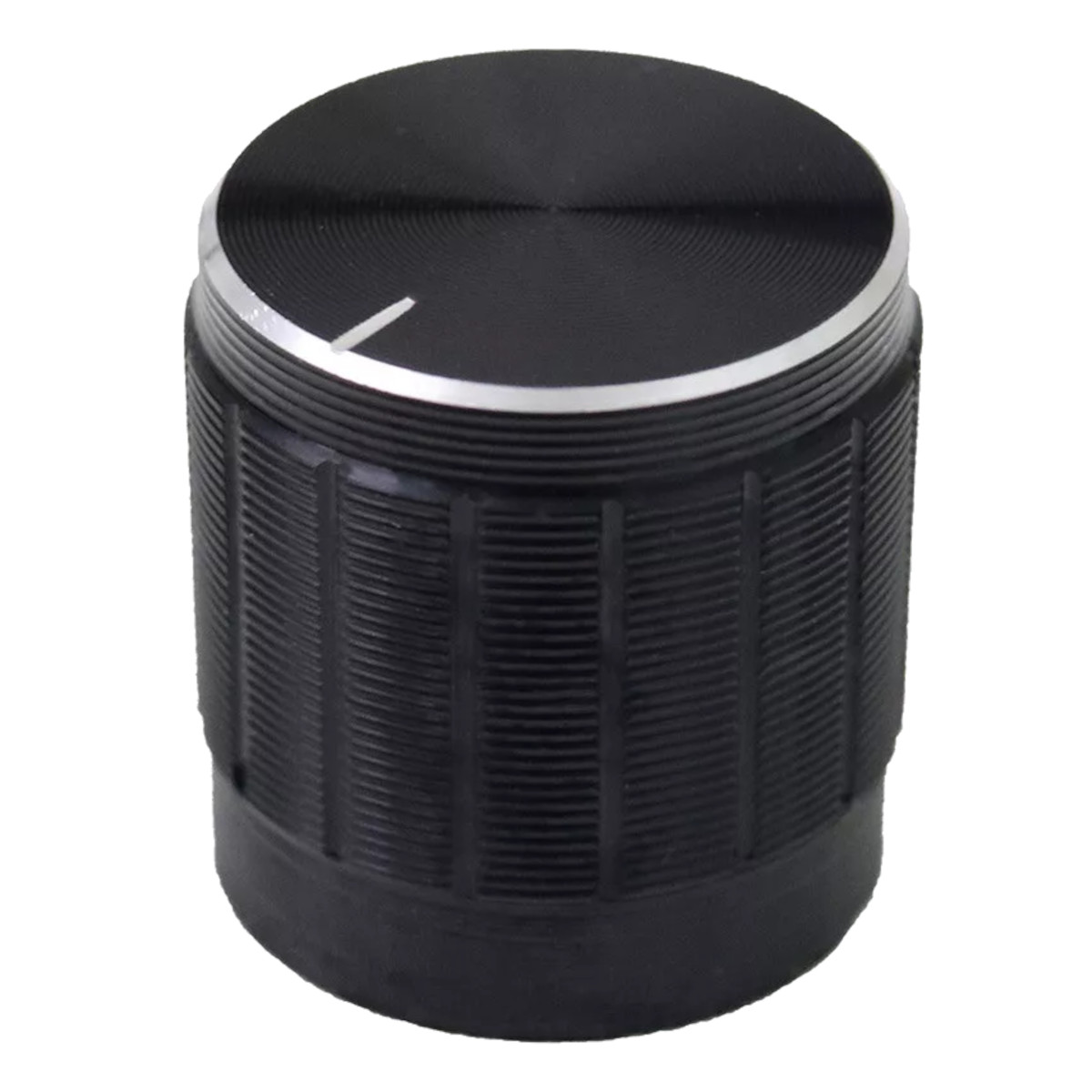 15mm Black Aluminum-Style Potentiometer Knob - Push-Fit for 6mm Knurled/Splined Shaft ₹49.00
  GROW R503 Capacitive Fingerprint Sensor Module UART IP65 ₹2,999.00
 The Hollow Shaft "Zero-Backlash" Advantage Standard solid-shaft encoders require an external flexible coupling to attach to a motor. Couplings add physical length to your assembly and can introduce microscopic "backlash" (slop) when rapidly changing directions. This Hollow Shaft (Blind Bore) Encoder bypasses those issues entirely. The center of the sensor is a precision-machined 8mm hole. You simply slide the encoder directly onto the back shaft of your stepper motor and tighten the two M3 set screws on the metal clamping collar. This creates a perfectly rigid, ultra-compact assembly.
High-Resolution AB Phase Tracking Inside the compact 38mm diameter housing is an advanced optical disk that generates exactly 1000 Pulses Per Revolution (PPR). It outputs these signals over two separate channels (Phase A and Phase B) that are slightly offset from one another (quadrature). By reading which phase triggers first, your microcontroller can instantly determine the exact direction of rotation. Using 4X hardware decoding on these two phases, you can achieve an incredible 4000 measurable steps per revolution, allowing for microscopic positional tracking.
Anti-Rotation Leaf-Spring Bracket Because the main bearing of the encoder sits directly on a spinning motor shaft, you need a mechanism to prevent the outer black housing from spinning along with it. This is handled by the flexible metal "wings" attached to the faceplate. This flexible tether bracket is bolted to your machine's stationary frame. It prevents the housing from rotating but has just enough "give" to absorb minor vibrations and shaft runout, protecting the delicate internal glass optical disk from being shattered by radial loads.
NPN Open-Collector Output This sensor utilizes an NPN (Sinking) output and operates on a wide input voltage of 5V to 24V DC. In an NPN open-collector setup, the encoder's signal wires act as switches connected to Ground. When a pulse triggers, it pulls the signal line down to 0V. To read this with a microcontroller, you must provide a "Pull-Up Resistor" (connecting the signal line to your logic voltage, like 5V). This highly versatile design allows you to power the encoder with a robust 24V industrial supply, while safely reading the 0V-to-5V toggle on a standard Arduino!
Resolution: 1000 PPR (Pulses Per Revolution)
Operating Voltage: 5V to 24V DC
Output Type: NPN Open-Collector (Sinking)
Signal Output: Incremental AB Phase (Quadrature)
Shaft Type: Blind Hollow Shaft (Bore)
Bore Diameter: 8mm
Fixing Method: Clamping Collar with 2x M3 Set Screws
Body Diameter: 38mm
Body Length: 40mm
Anti-Rotation: Flexible Leaf-Spring Bracket (46mm bolt arc)
Closed-Loop 3D Printing: Sliding this directly onto the rear shaft of your NEMA 17 or NEMA 23 stepper motors to ensure your printer never loses a step during high-speed, 24-hour prints.
Automated Coil Winders: Mounting to the spool axis to count the exact length and number of wraps of copper wire being applied to a custom electromagnet or guitar pickup.
Robotic Joint Odometry: Providing ultra-high-resolution feedback for the shoulder and elbow joints of a robotic arm, ensuring sub-millimeter positioning accuracy.
Unlock New Capabilities (Project Evolution)
The Smart Digital Lathe Readout (DRO): Upgrading an old manual metal lathe? Evolve your workshop! Slide this 8mm hollow shaft encoder onto the end of your lathe's lead screw. Because it provides 1000 PPR (4000 steps with quadrature decoding), it can track incredibly minute movements of your cutting tool. Wire the NPN outputs to an ESP32 using pull-up resistors and display the exact X/Y axis coordinates on a large TFT touchscreen. You have just built a professional-grade Digital Readout system for a fraction of the cost!
1 x 8MM Hollow Shaft Rotary Encoder (1000 PPR, NPN Output)
1 x Flexible Anti-Rotation Bracket (Pre-installed)
1 x Integrated Shielded Cable

What does "Hollow Shaft" or "Blind Bore" mean? Instead of having a metal rod protruding from the sensor, this encoder has an 8mm hole through the center. You slide it over an existing 8mm shaft on your machine.
How do I lock it onto my motor's shaft? Once slid onto the shaft, you tighten the two M3 set screws located on the built-in metal clamping collar. This firmly friction-locks the encoder to the shaft.
What are the metal wings on the side for? That is the flexible anti-rotation tether bracket. You bolt these wings to your machine's stationary frame to prevent the encoder body from spinning with the shaft.
Do I need to buy a separate flexible spider coupling for this? No. The primary advantage of a hollow shaft encoder is that it mounts directly without the need for an external coupling, saving valuable space and eliminating mechanical backlash.
What does 1000 PPR mean? PPR stands for Pulses Per Revolution. The encoder generates 1000 distinct electrical pulses on Phase A and 1000 pulses on Phase B for every full 360-degree rotation of the shaft.
How does 1000 PPR give me 4000 steps of resolution? Phase A and Phase B are offset (quadrature). By using hardware interrupts in your code to count every time Phase A or Phase B goes HIGH or LOW (rising and falling edges), you effectively quadruple the resolution (1000 x 4 = 4000 counts per revolution).
What is an NPN output? NPN is a "sinking" output. When the encoder triggers a pulse, it internally connects the signal wire to Ground (0V).
Do I need a pull-up resistor to use this? Yes. NPN open-collector outputs require a pull-up resistor connected between the signal line and your logic voltage (e.g., 5V) to pull the signal HIGH when the encoder isn't actively pulling it LOW.
Can I use my Arduino's internal pull-up resistors? Yes, you can use pinMode(pin, INPUT_PULLUP) in your Arduino code. However, for industrial environments with long cable runs, an external physical 4.7k or 10k Ohm resistor is recommended for a stronger, cleaner signal.
Can I power this encoder with 24V but read it safely with a 5V Arduino? Yes! Because the NPN open-collector only pulls the signal down to Ground, you can power the encoder from a 24V supply, but connect your pull-up resistor to your Arduino's 5V pin. The logic signal will safely toggle between 0V and 5V.
How does it know which direction it is spinning? By reading the offset A and B phases. If Phase A pulses before Phase B, it is spinning one direction. If Phase B pulses before Phase A, it is spinning the opposite direction.
Does this measure absolute position? No. This is an incremental encoder. It only tracks relative movement. If power is lost, it forgets its physical position and will start counting from 0 again when powered back on.
How fast can I spin this encoder? Industrial hollow-shaft encoders can generally track continuous speeds up to 3000 to 5000 RPM safely.
Why is my microcontroller missing counts at high RPMs? 1000 PPR spinning at 3000 RPM generates 50,000 pulses per second! If you use standard polling code (digitalRead), you will miss pulses. You must use "Hardware Interrupts" in your microcontroller code to track high-speed encoders.
Is this encoder waterproof? It is highly dust-resistant and splash-proof for standard factory environments, but it is not completely sealed or submersible.
Can I use this on a 6mm or 10mm shaft? No. The rigid internal bore is machined specifically for an 8mm shaft. Forcing it onto a larger shaft is impossible, and using it on a smaller shaft will cause severe off-center wobbling that will destroy the internal glass disk.
Can I mount the metal tether bracket rigidly, without any flex? The bracket must have some flex. If you rigidly bolt the encoder body to the frame and rigidly clamp it to the shaft, any microscopic bend in your motor shaft will put immense radial load on the encoder bearings, destroying them.
What are the overall dimensions of the main body? According to the blueprint, the main cylindrical body is 38mm in diameter and 40mm in length.
What do the wire colors mean? Typically, Brown is VCC, Blue or Black is GND, Black or Green is Phase A, and White is Phase B. However, you must always verify the specific wiring diagram printed on the label of your unit to prevent damage.
Can I remove the metal tether bracket if it gets in the way? Yes, it is secured by small screws, but you must replace it with an alternative flexible tethering method, otherwise the entire encoder housing will spin wildly with your motor shaft.
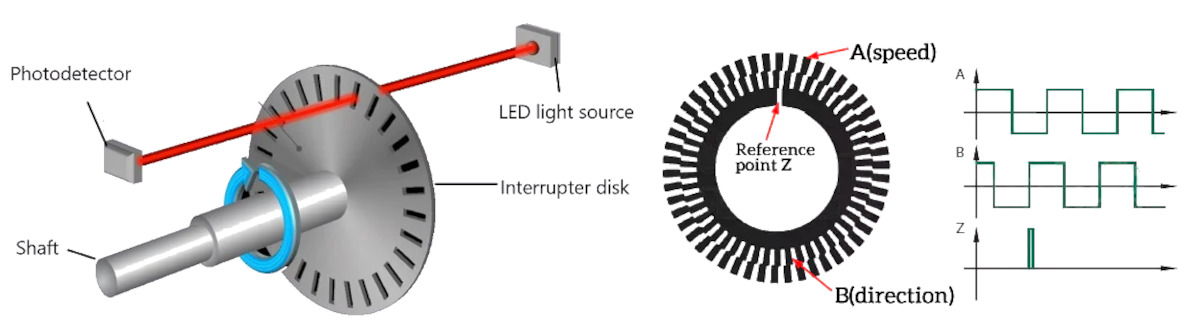
This Video Demonstrates the working principle of the Rotary Encoder
| Voltage | 5-24V DC |
|---|---|
| Shaft Type | Hollow |
| Pulses Per Revolution (PPR) | 1000 |
| Working Phase | AB two-phase |
| Output Type | NPN |
Probots sells every Electronics Part for your next Project. You can order 10,000+ Electronic Parts Online - Arduino, Raspberry Pi, NodeMCU Development Boards, Sensors, Motors, Motor Drivers, SMPS, Plastic Enclosures etc in India directly on probots.co.in
We delivery electronics components and parts throughout India using standard couriers like Bluedart, Delhivery & India Post.
For order related queries contact -
This item is covered by a warranty of 7 days from the date of delivery, against confirmed manufacturing defects only, as verified by Probots' own testing and investigation. In case of a confirmed defect, we will replace the item — a refund is issued only if a replacement can't be supplied (e.g. discontinued or out of stock). Transit damage or a wrong item received must be reported within 3 days of delivery.
If the product shows signs of misuse, tampering, physical damage, static discharge, liquid or fire damage, use of unapproved chemicals, or has been soldered or physically altered in any way.
China
Probots sells every Electronics Part for your next Project. You can order 10,000+ Electronic Parts Online - Arduino, Raspberry Pi, NodeMCU Development Boards, Sensors, Motors, Motor Drivers, SMPS, Plastic Enclosures etc in India directly on probots.co.in
We offer specialized services for Bulk, Wholesale & B2B Customers like discounted prices, additional shipping options, customised products, etc . Customer with large quantity & regular orders qualify for the specialised discounted rates.
We also offer dedicated sales team to assist you with the order process by providing sales quotations, PI, technical support for choosing products, etc.
Note: Business Orders are processed manually and usually take 1-3 days to process compared to placing the order directly on our website. Please plan your purchases accordingly.
Need Help?
For bulk enquiries contact us by -
Probots Electronics is highly regarded for its highly skilled team and knowledgeable staff who provide expert guidance to ensure customers select the right components for their technical projects. The business maintains a strong reputation for prompt service and reliable support, with many clients praising their quick response times and genuine commitment to customer satisfaction.


A very great place for electronics Such a well maintained shop... Felt good shopping here


Nice

For new developments kit available and they will support till working, and I suggest this place strongly


This place has all the electronic parts students will ever need, staff is friendly and the place is organised.


It was a really nice experience! I was happy to find such a wide range of robotics kits for kids, suitable for different age groups and learning levels.

Excellent experience




Good stuff

Buyed them. But no bargain. Helpful staff.


Available all children school project spears parts like electronics


It was good experience




Staff is very patient and helpful

One of the best place for electronics you will get everything you want! With the best and orginal quality

Very helpful staff and the best place to buy components for projects

Wonderful store with expert service and technically strong people.

Prompt delivery, excellent technical support


Large inventory of electronic components and parts. Well trained service personnel and technicians who can quickly identify and rectify product defect if any. They are a reliable and trustworthy online stores.

A very great place for electronics Such a well maintained shop... Felt good shopping here
Nice
For new developments kit available and they will support till working, and I suggest this place strongly
This place has all the electronic parts students will ever need, staff is friendly and the place is organised.
It was a really nice experience! I was happy to find such a wide range of robotics kits for kids, suitable for different age groups and learning levels.
Excellent experience
Good stuff
Buyed them. But no bargain. Helpful staff.
Available all children school project spears parts like electronics
It was good experience
Staff is very patient and helpful
One of the best place for electronics you will get everything you want! With the best and orginal quality
Very helpful staff and the best place to buy components for projects
Wonderful store with expert service and technically strong people.
Prompt delivery, excellent technical support
Large inventory of electronic components and parts. Well trained service personnel and technicians who can quickly identify and rectify product defect if any. They are a reliable and trustworthy online stores.
● 20 min readVol. 56 | The Heavyweight DC Drivetrain Duel Reliability isn’t optional when you’re designing actuators that need to move actual steel or
Read Article → ● 13 min read
Workbench Vol. 49 🚀 The Project Trifecta: 3 Builds to Start Today We don’t just stock parts; we curate ecosystems. This week’s arrivals are desi
Read Article →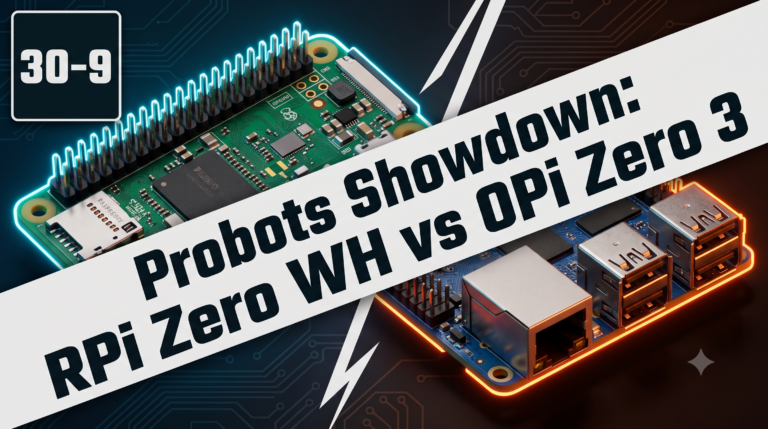 ● 18 min read
Vol. 59 | The Battle of the Bite-Sized Boards Picture a project that needs full Linux, networking, and GPIO—but has almost no room for a conventional
Read Article →