










 ● 20 min read
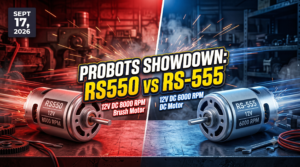
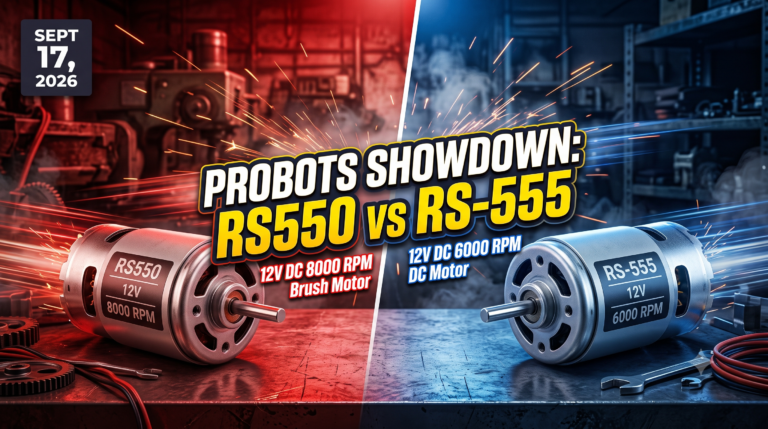
Showdown: RS550 12V DC 8000 vs RS-555 12V DC 6000 RPM DC Motor
Vol. 56 | The Heavyweight DC Drivetrain Duel Reliability isn’t optional when you’re designing actuators that need to move actual steel or
Read Article →
A working prototype is not a product. It is merely a proof of concept. The true test of engineering is not "Can we build one?" but "Can we build 10,000, perfectly, every single time, at a profit?" This is the discipline of Design for Manufacturing (DFM) and Design for Assembly (DFA). It is the rigorous engineering process of optimizing a design so it can be manufactured cheaply, reliably, and at scale. Ignoring this phase is the primary reason hardware startups fail: they run out of cash trying to fix production defects on the factory floor. Our service is the vaccine against this failure, ensuring your product is born ready for the assembly line.
We optimize panelization for maximum throughput, redesign layouts to prevent tombstoning, solder bridges, and Head-in-Pillow (HiP) defects, and simplify mechanical assemblies to reduce labor costs. We solve the critical business problems of low yield (high scrap rate), slow assembly times, and component shortages. We act as your technical advocate with the EMS (Electronic Manufacturing Service), speaking their language of IPC Standards, fiducials, selective soldering, and wave pallets.
We optimize panelization for maximum throughput, redesign layouts to prevent tombstoning, solder bridges, and Head-in-Pillow (HiP) defects, and simplify mechanical assemblies to reduce labor costs. We solve the critical business problems of low yield (high scrap rate), slow assembly times, and component shortages. We act as your technical advocate with the EMS (Electronic Manufacturing Service), speaking their language of IPC Standards, fiducials, selective soldering, and wave pallets.
Who Is This Service For?

We apply these principles across all electronics domains, from simple MCU-based sensors (ST, Nordic) to complex, high-density Linux Gateways (NXP, Rockchip), precision RF/Wireless modules, and complex Flex/Rigid-Flex assemblies.
Factory floors run on data. Our advantage is an AI Co-Pilot trained on manufacturing data from millions of units produced.

Superior Quality: AI-driven layout analysis helps us achieve first-pass yields of 99% or higher on pilot runs.
Accelerated Timelines: By catching DFM errors digitally, we eliminate an average of 2 "respin" cycles, saving 4-8 weeks of time-to-market.
Increased Efficiency: DFM optimization typically reduces PCB assembly costs by 15-20% by removing manual soldering steps and optimizing component placement for speed.
Our metrics are our proof: we have optimized over 200+ designs for manufacturing, enabling our clients to scale from 10 units to 100,000 units seamlessly.
Case Study 1: The "Unbuildable" Wearable

Case Study 2: The "Blind" BGA Failure (Advanced DFM)
Case Study 3: The "Rugged" Field Failure (Coating & Potting DFA)
Our Engineering Philosophy: If you can't build it efficiently, you haven't finished designing it.
We engage with clients at any stage, providing precisely the value they need.

This is a critical strategic decision. Your primary alternatives are the "Throw it over the wall" approach or trusting a low-cost factory to fix it.
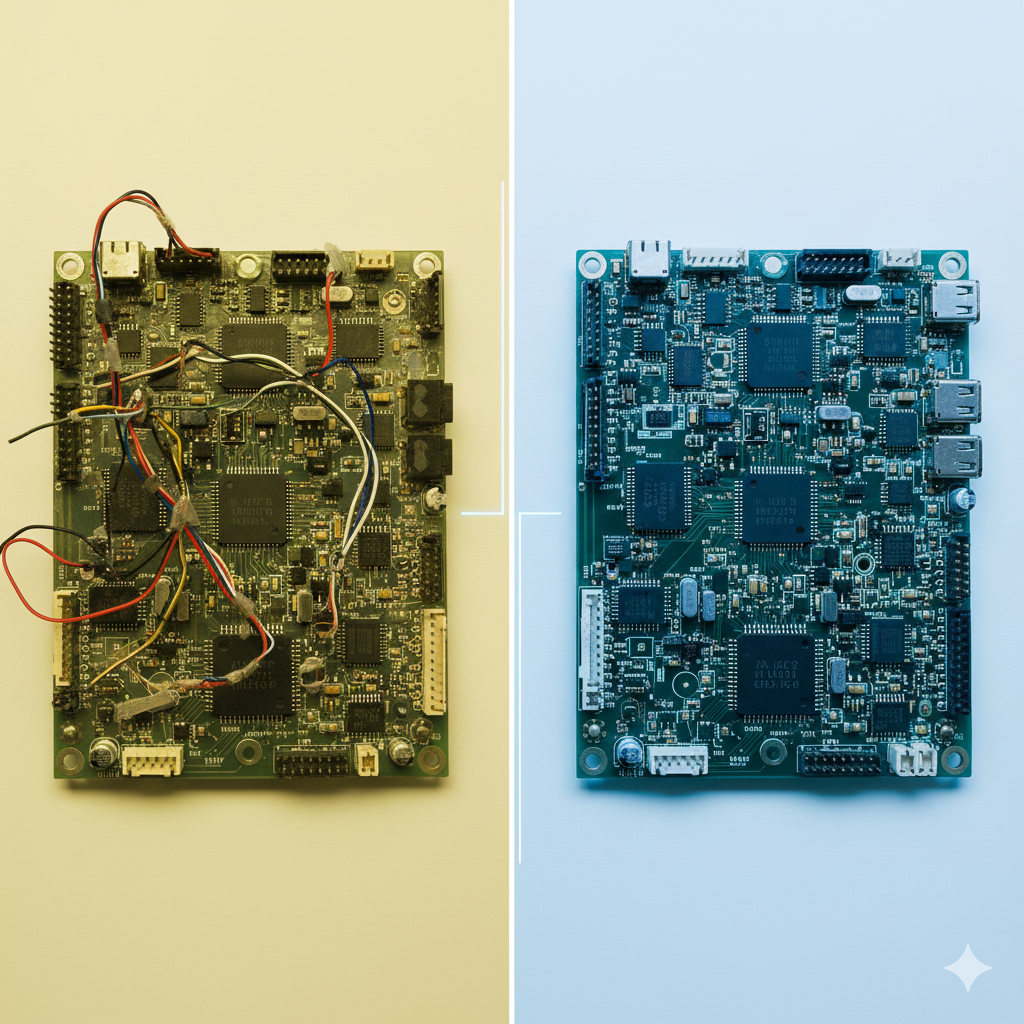
The Expert Partner Solution: We are your Technical Fiduciary. We represent your interests, not the factory's. We ensure the design is robust enough to be built by any competent manufacturer, giving you supply chain freedom and guaranteed quality.
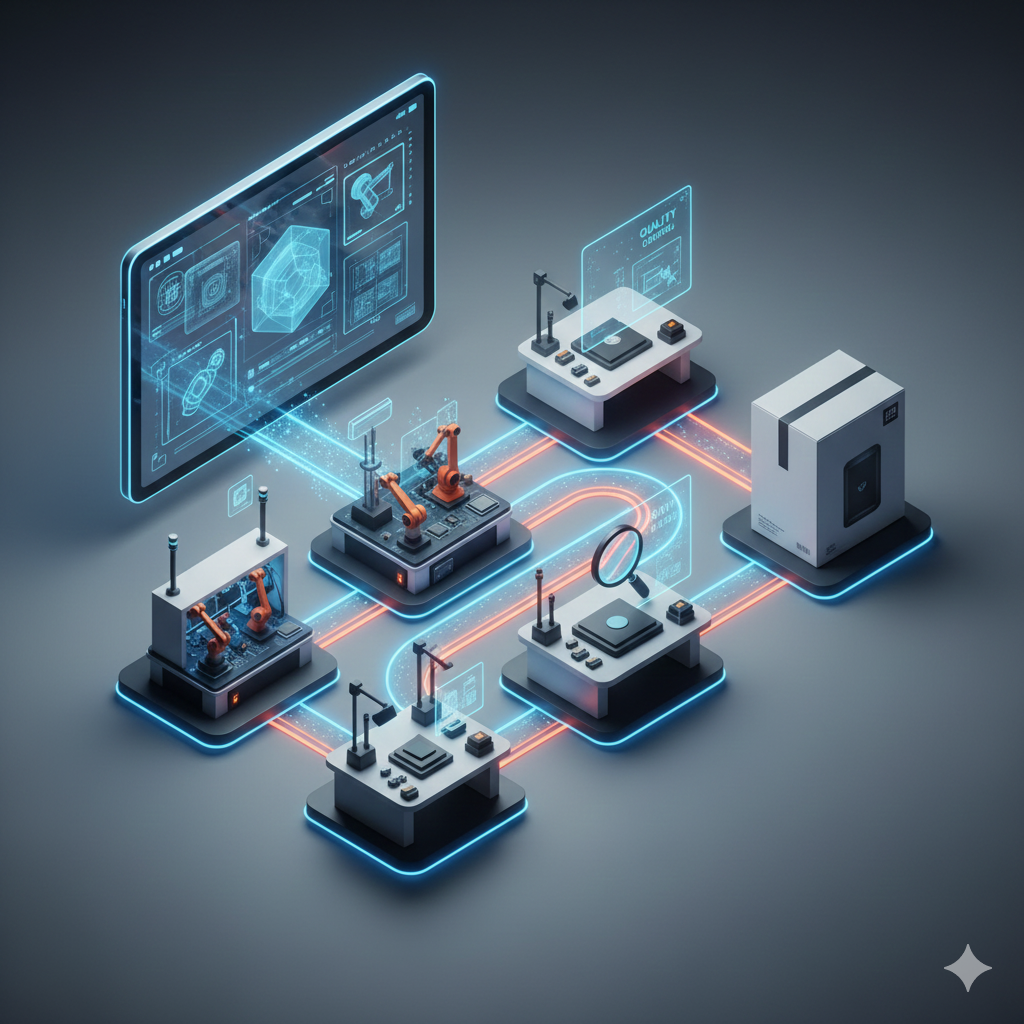
Phase 4 (Execution): The Manufacturing Pack. We generate the "Golden Files": precise assembly drawings, pick-and-place data, stencil aperture designs, and test procedures.
Phase 5 (Handoff & Support): Pilot Run Support. We don't just email files. We work with the EMS partner during the "First Article Inspection" (FAI). We review the first unit off the line, approve the quality, and solve any live production issues.
Does DFM really save money? Yes. Always. Saving 10 seconds of assembly labor per board doesn't matter for 10 units. For 10,000 units, it's a fortune. Moreover, DFM prevents the "catastrophic" costs: a 20% scrap rate or a line stoppage due to a missing part. The ROI on DFM is typically 5x-10x the engineering fee.
What is the difference between DFM and DFA? DFM (Design for Manufacturing) focuses on the parts: "Is this PCB etchable? Is this chip solderable without bridging?" DFA (Design for Assembly) focuses on the process: "Can the operator easily plug in this battery? Do we need 5 different screwdrivers, or can we standardize on one?" We optimize both to reduce total unit cost.
How do you fix specific defects like "Tombstoning" or "Head-in-Pillow"? These are classic DFM failures. Tombstoning happens when one pad melts faster than the other, pulling the component upright. We fix this by balancing the thermal mass on the pads. Head-in-Pillow (HiP) happens with BGA chips when the ball doesn't merge with the paste. We solve this by optimizing the stencil aperture design and matching the reflow profile to the specific thermal mass of your board.
Can you help me select the right EMS factory? Yes. We have vetted relationships with EMS providers in India, Taiwan, and China. We match the factory to your product. You wouldn't build a military radio at a toy factory, and you shouldn't build a $5 sensor at a Tier-1 aerospace facility. We help you find the "Goldilocks" partner—right capability, right price.
Do you handle "Box Build" (Final Assembly)? Yes. We optimize the entire product, not just the PCB. We ensure the PCB fits the enclosure, the cable routing is logical, and the final screw assembly is efficient. This reduces the time it takes to go from "pile of parts" to "finished product in a box."
What is IPC Class 2 vs. Class 3? Class 2 (Dedicated Service) is for most commercial/industrial products (laptops, IoT sensors) where uninterrupted service is desired but not critical. Class 3 (High Performance/Harsh Environment) is for medical, aerospace, or automotive safety systems where failure is not an option. We design and validate your product to the specific class required by your industry.
What about testing? How do we know the boards work? This is DFT (Design for Test). We add specific test points to your PCB layout during the design phase. This allows the factory to use "Bed of Nails" ICT (In-Circuit Test) fixtures or FCT (Functional Circuit Test) jigs to verify every single board instantly. We can design and build these [Production Test Fixtures] for you.
Can you perform DFM on Flex and Rigid-Flex PCBs? Yes. Flex circuits have unique manufacturing challenges (tear-drops, bend radius, stiffener placement). A standard rigid PCB DFM check will miss these. We have specific expertise in optimizing Rigid-Flex designs to ensure they don't crack during installation or use.
Can you advise on Conformal Coating and Potting? Yes. Choosing the right protection is critical for rugged electronics. We advise on material selection (Acrylic, Silicone, Urethane, or Epoxy) based on your thermal and chemical environment. We also optimize the PCB layout (DFA) to ensure coating doesn't flow into connectors or mask switches.
What exactly is in the "Manufacturing Pack" you deliver? This is the industry-standard package any EMS needs to build your product without asking questions. It includes:
Probots Electronics is highly regarded for its highly skilled team and knowledgeable staff who provide expert guidance to ensure customers select the right components for their technical projects. The business maintains a strong reputation for prompt service and reliable support, with many clients praising their quick response times and genuine commitment to customer satisfaction.


A very great place for electronics Such a well maintained shop... Felt good shopping here


Nice

For new developments kit available and they will support till working, and I suggest this place strongly


This place has all the electronic parts students will ever need, staff is friendly and the place is organised.


It was a really nice experience! I was happy to find such a wide range of robotics kits for kids, suitable for different age groups and learning levels.

Excellent experience




Good stuff

Buyed them. But no bargain. Helpful staff.


Available all children school project spears parts like electronics


It was good experience




Staff is very patient and helpful

One of the best place for electronics you will get everything you want! With the best and orginal quality

Very helpful staff and the best place to buy components for projects

Wonderful store with expert service and technically strong people.

Prompt delivery, excellent technical support


Large inventory of electronic components and parts. Well trained service personnel and technicians who can quickly identify and rectify product defect if any. They are a reliable and trustworthy online stores.

A very great place for electronics Such a well maintained shop... Felt good shopping here
Nice
For new developments kit available and they will support till working, and I suggest this place strongly
This place has all the electronic parts students will ever need, staff is friendly and the place is organised.
It was a really nice experience! I was happy to find such a wide range of robotics kits for kids, suitable for different age groups and learning levels.
Excellent experience
Good stuff
Buyed them. But no bargain. Helpful staff.
Available all children school project spears parts like electronics
It was good experience
Staff is very patient and helpful
One of the best place for electronics you will get everything you want! With the best and orginal quality
Very helpful staff and the best place to buy components for projects
Wonderful store with expert service and technically strong people.
Prompt delivery, excellent technical support
Large inventory of electronic components and parts. Well trained service personnel and technicians who can quickly identify and rectify product defect if any. They are a reliable and trustworthy online stores.
● 20 min readVol. 56 | The Heavyweight DC Drivetrain Duel Reliability isn’t optional when you’re designing actuators that need to move actual steel or
Read Article → ● 13 min read
Workbench Vol. 49 🚀 The Project Trifecta: 3 Builds to Start Today We don’t just stock parts; we curate ecosystems. This week’s arrivals are desi
Read Article → ● 18 min read
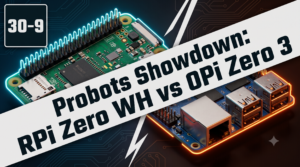
Vol. 59 | The Battle of the Bite-Sized Boards Picture a project that needs full Linux, networking, and GPIO—but has almost no room for a conventional
Read Article →