










 ● 20 min read
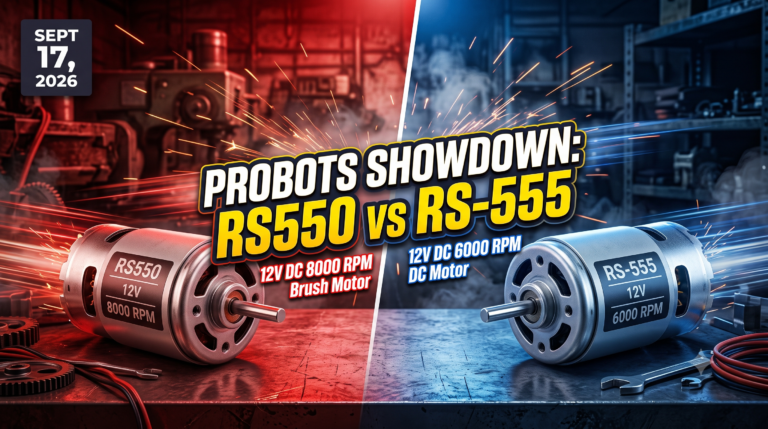
Showdown: RS550 12V DC 8000 vs RS-555 12V DC 6000 RPM DC Motor
Vol. 56 | The Heavyweight DC Drivetrain Duel Reliability isn’t optional when you’re designing actuators that need to move actual steel or
Read Article →
| Bulk Pricing | ||
|---|---|---|
| QTY | Unit Price(Inlc. GST) | |
| 10+ | ₹239.04 ₹ 202.58 + 36.46 GST | |
| 20+ | ₹234.06 ₹ 198.36 + 35.7 GST | |
| 50+ | ₹229.08 ₹ 194.14 + 34.95 GST | |
| 100+ | ₹224.10 ₹ 189.92 + 34.19 GST | |
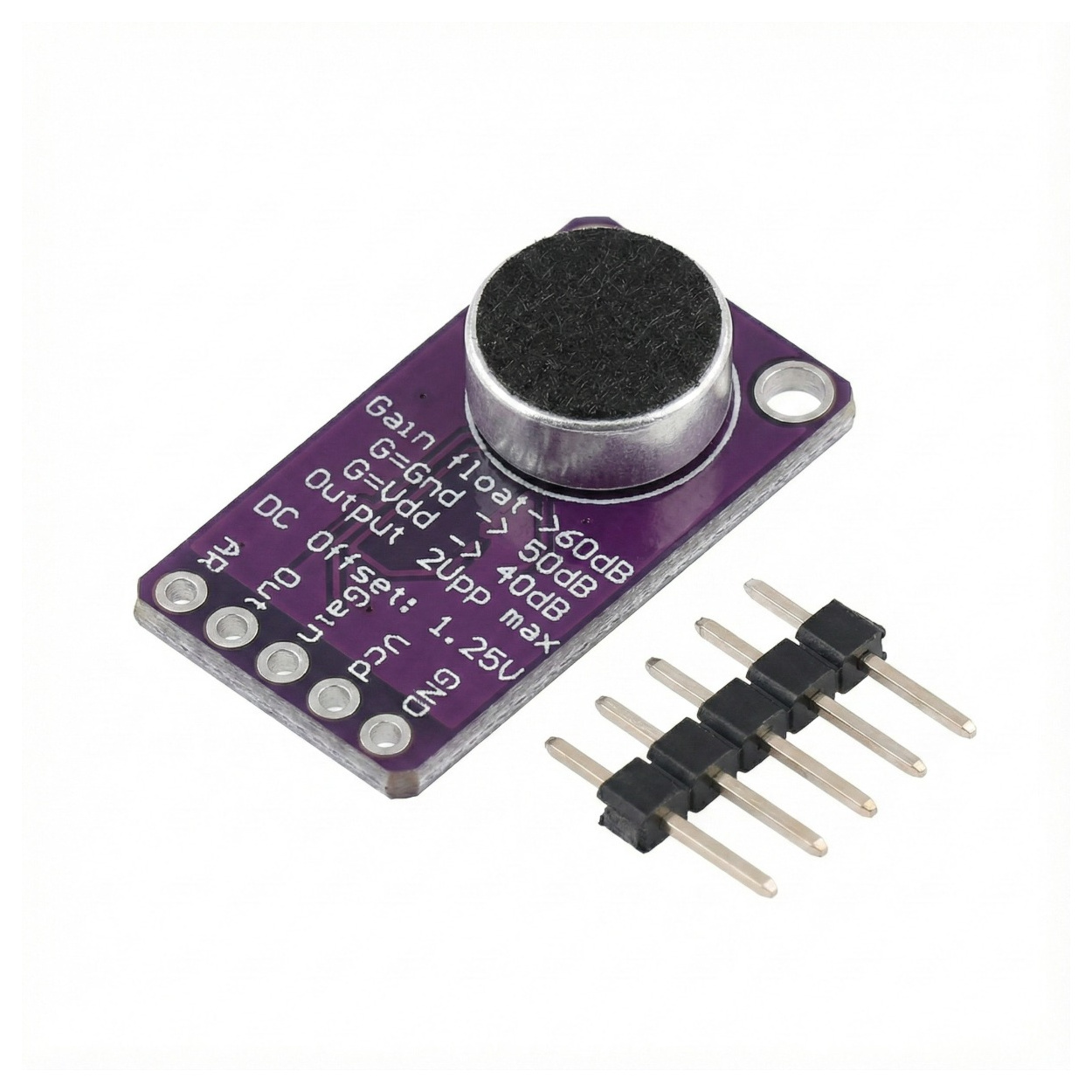
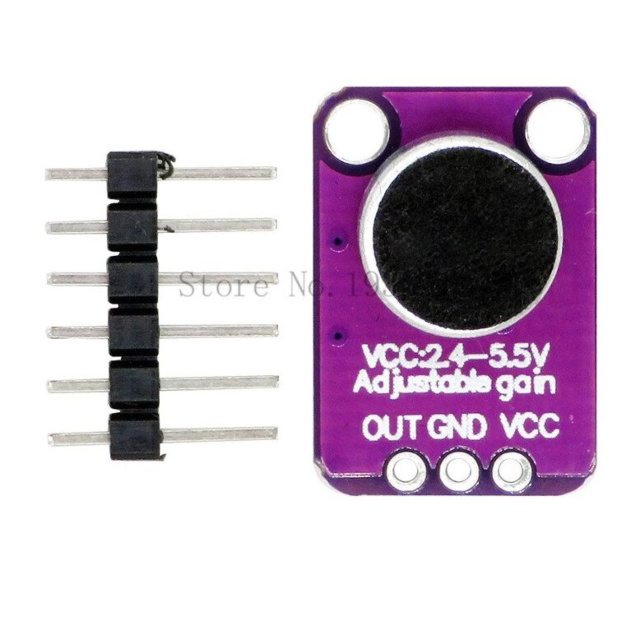
The ultimate solution for unpredictable audio environments. This advanced microphone module features the MAX9814 chip with Automatic Gain Control (AGC), ensuring clear audio capture for both whisper-quiet and loud sounds without clipping.
Quick Introduction: Struggling with distorted audio recordings or sensors that can't hear distant sounds? The MAX9814 Microphone Amplifier Module is engineered to solve the most common problem in audio projects: dynamic range. Unlike standard microphone modules that clip when it gets loud or go silent when it gets quiet, this smart module uses Automatic Gain Control (AGC) to dynamically adjust its sensitivity in real-time. Whether you are building a voice assistant, a decibel meter, or a covert listening device, the MAX9814 ensures consistent, high-fidelity audio output.
Detailed Specifications
Main Chip: Maxim MAX9814 (Low-Noise Microphone Amplifier with AGC).
Supply Voltage: 2.7V – 5.5V DC.
Current Consumption: 3mA (Typ).
Output: 2Vpp (Peak-to-Peak) on 1.25V DC Bias.
Frequency Response: 20Hz – 20kHz.
Gain Settings:
40dB (Connect Gain to VDD)
50dB (Connect Gain to GND)
60dB (Gain Unconnected - Default)
Attack/Release Ratio: Programmable (1:500, 1:2000, 1:4000).
THD (Total Harmonic Distortion): 0.04% (Typ).
Noise Density: Low Input-Referred Noise Density of 30nV/√Hz.
Quality Advantage & Differentiation: Why choose the MAX9814 over cheaper MAX4466 or generic LM393 modules?
Automatic Gain Control (AGC): This is the game-changer. It automatically boosts quiet sounds (like a whisper across the room) and suppresses loud sounds (like a door slamming) to prevent signal clipping.
Tunable Performance: Unlike fixed modules, you can hardware-program the Gain and Attack/Release Ratio simply by connecting specific pins to VCC or GND, allowing you to tailor the response to your specific environment.
Clean Analogue Output: Provides a stable 2Vpp analogue signal biased at 1.25V, making it perfectly compatible with the ADC inputs of Arduino (5V) and ESP32/STM32 (3.3V) microcontrollers.
Key Applications & Usage
Voice Recognition: Consistent audio levels significantly improve the accuracy of voice-to-text engines and keyword spotting on microcontrollers.
Audio Recording: Create high-quality dictaphones or field recorders that handle fluctuating noise levels automatically.
Sound Reactive Lighting: The AGC ensures your LEDs react beautifully to both subtle ambient music and loud bass drops without needing manual sensitivity adjustments.
Baby Monitors: Hear soft breathing without being deafened by a sudden cry.
What's Included & Required
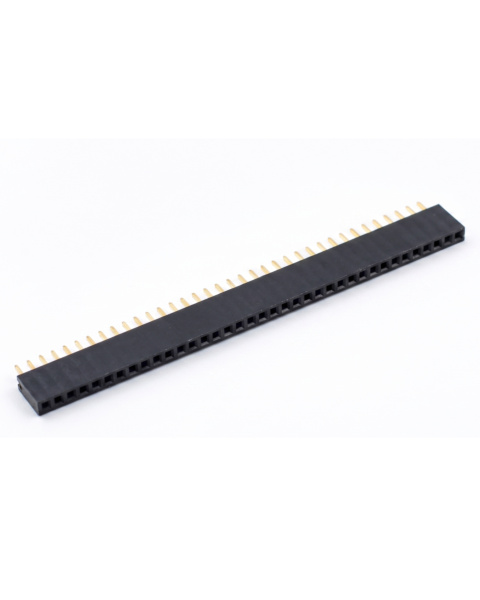
Included: 1x MAX9814 Microphone Amplifier Module, 1x Pin Header Strip.
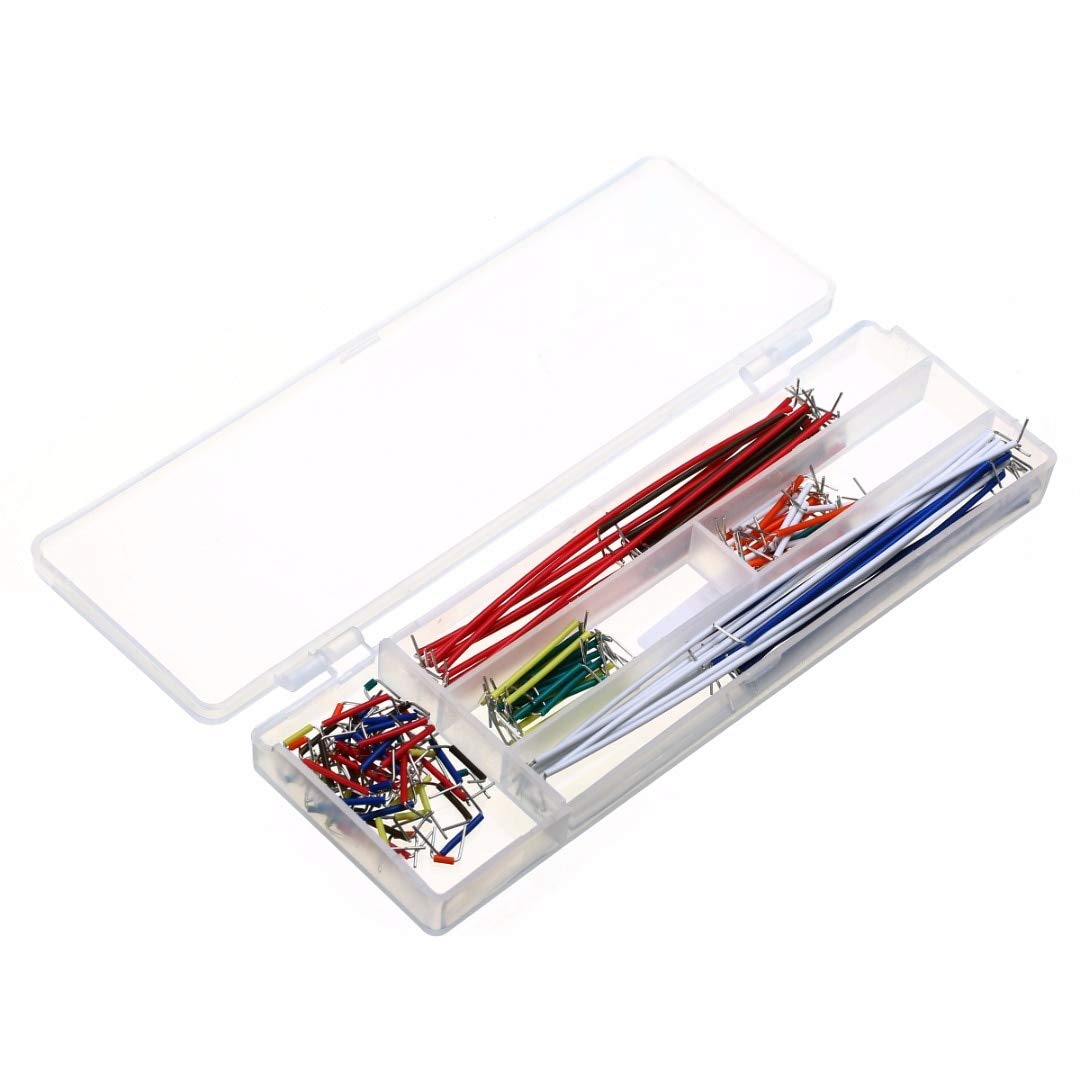
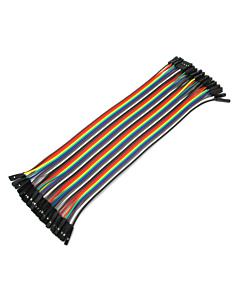
Required: Microcontroller (Arduino/ESP32), Jumper Wires, 2.7V-5.5V Power Source.
Helpful Tutorials & Resources
The "Virtual Technician" Support Panel
⚠️ CRITICAL SAFETY WARNING:
Power Supply Noise: Microphones are extremely sensitive to power supply noise. If you hear a "hum" or "buzz," use a clean battery source or add a capacitor across VDD and GND. DO NOT power this directly from a noisy servo motor power rail.
Voltage Limit: The Maximum input voltage is 5.5V. Connecting it to a 9V battery directly will destroy the chip.
Pinout Reference:
VDD: 2.7V - 5.5V Power Input.
GND: Ground.
OUT: Analogue Audio Output.
GAIN: Gain Control Pin.
Unconnected: 60dB (Max Gain - Default).
Connect to GND: 50dB.
Connect to VDD: 40dB (Lowest Gain).
AR: Attack/Release Ratio Control.
Unconnected: 1:4000 (Default).
Connect to GND: 1:500.
Connect to VDD: 1:2000.
Troubleshooting: Getting "garbage" values on Arduino? The output is an audio waveform, not a simple DC level. You need to sample the analogue pin rapidly (using analogRead a loop or interrupts) to "hear" the sound wave. A single reading will just give you the instantaneous voltage, which is random.
Call to Action (CTA): Give your project the "ears" it deserves. Add the MAX9814 AGC Microphone Module to your cart today and capture crystal-clear audio in any environment!
Probots sells every Electronics Part for your next Project. You can order 10,000+ Electronic Parts Online - Arduino, Raspberry Pi, NodeMCU Development Boards, Sensors, Motors, Motor Drivers, SMPS, Plastic Enclosures etc in India directly on probots.co.in
We delivery electronics components and parts throughout India using standard couriers like Bluedart, Delhivery & India Post.
For order related queries contact -
This item is covered by a warranty of 7 days from the date of delivery, against confirmed manufacturing defects only, as verified by Probots' own testing and investigation. In case of a confirmed defect, we will replace the item — a refund is issued only if a replacement can't be supplied (e.g. discontinued or out of stock). Transit damage or a wrong item received must be reported within 3 days of delivery.
If the product shows signs of misuse, tampering, physical damage, static discharge, liquid or fire damage, use of unapproved chemicals, or has been soldered or physically altered in any way.
China
Probots sells every Electronics Part for your next Project. You can order 10,000+ Electronic Parts Online - Arduino, Raspberry Pi, NodeMCU Development Boards, Sensors, Motors, Motor Drivers, SMPS, Plastic Enclosures etc in India directly on probots.co.in
We offer specialized services for Bulk, Wholesale & B2B Customers like discounted prices, additional shipping options, customised products, etc . Customer with large quantity & regular orders qualify for the specialised discounted rates.
We also offer dedicated sales team to assist you with the order process by providing sales quotations, PI, technical support for choosing products, etc.
Note: Business Orders are processed manually and usually take 1-3 days to process compared to placing the order directly on our website. Please plan your purchases accordingly.
Need Help?
For bulk enquiries contact us by -

Probots Electronics is highly regarded for its highly skilled team and knowledgeable staff who provide expert guidance to ensure customers select the right components for their technical projects. The business maintains a strong reputation for prompt service and reliable support, with many clients praising their quick response times and genuine commitment to customer satisfaction.


A very great place for electronics Such a well maintained shop... Felt good shopping here


Nice

For new developments kit available and they will support till working, and I suggest this place strongly


This place has all the electronic parts students will ever need, staff is friendly and the place is organised.


It was a really nice experience! I was happy to find such a wide range of robotics kits for kids, suitable for different age groups and learning levels.

Excellent experience




Good stuff

Buyed them. But no bargain. Helpful staff.


Available all children school project spears parts like electronics


It was good experience




Staff is very patient and helpful

One of the best place for electronics you will get everything you want! With the best and orginal quality

Very helpful staff and the best place to buy components for projects

Wonderful store with expert service and technically strong people.

Prompt delivery, excellent technical support


Large inventory of electronic components and parts. Well trained service personnel and technicians who can quickly identify and rectify product defect if any. They are a reliable and trustworthy online stores.

A very great place for electronics Such a well maintained shop... Felt good shopping here
Nice
For new developments kit available and they will support till working, and I suggest this place strongly
This place has all the electronic parts students will ever need, staff is friendly and the place is organised.
It was a really nice experience! I was happy to find such a wide range of robotics kits for kids, suitable for different age groups and learning levels.
Excellent experience
Good stuff
Buyed them. But no bargain. Helpful staff.
Available all children school project spears parts like electronics
It was good experience
Staff is very patient and helpful
One of the best place for electronics you will get everything you want! With the best and orginal quality
Very helpful staff and the best place to buy components for projects
Wonderful store with expert service and technically strong people.
Prompt delivery, excellent technical support
Large inventory of electronic components and parts. Well trained service personnel and technicians who can quickly identify and rectify product defect if any. They are a reliable and trustworthy online stores.
● 20 min readVol. 56 | The Heavyweight DC Drivetrain Duel Reliability isn’t optional when you’re designing actuators that need to move actual steel or
Read Article →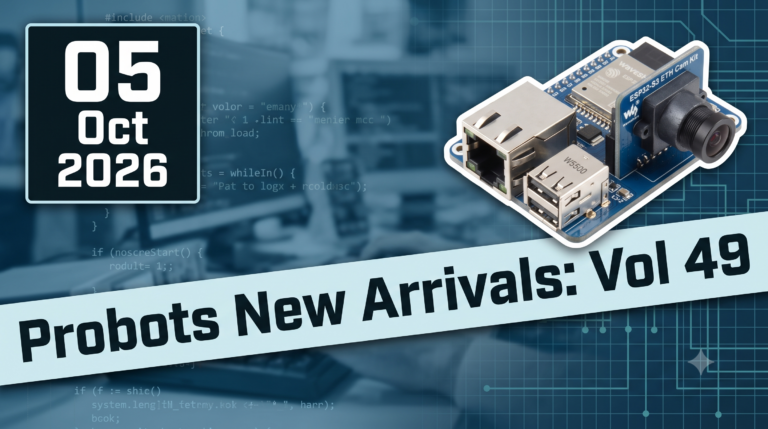 ● 13 min read
Workbench Vol. 49 🚀 The Project Trifecta: 3 Builds to Start Today We don’t just stock parts; we curate ecosystems. This week’s arrivals are desi
Read Article →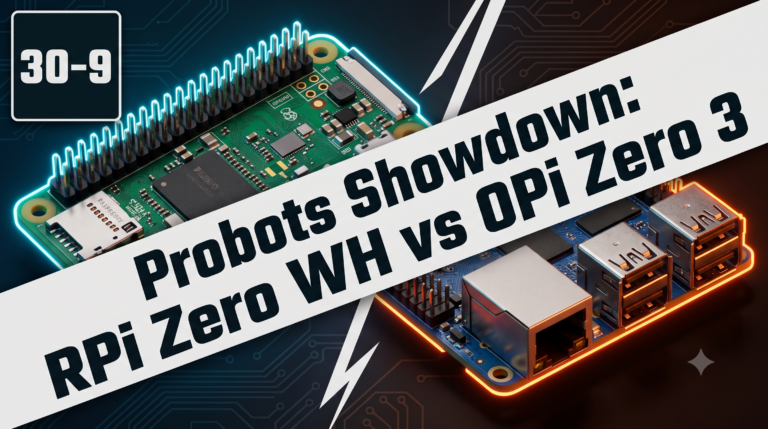 ● 18 min read
Vol. 59 | The Battle of the Bite-Sized Boards Picture a project that needs full Linux, networking, and GPIO—but has almost no room for a conventional
Read Article →