








 ● 20 min read
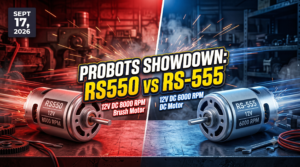
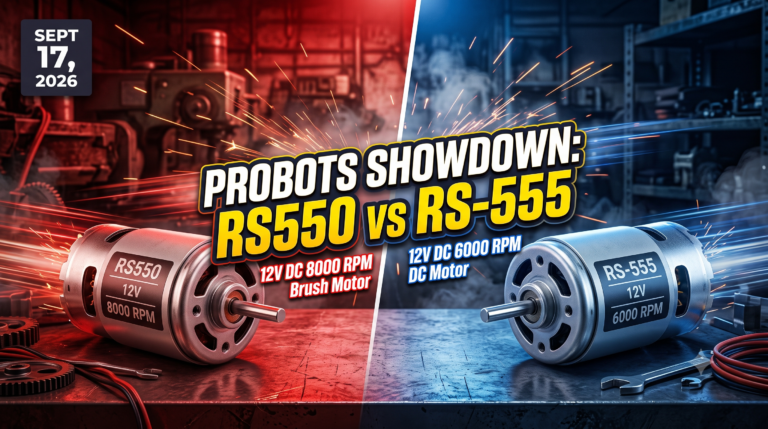
Showdown: RS550 12V DC 8000 vs RS-555 12V DC 6000 RPM DC Motor
Vol. 56 | The Heavyweight DC Drivetrain Duel Reliability isn’t optional when you’re designing actuators that need to move actual steel or
Read Article →
The world is awash in powerful AI models. Every day, new breakthroughs in the cloud redefine what's possible. But this is a trap. For a real-world embedded product, a cloud connection is a high-cost, high-latency, and high-risk liability. The true competitive frontier is on-device processing, or "Edge AI." The challenge is no longer training a model; it's the high-stakes, complex engineering of making that 2GB Python model run in real-time on a 2-watt, cost-effective microprocessor. This is the gap where data science theory collides with hardware reality. Our service is the specialized discipline of bridging this chasm, engineering your AI model into a robust, efficient, and powerful on-device product.
Our Edge AI Deployment service is the end-to-end process of taking your trained model and deploying it onto constrained embedded hardware. We are not a data-science-for-hire firm; we are expert Embedded AI Engineers. Our work begins after your data scientists have a trained model. We dive into the deep technical work of model analysis, conversion, quantization, and optimization, porting it to run with maximum performance on your specific target hardware. This solves the critical business problem of a model that is "too big, too slow, and too power-hungry."
For example, a medical device client came to us with a powerful audio model for real-time cough detection that was over 500MB. We applied advanced 8-bit quantization and pruning, reducing the model size by 90% with less than 1% accuracy loss, enabling it to run on their low-cost, low-power STM32MP1-based device.
We are experts in all forms of on-device AI, from high-speed computer vision to complex multi-sensor fusion (e.g., combining accelerometer and gyro data), direct analog sensor inference (like vibration analysis), and digital signal processing (DSP)-based pattern detection.

We leverage advanced toolchains like TensorFlow Lite, PyTorch Mobile, ONNX Runtime, and vendor-specific SDKs (like NXP eIQ or NVIDIA TensorRT) to unlock the full power of the hardware's NPUs, GPUs, and TPUs. Our expertise is proven in the most demanding verticals, including industrial (predictive maintenance), automotive (driver monitoring), smart city (vision), and medical (on-device diagnostics).
Any team can download TensorFlow Lite. Our advantage is an AI Co-Pilot trained on our most valuable asset: a proprietary database of model performance benchmarks across every MPU, NPU, and GPU we support. This system codifies our institutional knowledge of what actually works on hardware

The Tangible Payoff:
Our metrics are our proof: we have successfully deployed over 30+ unique AI/ML models onto embedded hardware, turning our clients' data-science R&D into shippable products
Case Study 1: The "Too-Slow" Industrial Vision System
Problem: A client had a brilliant Keras/Python model for detecting manufacturing defects on an assembly line. It worked perfectly on a developer's laptop (achieving 30 FPS) but was unusable on their embedded prototype board (an NXP i.MX 8M Plus), running at only 2 FPS.
Process: We didn't retrain the model. We optimized it. Our team profiled the model, identified the bottlenecks, and then converted it using TensorFlow Lite with full INT8 quantization. We then used the NXP eIQ toolkit to write a C++ application that deployed the model to run directly on the i.MX 8's dedicated NPU, completely bypassing the main ARM cores. We also built a GStreamer pipeline to create a zero-copy data path from the MIPI camera directly to the NPU.
Result: We delivered a final, on-device application that achieved 28 FPS, a 14x performance increase, while fitting the model in 25% of the original memory footprint. This saved the client from a costly hardware redesign and allowed them to ship their product.

Case Study 2: The Real-Time Automotive DMS
Problem: An automotive-tech client needed a Driver Monitoring System (DMS) to detect drowsiness, but their complex C++ model was running at 120ms per inference on their target NXP i.MX 8, far too slow for real-time safety alerts.
Process: Our team identified the bottleneck: data was being copied between the CPU and GPU. We re-architected their GStreamer pipeline for zero-copy and used the eIQ toolkit to deploy the model to run asynchronously on the NPU.
Result: The final, on-device inference speed dropped to 18ms (a 6.6x performance increase), successfully meeting the strict real-time requirements for their automotive application.
Our process ensures your on-device data handling is compliant with privacy regulations like GDPR and HIPAA (by keeping data local), while the underlying hardware platform is built to meet BIS/WPC/CE/FCC standards.
Our Engineering Philosophy: An AI model in the cloud is a research project. An efficient, on-device model is a real product.
We engage with clients at any stage, providing precisely the value they need.
As a Standalone Service (Model Deployment): You have a trained model (e.g., in .h5, .pth, or ONNX format) and your target hardware. Our team will perform the deep optimization, quantization, conversion, and deployment to get your model running at maximum performance on your existing platform.
As an Integrated End-to-End Solution (The "AI-First" Hardware): This is our most powerful offering. You have an AI goal, but no hardware. For example, a retail-tech client wanted a smart kiosk that responded to hand gestures. We engaged for the full Custom Embedded Linux Development and Edge AI Deployment service. We used our AI Co-Pilot to select a Rockchip RK3568 MPU, then built a custom Yocto OS, a V4L2 camera pipeline, and deployed a lightweight gesture model to its NPU. The result was a single, cost-effective board that ran a 4K UI on its GPU, while simultaneously running the AI gesture model on its NPU with a <100ms response time. The hardware, the custom OS, the drivers, and the AI libraries are all co-designed and delivered as a single, fully-validated, production-ready system.

This is a critical strategic decision. Your primary alternatives are the cloud or a difficult DIY approach.
The Generic/Vendor Trap (The "Cloud AI" Trap): The "easy" path is to send all your data (video, audio, etc.) to a cloud API (like AWS or Azure AI). This is a trap that creates a competitively weak product. It's expensive (you pay for every inference), slow (high latency), unreliable (what happens if the internet connection drops?), and a massive privacy and security risk (you are sending raw user/factory data to a third party).
The In-House Labyrinth (The "Data Scientist vs. Embedded" Trap): This is the #1 reason AI projects fail. Your data scientists are brilliant, but they live in Python, Keras, and Jupyter notebooks. Your embedded engineers are brilliant, but they live in C, Yocto, and hardware drivers. They don't speak the same language. Your team will spend 6-9 months just trying to compile TensorFlow Lite with the correct hardware acceleration, all while debugging cryptic driver and dependency errors.
The Expert Partner Solution: We are the translators. We are the "Embedded AI Engineers" who live in both worlds. We take the model file from your data science team and deliver a clean, simple, high-performance API (run_inference()) to your embedded application team. We handle the entire complex "middle layer," allowing your teams to do what they do best.

Phase 1 (No-Cost): AI Model & Hardware Feasibility Workshop. We start with a free consultation. You bring your model and hardware requirements. We analyze your model's operations (OPs) and, using our AI Co-Pilot, give you an initial performance estimate on various hardware targets

Do you train AI models, or just deploy them?
We are deployment and optimization experts. We expect you to bring your own trained model. However, we often partner with your data science team to advise them on which model architectures are "hardware-friendly." For an industrial IoT client, we advised them against a complex neural network for predictive maintenance. We recommended a simple Random Forest model, which we then deployed using TensorFlow Lite for Microcontrollers on an STM32MP1. The final model used <1MB of RAM and achieved their 98% accuracy target, saving them from a costly and unnecessary hardware upgrade.
What's the difference between CPU, GPU, NPU, and TPU?
In short:CPU: Slowest, most generic. Bad for most AI.
GPU: Good at parallel math, used by NVIDIA Jetson for complex models.
NPU (Neural Processing Unit): A dedicated, on-chip AI accelerator. This is the key to efficient, low-power AI on NXP, Rockchip, and ST MPUs.
TPU (Tensor Processing Unit): Google's custom-built AI accelerator, found on Google Coral modules. Our job is to ensure your model runs on the correct accelerator, not just the CPU.
My project doesn't use a camera. Can you run AI on other sensors?
Absolutely. This is a core specialty and a major trend. Many of our most innovative projects do not involve video. We are experts in:
What is "quantization"? Will it hurt my model's accuracy? Quantization is the process of converting a model's math from high-precision 32-bit floating point (FP32) to low-precision 8-bit integer (INT8). This makes the model ~4x smaller and ~4x-10x faster. While there can be a tiny (0.5-2%) accuracy loss, we use advanced techniques (like post-training quantization) to minimize this, giving you a massive performance boost for a negligible trade-off.
How do you handle real-time video feeds for AI vision models? : This is one of our specialties. We are experts at building GStreamer and V4L2 pipelines on Linux. We build "zero-copy" pipelines that send the video data directly from the camera's memory to the NPU/GPU's memory, without ever touching (and slowing down) the main CPU. This is essential for achieving 30+ FPS on embedded hardware.
What hardware platforms do you specialize in?
We are platform-agnostic but have deep, production-level expertise with all major AI-enabled toolkits, including:
Probots Electronics is highly regarded for its highly skilled team and knowledgeable staff who provide expert guidance to ensure customers select the right components for their technical projects. The business maintains a strong reputation for prompt service and reliable support, with many clients praising their quick response times and genuine commitment to customer satisfaction.


A very great place for electronics Such a well maintained shop... Felt good shopping here


Nice

For new developments kit available and they will support till working, and I suggest this place strongly


This place has all the electronic parts students will ever need, staff is friendly and the place is organised.


It was a really nice experience! I was happy to find such a wide range of robotics kits for kids, suitable for different age groups and learning levels.

Excellent experience




Good stuff

Buyed them. But no bargain. Helpful staff.


Available all children school project spears parts like electronics


It was good experience




Staff is very patient and helpful

One of the best place for electronics you will get everything you want! With the best and orginal quality

Very helpful staff and the best place to buy components for projects

Wonderful store with expert service and technically strong people.

Prompt delivery, excellent technical support


Large inventory of electronic components and parts. Well trained service personnel and technicians who can quickly identify and rectify product defect if any. They are a reliable and trustworthy online stores.

A very great place for electronics Such a well maintained shop... Felt good shopping here
Nice
For new developments kit available and they will support till working, and I suggest this place strongly
This place has all the electronic parts students will ever need, staff is friendly and the place is organised.
It was a really nice experience! I was happy to find such a wide range of robotics kits for kids, suitable for different age groups and learning levels.
Excellent experience
Good stuff
Buyed them. But no bargain. Helpful staff.
Available all children school project spears parts like electronics
It was good experience
Staff is very patient and helpful
One of the best place for electronics you will get everything you want! With the best and orginal quality
Very helpful staff and the best place to buy components for projects
Wonderful store with expert service and technically strong people.
Prompt delivery, excellent technical support
Large inventory of electronic components and parts. Well trained service personnel and technicians who can quickly identify and rectify product defect if any. They are a reliable and trustworthy online stores.
● 20 min readVol. 56 | The Heavyweight DC Drivetrain Duel Reliability isn’t optional when you’re designing actuators that need to move actual steel or
Read Article → ● 13 min read
Workbench Vol. 49 🚀 The Project Trifecta: 3 Builds to Start Today We don’t just stock parts; we curate ecosystems. This week’s arrivals are desi
Read Article →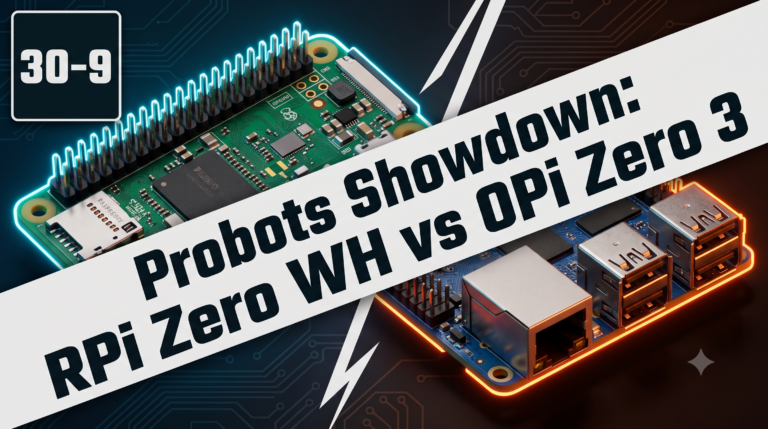 ● 18 min read
Vol. 59 | The Battle of the Bite-Sized Boards Picture a project that needs full Linux, networking, and GPIO—but has almost no room for a conventional
Read Article →