







 ● 20 min read
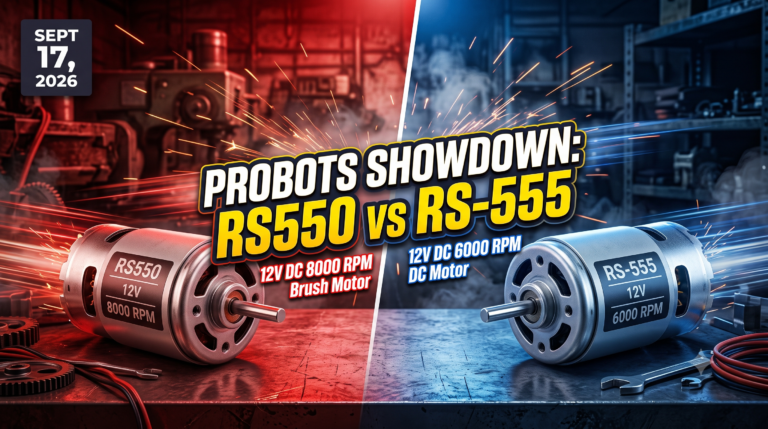
Showdown: RS550 12V DC 8000 vs RS-555 12V DC 6000 RPM DC Motor
Vol. 56 | The Heavyweight DC Drivetrain Duel Reliability isn’t optional when you’re designing actuators that need to move actual steel or
Read Article →
Our company faced a critical situation: over 50,000 ARM64-based embedded devices deployed between 2014-2016 generated approximately $12M in annual maintenance revenue. These devices required periodic firmware updates for security vulnerabilities and regulatory compliance. However, the original development team had disbanded, and critically, the cross-compiler toolchain had been lost during a server migration.
The firmware required EGLIBC 2.19 (released in 2014) and GCC 4.9.4 targeting aarch64 (ARM 64-bit) architecture. Without compilation capability, our team couldn't deploy security patches, leaving devices vulnerable. Customer contracts required quarterly updates, and our inability to deliver risked penalties totaling ~$800K annually, plus potential contract cancellations affecting the entire $12M revenue stream. The technical constraint was non-negotiable: binaries must link against EGLIBC 2.19. Modern compilers link against GLIBC 2.34+, making them incompatible. When our testing team deployed a test program compiled with GCC 11, devices crashed with version 'GLIBC_2.34' not found—we needed to rebuild the exact 2014 toolchain environment.
Before committing to the months-long toolchain rebuild, our team explored faster solutions. Each failed in ways that taught us about binary compatibility's inflexibility.
After exhausting workarounds, our team committed to reconstructing the 2014 toolchain from source code. This meant building GCC 4.9.4 configured for aarch64 with EGLIBC 2.19—a process requiring solutions to several cascading technical challenges.
Challenge 1: The Compiler Bootstrap Paradox
Modern Linux distributions ship with GCC 11 or GCC 12, which enforce strict C++ standards and treat deprecated patterns as hard errors. GCC 4.9.4's source code was written with looser 2014 standards—compiling it with GCC 12 resulted in ~200 errors related to implicit type conversions and deprecated headers. The solution required a two-stage bootstrap: we created a Docker container running Ubuntu 14.04 with GCC 4.8, which could successfully build GCC 4.9.4. The containerized environment meant any team member could reproduce the toolchain identically, eliminating "works on my machine" problems.
Challenge 2: The EGLIBC Ghost Hunt
EGLIBC was a fork of GLIBC maintained for embedded systems from 2009-2014, then merged back into mainline GLIBC. Primary source repositories had gone offline. After three days searching, the QA team found a complete EGLIBC 2.19 tarball on a French academic mirror with verified checksums. While standard GLIBC 2.19 maintained ABI compatibility, we chose exact matching with EGLIBC 2.19 to eliminate any risk of subtle incompatibilities in production deployments.
Challenge 3: Build Tool Time Drift
Tools like make, texinfo, and sed have evolved over a decade in ways that break 2014-era software. Our first build failed during documentation generation—Texinfo 5.0 (2014) had different syntax than Texinfo 6.8 (current). Rather than debugging Texinfo internals, we disabled documentation generation entirely, reducing build time to ~75 minutes while eliminating a fragile dependency. The Ubuntu 14.04 container provided tool versions contemporary with GCC 4.9.4, ensuring behavioral compatibility.
Challenge 4: Early ARM64 Compiler Maturity
GCC 4.9.4 had early aarch64 support with some buggy optimization passes. Our firmware compiled with -O2 crashed during boot, while -O1 worked correctly. The testing team traced this to incorrect memory barrier reordering in ARM64 assembly—critical for hardware peripheral interaction. We backported a three-line patch from GCC 5.1 that fixed the instruction scheduling phase. After applying this patch, -O2 optimization worked correctly, delivering ~15% better performance in cryptographic and network processing benchmarks.
Why Docker vs. chroot?
When creating an isolated Ubuntu 14.04 environment for building the toolchain, our team evaluated Docker containers versus chroot jails. While both create isolated filesystem environments, Docker was favored for several reasons.
Our team's implementation followed a staged approach, building complexity incrementally to reduce risk and enable early validation.
The completed toolchain delivered both immediate tactical benefits and strategic improvements to our development process:
The strategic impact extended beyond this project. Our build automation team created a "toolchain archaeology" methodology documented internally, establishing patterns for recovering obsolete build environments. When similar situations arose with other legacy products (MIPS and PowerPC-based systems), teams successfully applied these patterns in ~50% of the original timeframe. The project influenced organizational policy—our infrastructure team now maintains version-controlled Dockerfiles for all active product toolchains with quarterly validation testing, preventing future "lost toolchain" scenarios.
Teams facing similar legacy system support challenges can apply several lessons from our experience:
Probots Electronics is highly regarded for its highly skilled team and knowledgeable staff who provide expert guidance to ensure customers select the right components for their technical projects. The business maintains a strong reputation for prompt service and reliable support, with many clients praising their quick response times and genuine commitment to customer satisfaction.


A very great place for electronics Such a well maintained shop... Felt good shopping here


Nice

For new developments kit available and they will support till working, and I suggest this place strongly


This place has all the electronic parts students will ever need, staff is friendly and the place is organised.


It was a really nice experience! I was happy to find such a wide range of robotics kits for kids, suitable for different age groups and learning levels.

Excellent experience




Good stuff

Buyed them. But no bargain. Helpful staff.


Available all children school project spears parts like electronics


It was good experience




Staff is very patient and helpful

One of the best place for electronics you will get everything you want! With the best and orginal quality

Very helpful staff and the best place to buy components for projects

Wonderful store with expert service and technically strong people.

Prompt delivery, excellent technical support


Large inventory of electronic components and parts. Well trained service personnel and technicians who can quickly identify and rectify product defect if any. They are a reliable and trustworthy online stores.

A very great place for electronics Such a well maintained shop... Felt good shopping here
Nice
For new developments kit available and they will support till working, and I suggest this place strongly
This place has all the electronic parts students will ever need, staff is friendly and the place is organised.
It was a really nice experience! I was happy to find such a wide range of robotics kits for kids, suitable for different age groups and learning levels.
Excellent experience
Good stuff
Buyed them. But no bargain. Helpful staff.
Available all children school project spears parts like electronics
It was good experience
Staff is very patient and helpful
One of the best place for electronics you will get everything you want! With the best and orginal quality
Very helpful staff and the best place to buy components for projects
Wonderful store with expert service and technically strong people.
Prompt delivery, excellent technical support
Large inventory of electronic components and parts. Well trained service personnel and technicians who can quickly identify and rectify product defect if any. They are a reliable and trustworthy online stores.
● 20 min readVol. 56 | The Heavyweight DC Drivetrain Duel Reliability isn’t optional when you’re designing actuators that need to move actual steel or
Read Article →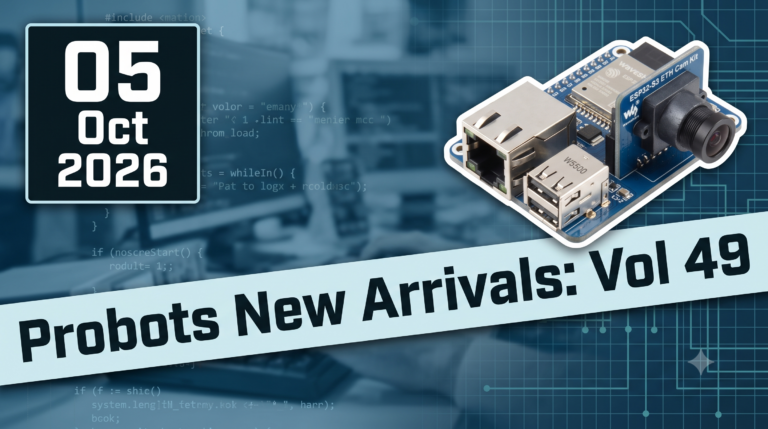 ● 13 min read
Workbench Vol. 49 🚀 The Project Trifecta: 3 Builds to Start Today We don’t just stock parts; we curate ecosystems. This week’s arrivals are desi
Read Article →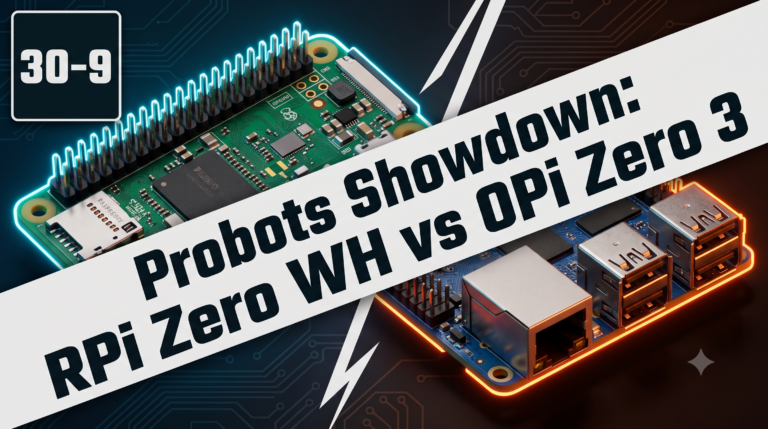 ● 18 min read
Vol. 59 | The Battle of the Bite-Sized Boards Picture a project that needs full Linux, networking, and GPIO—but has almost no room for a conventional
Read Article →