









 ● 20 min read
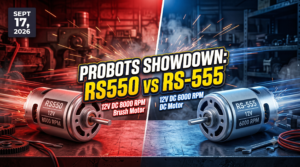
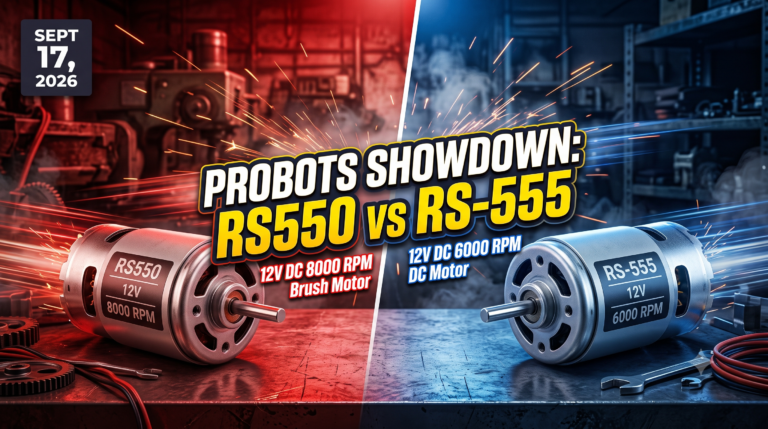
Showdown: RS550 12V DC 8000 vs RS-555 12V DC 6000 RPM DC Motor
Vol. 56 | The Heavyweight DC Drivetrain Duel Reliability isn’t optional when you’re designing actuators that need to move actual steel or
Read Article →
The most expensive mistake in product development is not discovering a design flaw. It's discovering that flaw after you've paid for mass production tooling. Rapid prototyping is the discipline of building a high-fidelity, functional version of a product quickly to test design, prove technical feasibility, validate assumptions, and de-risk mass production. Our service achieves this by working from either your existing development files or just your core requirements. This "design-to-reality gap" is where brilliant concepts, built on sound schematics and elegant CAD models, collide with the hard realities of physics, supply chain, and manufacturability. Bridging this gap is the single highest-stakes challenge in hardware engineering. Our electronics prototyping services are not just a step in the process; they are the discipline of de-risking this collision.
Our electronics prototyping service is an end-to-end, integrated process designed to turn your digital files into a fully functional, testable system. Our expertise lies in understanding your exact stage of development and building the right prototype for the job. This includes:
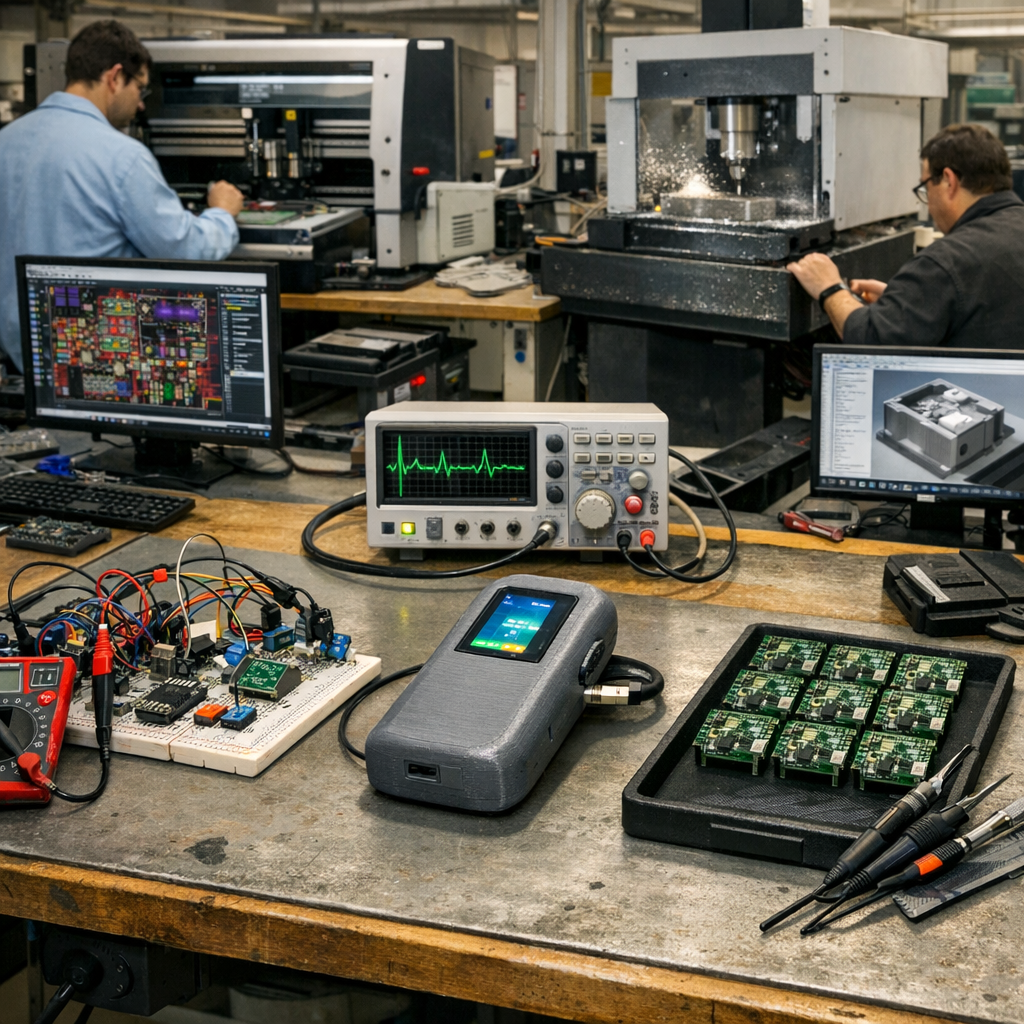
We are not just a board assembler; we are the electronics integration partner that manages the entire flow. Our core focus is on rapid prototype PCB assembly (also known as low-volume PCBA) for high-complexity boards, coupled with firmware bring-up and functional testing. We support this with mechanical fabrication (like custom 3D printing and CNC machining for enclosures) to deliver a complete, integrated unit—across the most demanding industries, including medical devices, automotive, and aerospace.
Our integrated prototyping service is built for clients who need more than just an assembled board; they need a functional, de-risked system.

Any team can buy an AI tool; our advantage is an AI Co-Pilot trained on our most valuable asset: years of proprietary project data from hundreds of successful (and failed) builds. This system codifies our institutional knowledge, acting as a force multiplier for our engineering team.

Our metrics speak for themselves: we have delivered over 500+ unique, functional prototypes to clients worldwide, with 95% of our integrated prototypes passing validation on the first revision.
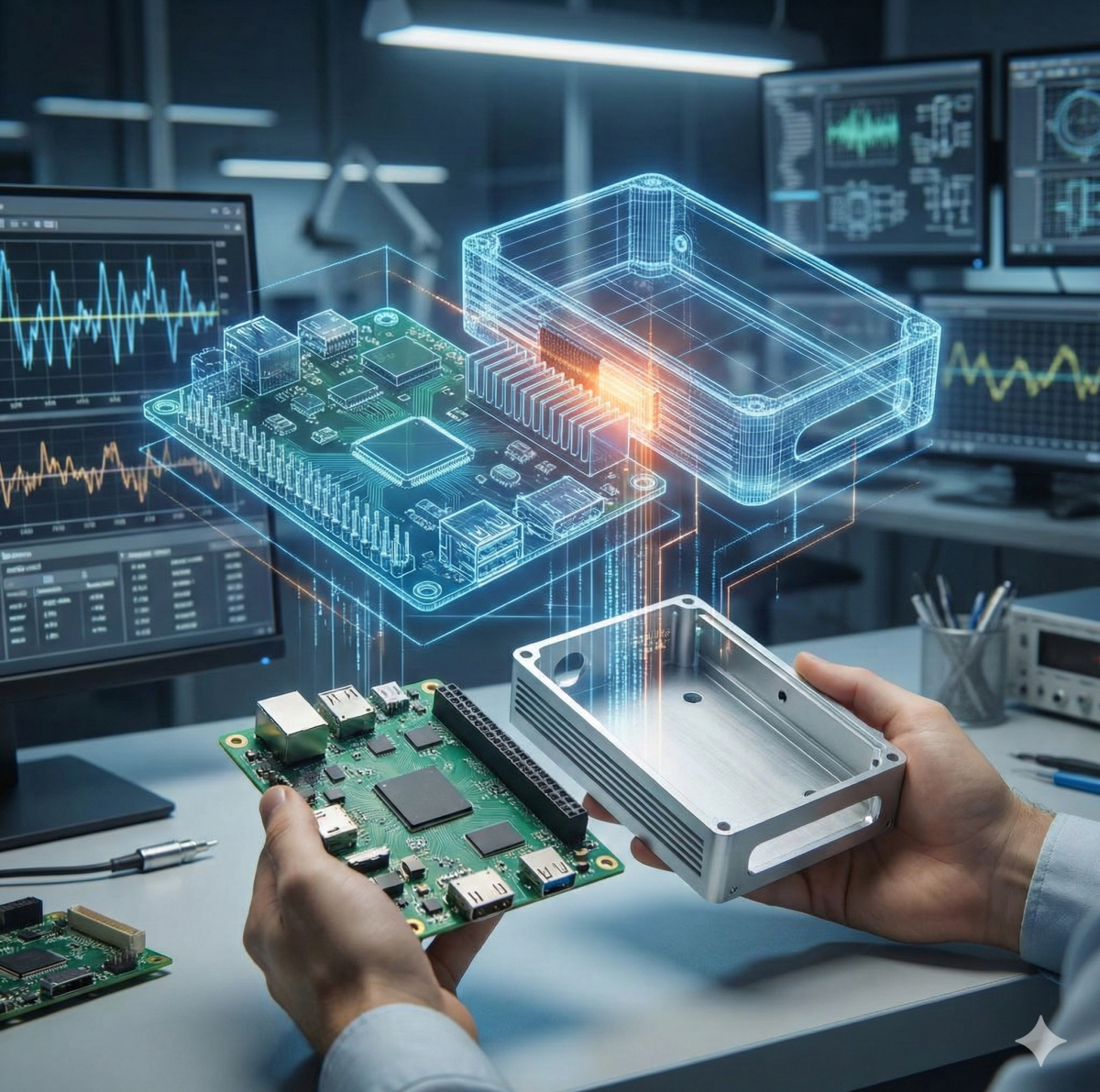
We build all prototypes with end-stage compliance in mind, considering material traceability (for medical/aerospace) and EMI/EMC shielding (for [FCC/CE Certification Testing] and Indian standards like BIS/TEC) from day one.
Our Engineering Philosophy: A prototype that just "looks right" is a failure. A prototype that "works right" is the only one that matters.
We engage with clients at any stage, providing precisely the value they need.
As a "Concept-to-Prototype" Accelerator: This is for you. You have a validated idea, but no formal schematics or CAD files. You need a functional prototype now to pitch to investors, test technical feasibility, or get customer feedback, but you can't risk a full 6-month development cycle on an unproven concept.
As a "Build-to-Print" Partner: You have a complete, locked design package (Gerbers, BOM, STEP files) and need a world-class, "build-to-print" partner. You hand us the files; we manage the complex logistics of fabrication and assembly, delivering a high-quality physical product back to you.
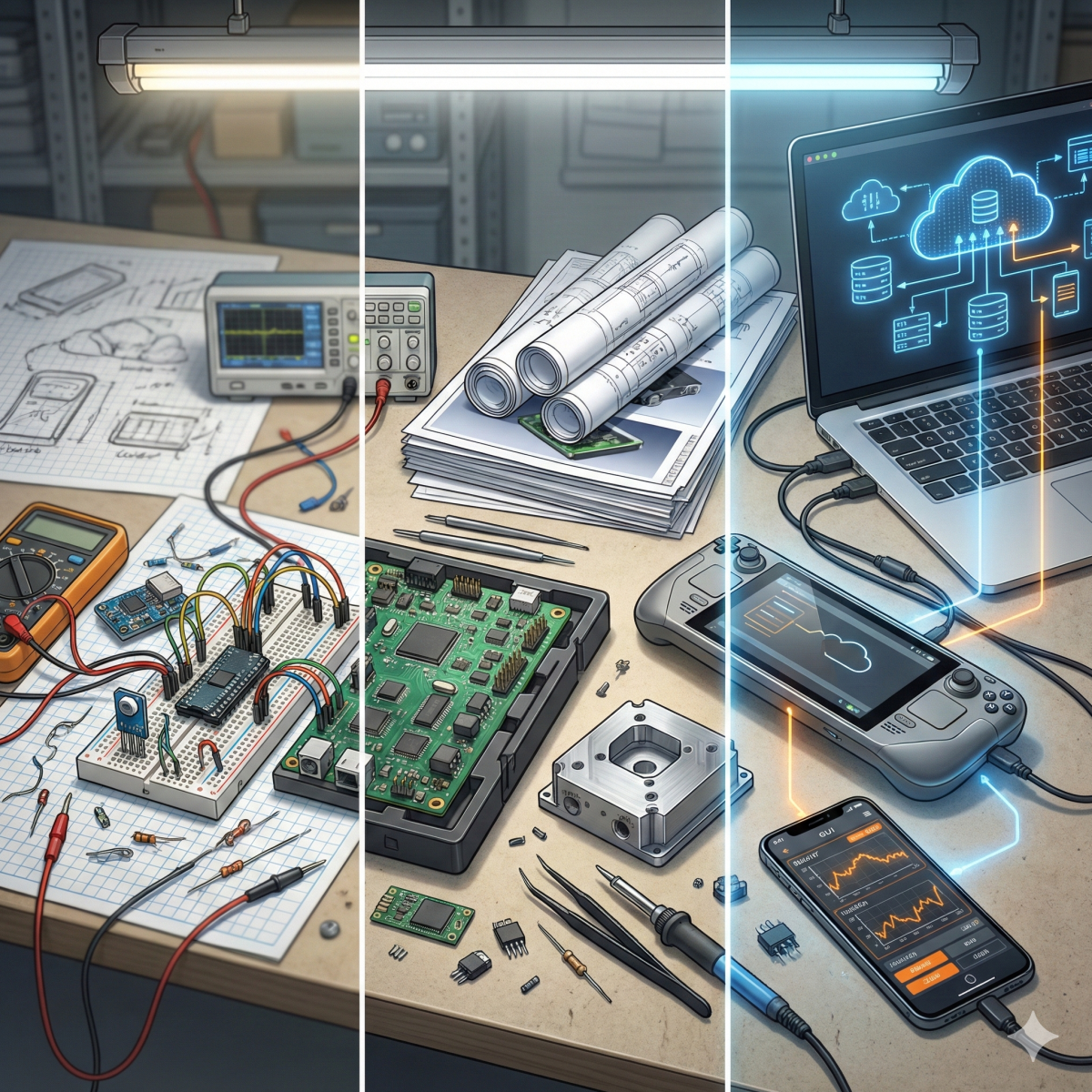
This is a critical strategic decision. Your primary alternatives are a fragmented supplier network or a total DIY approach, both of which are riddled with hidden risks.

The Expert Partner Solution: We are your integrated prototyping partner. Our business model is built for high-mix, low-volume runs. We've absorbed the setup costs by investing in our own in-house, flexible assembly lines and 3D printers. We don't penalize you for being in the prototype stage; we specialize in it. You are our priority.
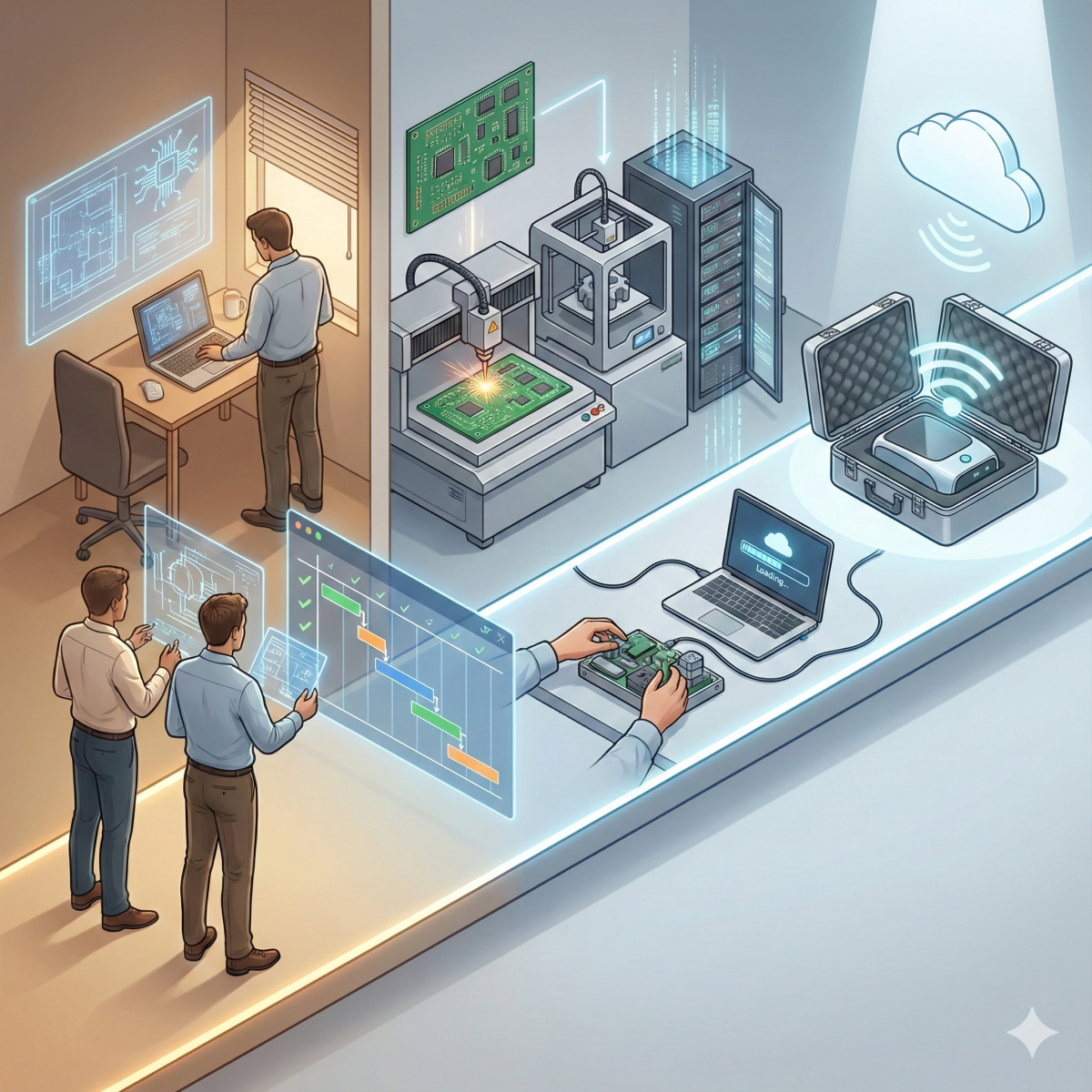
My main risk is the hardware/firmware integration. How does your service de-risk this? This is our core specialty. Unlike traditional assemblers who ship you a "dead" board, we use a parallel development strategy. Our firmware team writes the bootloader, drivers, and test code (our "Minimum Viable Firmware") while your board is in fabrication. When the PCBA is complete, we immediately flash it and perform a full [System Integration & Bring-Up]. You receive a prototype that is already validated and running code, which can save your in-house team weeks of debugging.
How is your "AI-Co-Pilot" DFM review different from a standard free DFM check? Standard DFM checks only look for basic "buildable" rules (like trace/space). Our AI Co-Pilot, trained on our proprietary data from hundreds of projects, predicts functional and system-level failures. It cross-references your PCB and mechanical files to find electro-mechanical conflicts (like a connector hitting a heatsink after thermal expansion) and flags component choices that are high-risk for supply chain or future performance issues. It's an engineering review, not just a file check.
What is the difference between a Proof-of-Concept (PoC) and a Functional Prototype? A PoC (which we build via our [Product Feasibility & Consulting] service) is designed to be fast and low-cost, to test one specific, high-risk question or prove the basic technical feasibility of an idea. A Functional Prototype (this service) is a high-fidelity, "works-like/looks-like" unit. It's the integrated system you use for investor demos, user testing, and final design validation after you are confident the core idea is viable. We help you choose the right one for your budget and goals.
Can you handle complex prototypes with high-speed (e.g., DDR, PCIe) or RF (e.g., Wi-Fi/BLE) designs? Yes. This is a key part of our value. Our assembly and testing protocols are designed to handle high-complexity boards. More importantly, this prototyping service is a direct extension of our [High-Speed PCB Layout] and [RF & Antenna Design] services. We understand the nuances of impedance control and signal integrity and can perform the necessary validation to ensure your prototype is a true, functional test of your advanced design.
What's the single biggest pitfall you see in prototyping, and how do you help avoid it? The biggest pitfall is the "Siloed Trap"—where the PCB, enclosure, and firmware are developed separately and "integrated" at the end. It never works. It leads to fitment issues, thermal problems, and weeks of debugging. Our service avoids this by being integrated from day one. Our hardware, firmware, and mechanical teams all work from the same design data, and our AI Co-Pilot ensures all three are in sync before a single part is ordered.
If my prototype is successful, can you help me move to mass production? Yes. This is the goal of our [DFM/DFA & Manufacturing Optimization] service. Once your prototype is validated, we help you re-design it for scale. This involves optimizing the layout to reduce manufacturing costs, panelizing the PCB for high-volume assembly, and creating a full production test plan to ensure 99.9%+ yield.
Where is your prototyping lab located? Do you work with international clients? Our primary engineering and rapid prototyping lab is located in Bangalore, India. While this provides a huge speed advantage for our local clients, we serve a global customer base. We handle all logistics to ship your functional prototypes securely and quickly, no matter where you are.
Probots Electronics is highly regarded for its highly skilled team and knowledgeable staff who provide expert guidance to ensure customers select the right components for their technical projects. The business maintains a strong reputation for prompt service and reliable support, with many clients praising their quick response times and genuine commitment to customer satisfaction.


A very great place for electronics Such a well maintained shop... Felt good shopping here


Nice

For new developments kit available and they will support till working, and I suggest this place strongly


This place has all the electronic parts students will ever need, staff is friendly and the place is organised.


It was a really nice experience! I was happy to find such a wide range of robotics kits for kids, suitable for different age groups and learning levels.

Excellent experience




Good stuff

Buyed them. But no bargain. Helpful staff.


Available all children school project spears parts like electronics


It was good experience




Staff is very patient and helpful

One of the best place for electronics you will get everything you want! With the best and orginal quality

Very helpful staff and the best place to buy components for projects

Wonderful store with expert service and technically strong people.

Prompt delivery, excellent technical support


Large inventory of electronic components and parts. Well trained service personnel and technicians who can quickly identify and rectify product defect if any. They are a reliable and trustworthy online stores.

A very great place for electronics Such a well maintained shop... Felt good shopping here
Nice
For new developments kit available and they will support till working, and I suggest this place strongly
This place has all the electronic parts students will ever need, staff is friendly and the place is organised.
It was a really nice experience! I was happy to find such a wide range of robotics kits for kids, suitable for different age groups and learning levels.
Excellent experience
Good stuff
Buyed them. But no bargain. Helpful staff.
Available all children school project spears parts like electronics
It was good experience
Staff is very patient and helpful
One of the best place for electronics you will get everything you want! With the best and orginal quality
Very helpful staff and the best place to buy components for projects
Wonderful store with expert service and technically strong people.
Prompt delivery, excellent technical support
Large inventory of electronic components and parts. Well trained service personnel and technicians who can quickly identify and rectify product defect if any. They are a reliable and trustworthy online stores.
● 20 min readVol. 56 | The Heavyweight DC Drivetrain Duel Reliability isn’t optional when you’re designing actuators that need to move actual steel or
Read Article → ● 13 min read
Workbench Vol. 49 🚀 The Project Trifecta: 3 Builds to Start Today We don’t just stock parts; we curate ecosystems. This week’s arrivals are desi
Read Article → ● 18 min read
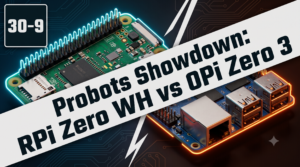
Vol. 59 | The Battle of the Bite-Sized Boards Picture a project that needs full Linux, networking, and GPIO—but has almost no room for a conventional
Read Article →