








 ● 20 min read
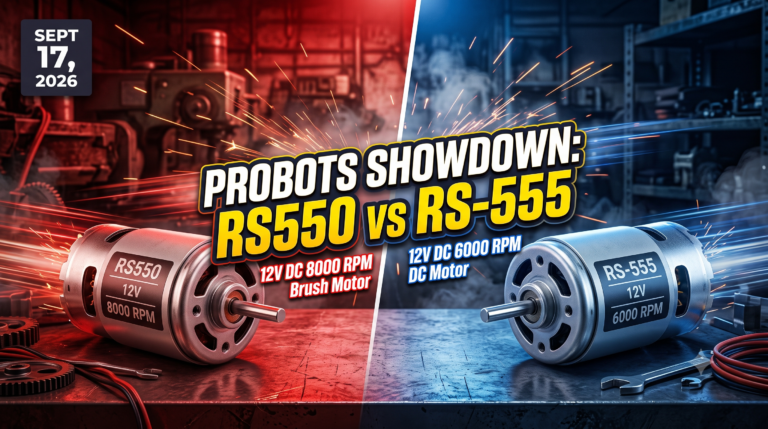
Showdown: RS550 12V DC 8000 vs RS-555 12V DC 6000 RPM DC Motor
Vol. 56 | The Heavyweight DC Drivetrain Duel Reliability isn’t optional when you’re designing actuators that need to move actual steel or
Read Article →
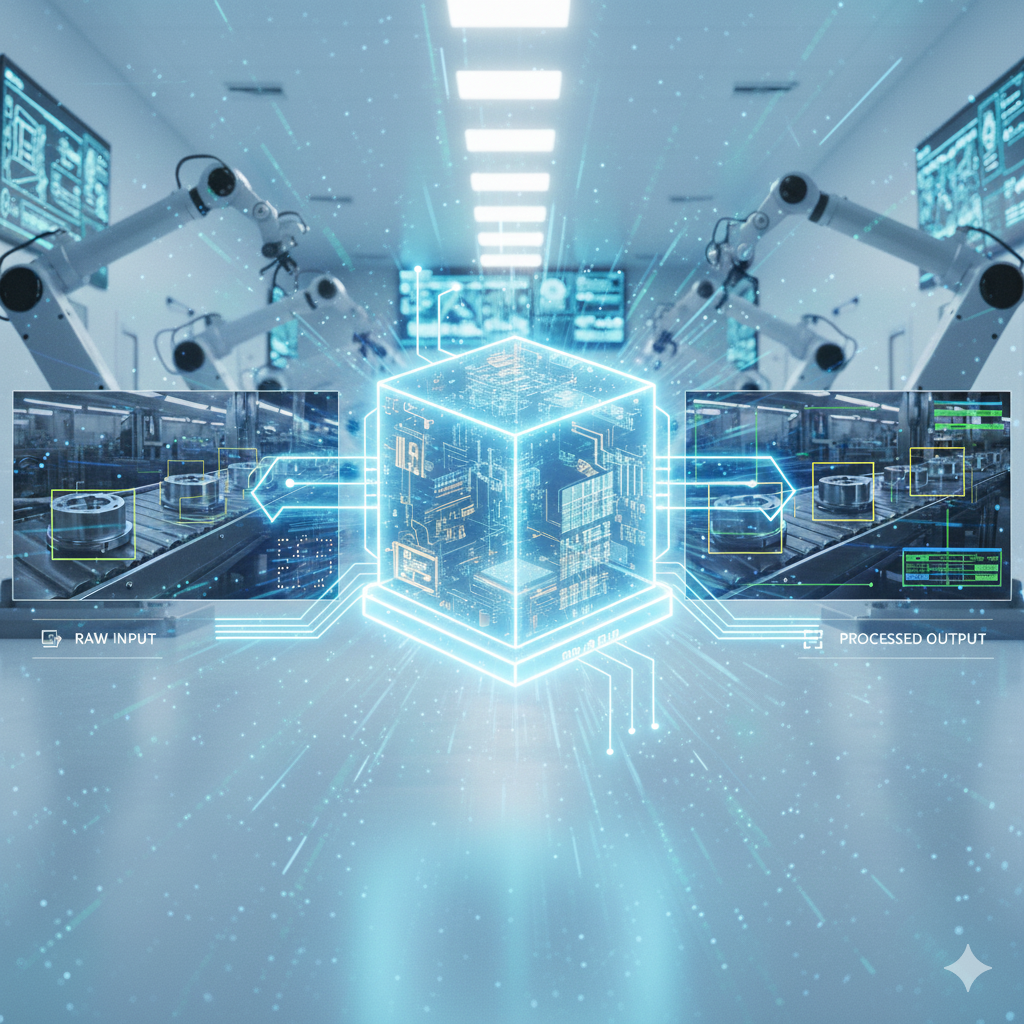
In the age of AI, it's easy to forget that a neural network is only as good as the image you feed it. Computer Vision is the engineering discipline that happens before and alongside the AI. It is the art of capturing light, correcting color, stabilizing motion, and processing pixels with mathematical precision.
If your camera driver is dropping frames, your ISP is distorting colors, or your latency is too high for real-time control, no amount of Deep Learning will save your product. Our service provides the essential, deterministic vision engineering required to build robust cameras, industrial sensors, and optical inspection systems that see the world with pixel-perfect clarity.
Our Computer Vision & Image Processing service is the expert-level discipline of architecting and optimizing the entire path from Photon to Pixel to Processed Data. We are not just software developers; we are Vision Systems Architects. Our core competency spans the full stack:
Sensor Integration: Interfacing complex MIPI-CSI2, LVDS, and SLVS-EC sensors (Sony IMX, OnSemi, OmniVision) with custom V4L2 drivers.
Advanced Sensor Modalities: We go beyond visible light. We specialize in integrating:
ISP Tuning: Calibrating the Image Signal Processor (ISP) for optimal Auto-Exposure (AE), Auto-White Balance (AWB), Lens Shading Correction (LSC), and HDR tone mapping.
Pipeline Optimization: Building zero-copy, high-throughput video pipelines using GStreamer, V4L2, and DMA-Buf to process 4K/8K video with minimal CPU load
Classic CV & Image Transformations: While AI is powerful, we master the foundational OpenCV algorithms that run faster and more reliably for specific tasks. This includes:
Who Is This Service For?
Industrial Automation OEMs: Building high-speed optical inspection (AOI) machines that need to trigger an ejector in microseconds.
Medical Device Makers: Developing endoscopes or digital microscopes where color accuracy and low latency are patient-critical.
Robotics Companies: Needing Visual SLAM (vSLAM) and depth sensing (Stereo/ToF) for autonomous navigation.
Smart City & Traffic: Creating License Plate Recognition (ANPR) cameras that must work in low-light and high-glare conditions.
Who Is This Service NOT For?
Web-Cam Integrators: If you just need to plug in a USB webcam and run a Python script, this deep engineering service is overkill.
Pure "Cloud Vision" Projects: We focus on Edge Vision—processing pixels on the device. If you are just uploading JPEGs to a cloud API, you don't need us.
Tuning an ISP is a "black art" that typically takes months of trial and error. Our advantage is an AI Co-Pilot trained on thousands of sensor calibration datasets.
The Tangible Payoff:

Case Study 1: The "Laggy" Surgical Endoscope
Case Study 2: The High-Speed Pill Sorter (FPGA Vision)

Case Study 3: The "Invisible" Stress Fracture (Textile Analysis)
Case Study 4: The "All-Seeing" Smart Sentry (Sensor Fusion)
Problem: A security client needed a remote monitoring device for off-grid construction sites. They needed to detect intruders reliably but were plagued by false alarms (cats, wind, leaves) which wasted battery and data. A simple motion sensor wasn't enough, and "always-on" video analytics was too power-hungry.
Process: We engineered a Multi-Modal Sensor Fusion architecture on a low-cost Rockchip SoC. We integrated PIR (passive infrared), Microwave Radar (motion doppler), Audio (glass break/footsteps), and Vibration (fence tampering) sensors.
Result: False alarms dropped by 99.9%. The device could run for months on a battery. By using a low-cost SoC and optimizing the BoM for volume production, the Total Unit Cost was <$50, enabling mass deployment across thousands of sites.
Our Engineering Philosophy: A vision system isn't just about pixels; it's about photons, physics, and timing.
We are experts in the specific vision silicon that powers the industry.
For Industrial Camera Clients (High-Speed GigE/USB3): We specialize in integrating high-end industrial cameras (e.g., Basler Ace 2, FLIR Blackfly, Teledyne Dalsa) that demand extreme performance.
For NVIDIA Clients (Jetson Nano/Orin): We are masters of DeepStream SDK and Argus ISP, building massive multi-stream analytics pipelines.

For NXP/Rockchip Clients (i.MX8, RK3588): We optimize the GStreamer stack to fully leverage the hardware VPU (Video Processing Unit) and ISP, enabling 4K encoding/decoding on low-power chips.
For FPGA Clients (Xilinx/Lattice): We implement custom MIPI-CSI2 receiver IP and hardware-accelerated image filters for ultra-low latency applications.
For Sensor Clients (Sony/OnSemi): We have deep experience with the Sony IMX (e.g., IMX290, IMX477) and OnSemi AR (Global Shutter) series, handling complex register settings for hardware triggers and strobe synchronization.
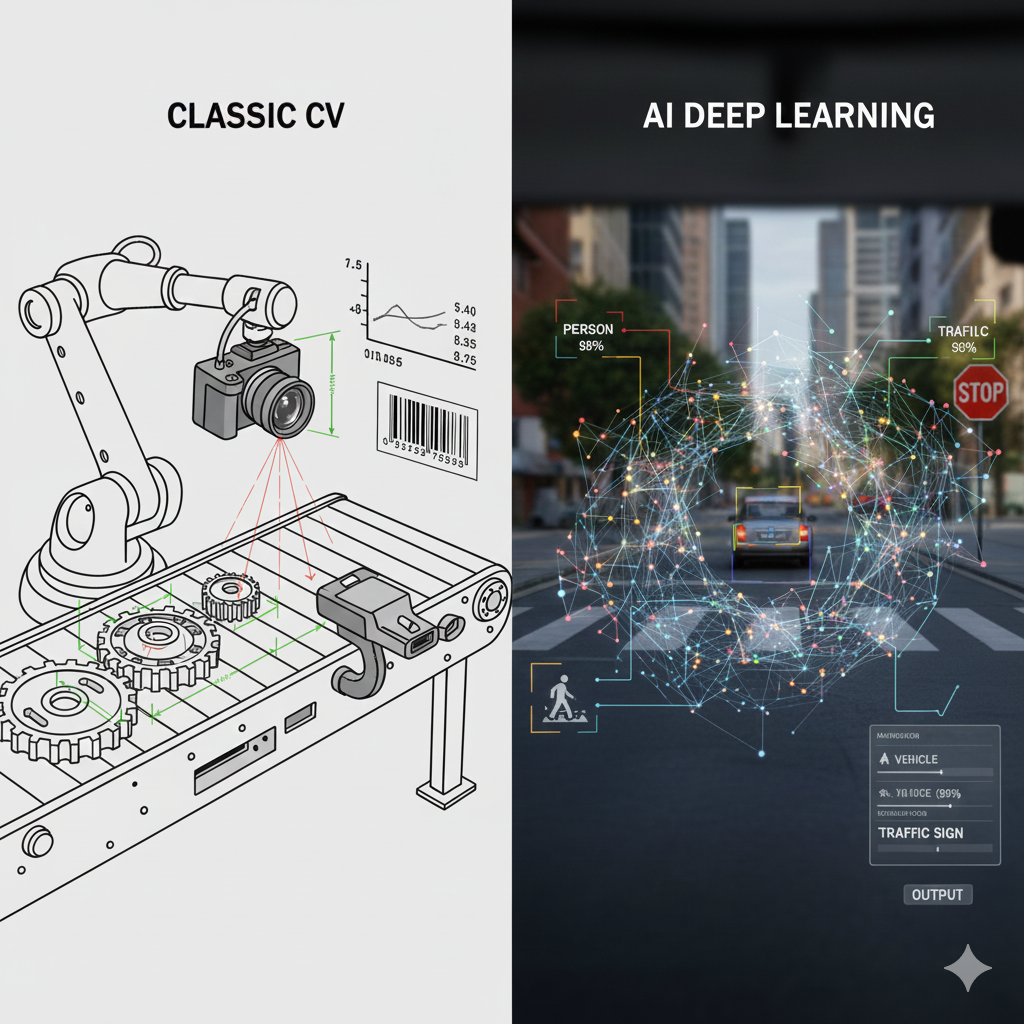
When to Choose Classic CV vs. AI/Deep Learning:
This is a critical architectural decision. Choose Classic CV (this service) when you need deterministic, pixel-perfect precision (e.g., measuring a gap to within 0.1mm, reading a barcode, or correcting lens distortion). It is faster, cheaper, and explainable. Choose AI/Deep Learning when you need "understanding" (e.g., "Is this a person or a dog?", "Is the driver sleeping?"). We often build hybrid systems that use Classic CV to "clean" the image before feeding it to the AI.
We engage with clients at any stage:
We design for today, but we engineer for tomorrow. Our Vision team is already deploying the technologies that will define the next generation of optical products.

The Expert Partner Solution: We are Full-Stack Vision Engineers. We optimize the light, the lens, the sensor, the driver, and the algorithm. We ensure the entire chain is balanced for your specific application constraints.

Phase 1 (No-Cost): Optical & System Review. We review your application requirements (Resolution, FPS, Lighting conditions, Distance). We recommend the right sensor (Global vs. Rolling shutter) and lens (FOV, F-number).
Phase 2 (Commercials): Vision System Proposal. We provide a detailed SOW, including ISP tuning scope, driver development, and algorithmic goals.
Phase 3 (Execution): Hardware Bring-Up & Driver Dev. We bring up the sensor on your board, validating the MIPI signals and I2C control. We write the V4L2 driver.
Phase 4 (Execution): ISP Tuning & Pipeline Optimization. We calibrate the colors and exposure. We build the GStreamer/DeepStream pipeline to ensure stable, low-latency video flow.
Phase 5 (Handoff & Support): Validation & SDK Delivery. We deliver the tuned image quality report (IQ Report) and the complete SDK. Our "white-glove" handoff includes setting up the build environment for your team to develop applications on top of our vision stack.

Global Shutter vs. Rolling Shutter: Which do I need?
Rolling Shutter: Good for static scenes. High resolution, low cost. Bad for moving objects (causes "jello effect" distortion).
Global Shutter: Mandatory for moving objects (drones, factory conveyors). Captures the entire frame at once. Zero distortion, but more expensive.
We help you pick the right one for your use case.
Should I choose GigE Vision or USB3 Vision for my industrial camera?
It depends on your application constraints: Choose GigE Vision: If you need long cables (up to 100 meters over Ethernet) or multi-camera synchronization over a network. It is robust but has slightly higher CPU overhead and latency compared to USB3.
Choose USB3 Vision: If you need extreme bandwidth (5 Gbps+) for high-resolution/high-FPS cameras and the cable length is short (<3-5 meters). It offers simple plug-and-play connectivity and lower CPU usage (via DMA).
What is "Zero-Copy" and why does it matter?
4K video is huge (24MB per frame). Copying it from one memory location to another takes time and CPU power. "Zero-Copy" means we pass a pointer to the image data between the camera driver, the GPU, and the display, without ever physically moving the pixels. This is the secret to high performance and low latency.
Do you handle lens selection and mount design
Yes. The lens is as important as the sensor. We help you select the right M12/C-mount/CS-mount lens based on your required Field of View (FOV) and working distance. We also work with ourIndustrial Design team to ensure the lens holder is perfectly aligned and ruggedized.
Can you integrate multiple cameras (e.g., 4x surround view)
Yes. We specialize in multi-camera synchronization. We use hardware triggers (FSYNC) to ensure all 4 cameras capture a frame at the exact same microsecond, which is critical for stereo depth, stitching, and 360-degree vision systems.
What is GStreamer and why do you use it?
GStreamer is the industry-standard framework for building media pipelines on Linux. It is modular, powerful, and supports hardware acceleration out of the box. We build custom GStreamer plugins to expose your specific algorithms (like barcode reading) as simple "elements" in the pipeline, making your application code clean and flexible.
Can you help with "Night Vision" or Low-Light performance
Yes. We select high-sensitivity sensors (like Sony Starvis) and optimize the ISP's Noise Reduction (NR) and HDR blocks to extract detail from shadows. We can also integrate IR-Cut filters and IR Illuminators for true day/night functionality.
What is the difference between SWIR, Thermal (LWIR), and Near-IR?
Near-IR (NIR): 700nm-1000nm. Used for night vision (with IR LEDs) and iris scanning. Standard silicon sensors can see this.
SWIR (Short-Wave Infrared): 1000nm-3000nm. Can "see through" silicon, plastic, and fog. Used for agricultural sorting (bruise detection) and semiconductor inspection. Requires expensive InGaAs sensors.
Thermal (LWIR): 8000nm-14000nm. Detects heat (emitted radiation), not reflected light. Used for fever screening, firefighting, and night surveillance.
Why use an "Industrial Camera" vs. a "Consumer Sensor"?
A consumer sensor (like in a phone) is cheap but has a short lifecycle (EOL in 1 year) and limited temperature range. An Industrial Camera (GigE/USB3) is ruggedized, has a guaranteed 10+ year lifecycle, precise trigger I/O, and is built to run 24/7 in harsh factory environments without overheating.
Do I always need Deep Learning, or can I use OpenCV?
We often recommend OpenCV for simpler, faster tasks. For geometric problems like barcode reading, QR decoding, line following, or image deskewing/un-warping, classic OpenCV algorithms are 100x faster and lighter than a neural network. We use the right tool for the job.
Can you combine multiple sensors for better data?
Yes, this is Sensor Fusion. We fuse visual data with IMU (Accelerometer/Gyro) data for stabilization, or with LiDAR points for precise depth mapping. This creates a robust world model that is far more reliable than a single camera alone.
How do you handle ISP tuning? Do I need to pay the sensor vendor?
Many sensor vendors charge $50k+ for ISP tuning. We offer a more cost-effective, expert service. We use our own labs and calibration tools to tune the ISP on your specific processor (Rockchip, NXP, etc.) to get excellent image quality without the massive vendor NRE fees.
Ready to Give Your Product Vision?
If you are building a product that needs to "see," we are the engineering partners who can make it happen reliably.
How to Contact Us:
Email: vision@probots.co.in
Subject Line: Vision System Inquiry -Your Product Name
Sample Request Template (Copy & Paste):
Project: >
e.g., High-Speed Sorting Camera
1. The Problem: >
e.g., Need to detect defects on a belt moving at 1m/s.

2. Key Constraints:
Resolution: >e.g., Need to see 0.5mm cracks
Frame Rate: >e.g., 60 FPS minimum
Lighting: >e.g., Variable warehouse lighting
Processor: >e.g., Raspberry Pi CM4 or Jetson Nano
3. Current Status:
>e.g., Have a prototype with USB cam, but it's too slow.
What You Get in Response:
Sensor/Lens Recommendation: "You need a Global Shutter sensor (OV9281) and a 6mm low-distortion lens."
Architecture Advice: "A Pi CM4 might struggle; we recommend an NXP i.MX8M Plus for its dedicated NPU and ISP."
Feasibility Check: A clear "Yes/No" on whether your speed/accuracy goals are physically possible within your budget.
Probots Electronics is highly regarded for its highly skilled team and knowledgeable staff who provide expert guidance to ensure customers select the right components for their technical projects. The business maintains a strong reputation for prompt service and reliable support, with many clients praising their quick response times and genuine commitment to customer satisfaction.


A very great place for electronics Such a well maintained shop... Felt good shopping here

Nice

For new developments kit available and they will support till working, and I suggest this place strongly


This place has all the electronic parts students will ever need, staff is friendly and the place is organised.


It was a really nice experience! I was happy to find such a wide range of robotics kits for kids, suitable for different age groups and learning levels.

Excellent experience




Good stuff

Buyed them. But no bargain. Helpful staff.


Available all children school project spears parts like electronics


It was good experience




Staff is very patient and helpful

One of the best place for electronics you will get everything you want! With the best and orginal quality

Very helpful staff and the best place to buy components for projects

Wonderful store with expert service and technically strong people.

Prompt delivery, excellent technical support


Large inventory of electronic components and parts. Well trained service personnel and technicians who can quickly identify and rectify product defect if any. They are a reliable and trustworthy online stores.

A very great place for electronics Such a well maintained shop... Felt good shopping here
Nice
For new developments kit available and they will support till working, and I suggest this place strongly
This place has all the electronic parts students will ever need, staff is friendly and the place is organised.
It was a really nice experience! I was happy to find such a wide range of robotics kits for kids, suitable for different age groups and learning levels.
Excellent experience
Good stuff
Buyed them. But no bargain. Helpful staff.
Available all children school project spears parts like electronics
It was good experience
Staff is very patient and helpful
One of the best place for electronics you will get everything you want! With the best and orginal quality
Very helpful staff and the best place to buy components for projects
Wonderful store with expert service and technically strong people.
Prompt delivery, excellent technical support
Large inventory of electronic components and parts. Well trained service personnel and technicians who can quickly identify and rectify product defect if any. They are a reliable and trustworthy online stores.
● 20 min readVol. 56 | The Heavyweight DC Drivetrain Duel Reliability isn’t optional when you’re designing actuators that need to move actual steel or
Read Article → ● 13 min read
Workbench Vol. 49 🚀 The Project Trifecta: 3 Builds to Start Today We don’t just stock parts; we curate ecosystems. This week’s arrivals are desi
Read Article → ● 18 min read
Vol. 59 | The Battle of the Bite-Sized Boards Picture a project that needs full Linux, networking, and GPIO—but has almost no room for a conventional
Read Article →