








 ● 20 min read
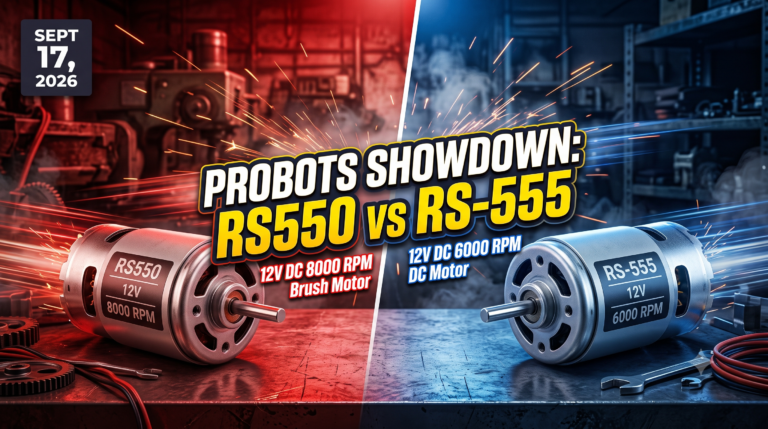
Showdown: RS550 12V DC 8000 vs RS-555 12V DC 6000 RPM DC Motor
Vol. 56 | The Heavyweight DC Drivetrain Duel Reliability isn’t optional when you’re designing actuators that need to move actual steel or
Read Article →
A "smart" device with an unreliable cloud backend isn't just a poor user experience; it's a "connected paperweight" and a critical business failure. The real engineering challenge in IoT is not just connecting one device; it's the high-stakes, complex discipline of managing, scaling, and securing a global fleet of 100,000 devices. This is where most products fail. The platform must ingest terabytes of data, manage millions of connections, and push secure updates, all with millisecond latency. Our service is the essential discipline of engineering this robust, scalable, and secure cloud foundation for your product's entire lifecycle.
An IoT Platform is the full-stack cloud software that enables you to provision, manage, collect data from, and send commands to your entire fleet of deployed devices.
Our Cloud Backend & IoT Platform service is the end-to-end process of architecting and building a custom, production-grade cloud backend for your connected hardware. We are not a generic web development agency; we are full-stack, device-to-cloud engineers. Our value is in understanding both sides of the connection. We build scalable, serverless architectures on AWS (IoT Core, Lambda, DynamoDB) and Azure (IoT Hub, Functions), optimized for high-volume MQTT communication and time-series data. We solve the critical business problems of scalability (your platform won't crash at 10,000 devices), security (preventing fleet-wide hacks), and data management, for verticals including Industrial IoT (IIoT), Smart City, Medical Devices, and Asset Tracking.
For example, a medical device client chose us to build their 100% HIPAA-compliant backend for a remote patient monitor. We used Azure's HIPAA-eligible services and IoT Hub to create a secure, encrypted, and auditable platform that could ingest real-time ECG data, enabling them to pass all security audits and begin clinical trials.

Who Is This Service For?
Startups launching their first connected product and needing a scalable, production-ready backend from day one.
Enterprises with a failing prototype platform (e.g., on a single server) that needs to be re-architected for 100,000+ devices.
R&D Labs that need a robust data-ingestion and management backend for their new hardware.
Our expertise in
Custom Embedded Linux Development
is our key advantage. We know exactly what a Rockchip or NXP-based device needs from the cloud—from efficient data protocols like Protobuf (instead of chatty JSON) to seamless integration with on-device
OTA update
agents like swupdate. We build the cloud for the device.
Any team can use AWS. Our advantage is an AI Co-Pilot trained on our most valuable asset: a proprietary database of device fleet-level data patterns and cloud architecture operational costs from our deployed client systems.
Generative AI (The Creative Partner): When you define your data needs (e.g., "10,000 devices, 1 data point per second"), our GenAI partner generates the complete, best-practice Infrastructure as Code (IaC) templates (e.g., in Terraform or AWS CDK) and the initial REST API documentation. It's built on our proven, scalable serverless architectures.
Machine Learning (The Analytical Partner): This is our key differentiator. Our ML model predicts your long-term costs. Trained on our private data from real, deployed fleets, it can analyze your proposed data schema and predict your 12-month AWS/Azure bill with 95% accuracy. It will flag an inefficient data structure (like using large JSON payloads instead of binary Protobuf) and show you it will cost you $50,000 extra in data transfer fees before you write a line of code.
The Tangible Payoff:
Superior Performance: Our optimized serverless architectures (using Lambda/DynamoDB) achieve <100ms P95 latency for device-to-cloud commands.
Accelerated Timelines: AI-generated IaC templates accelerate initial platform deployment and staging by 90%.
Increased Efficiency: AI-driven cost analysis reduces long-term cloud operational costs by 30-50% by optimizing data structures and service selection from day one.
Visual Aid Suggestion: An image of a data-rich AI analytics dashboard showing IoT fleet data.

Our metrics speak for themselves: we have architected 50+ custom cloud backends, currently managing over 1,000,000+ concurrently connected device endpoints worldwide for our clients.
Case Study 1: The Failing Smart-Energy Platform

Case Study 2: The Low-Latency Smart Mobility Platform
Our platforms are built to be compliant with data privacy laws like GDPR and medical-grade HIPAA (e.g., using AWS/Azure HIPAA-eligible services and BAA).
Our Engineering Philosophy: A device that isn't connected to a reliable, scalable platform isn't smart; it's a liability.
We engage with clients at any stage, providing precisely the value they need.

This is a critical strategic decision. Your primary alternatives are generic, off-the-shelf platforms or a DIY approach.
The Generic/Vendor Trap (The "Off-the-Shelf Platform" Trap): This is the "easy" trap. You build your product on a generic, "drag-and-drop" IoT platform. You are now stuck in their ecosystem, paying per-device, per-message fees that destroy your margins at scale. You have no control, no flexibility, and when you need a custom feature (like a unique data analytics pipeline), you can't build it. You've built your business on your competitor's platform.
The In-House Labyrinth (The "Web Dev vs. IoT Dev" Trap): This is the hidden-cost trap. You ask your web development team to build an "IoT server." They build a great website (using a monolith server, MySQL, REST APIs) that promptly collapses at 1,000 concurrent MQTT connections. They don't have experience with the specific, high-volume, low-latency demands of IoT:

The Expert Partner Solution: We are your expert, outsourced Device-to-Cloud team. We build you a custom, scalable, serverless platform on your own AWS/Azure account. You have 100% control, 100% ownership, and pay rock-bottom infrastructure costs, all while getting a production-ready system in a fraction of the time.
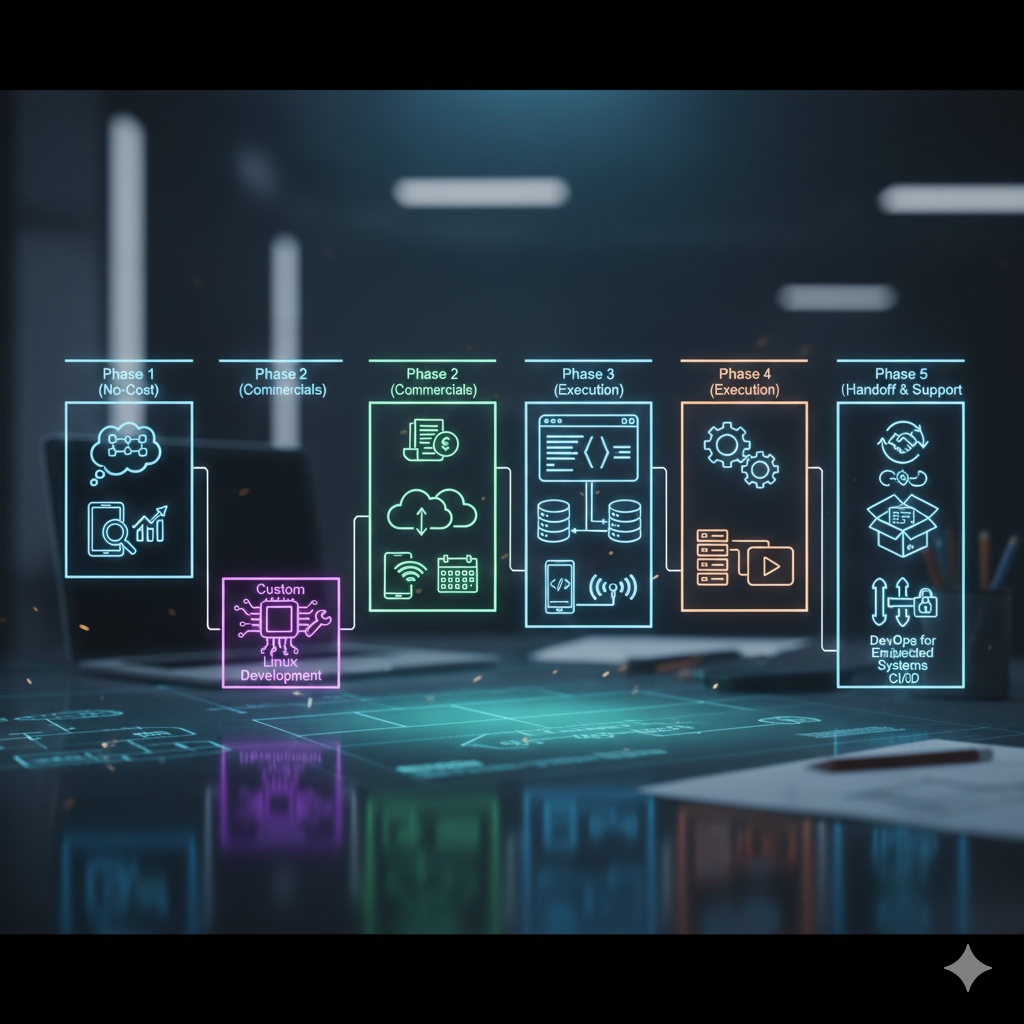
Phase 1 (No-Cost): Full-Stack Architecture Workshop. We start with a free consultation to review your device data model, user-facing app requirements, and 5-year scalability goals.
Phase 2 (Commercials): Formal Proposal & Architecture Plan. We provide a detailed proposal, a full cloud architecture diagram (e.g., AWS services, data schema, API spec), timeline, and quote.
Phase 3 (Execution): Infrastructure as Code (IaC) & API Development. We build the entire, replicable cloud platform using Terraform or AWS CDK. We build the core device-side services (provisioning, data ingestion, OTA) and the backend REST APIs for your mobile/web app.
Phase 4 (Execution): Device Integration & Testing. We work with your hardware team (or our in-house
Custom Embedded Linux Development
team) to integrate the device-side SDK and perform end-to-end integration testing.
Phase 5 (Handoff & Support): Full Handoff & Team Integration. We deliver the full cloud source code, the IaC templates, and a device-side SDK. Our "white-glove" handoff includes integrating this with your
DevOps for Embedded Systems
CI/CD pipeline and training your team. We then transition to long-term support.
Visual Aid Suggestion: A clean flowchart visualizing the full device-to-cloud architecture.
AWS vs. Azure vs. Google Cloud? Which do you recommend?
We are experts in all three, but our primary expertise is with AWS and Azure. We will recommend the best platform for your specific needs. AWS (with IoT Core, Lambda, DynamoDB) is fantastic for most serverless, scalable IoT applications. Azure (with IoT Hub, Sphere) is often a great choice for enterprises already in the Microsoft ecosystem.
What is "serverless" and why is it better than a regular server?
A "regular" server (like an EC2) is a 24/7 cost that you have to patch, secure, and manage. It will crash under heavy load. Serverless (like AWS Lambda) means you don't manage any servers. You just upload your code, and the cloud runs it for you. It scales from 0 to 1,000,000 requests automatically and you only pay for the milliseconds of compute you actually use. It is the modern, cost-effective, and scalable way to build an IoT backend.
What's the difference between MQTT and a REST API for IoT
REST APIs (HTTP) are what websites use. They are "heavy" and stateless. MQTT is a "lightweight" pub/sub protocol designed for IoT. It maintains a persistent, low-bandwidth connection, which is ideal for power-constrained devices on unreliable networks. We use MQTT for device-to-cloud communication and REST APIs for your web/mobile app to talk to the cloud.
How do you handle time-series data from thousands of sensors
We do not use a standard database like MySQL or Postgres for this. They are not built for this data volume and will fail. We use dedicated Time-Series Databases (TSDBs) like Amazon Timestream or InfluxDB. For an industrial client's predictive maintenance platform, we used a TSDB to ingest 100,000 vibration data points per second from 500 factory machines. This enabled them to run real-time queries that detected bearing failures 48 hours in advance.
How does this service connect to your Mobile App Development service?
They are two halves of the same solution. This "Cloud Backend" service builds the secure, scalable REST API. OurMobile App Development for IoT Devices service then consumes that API to build the native iOS/Android app that your end-users will use to control their devices and see their data.
How do you handle device security and provisioning at scale
This is a critical process we co-design with ourCustom Embedded Linux Development team. We use a "Just-in-Time Provisioning" (JITP) flow. Your device, when it's first flashed in the factory, has a generic "bootstrap" certificate. When it first connects to AWS IoT Core, it presents this certificate. The cloud verifies it, then automatically generates and "provisions" a unique, permanent X.509 certificate for that specific device, which it then uses for all future communication.
Probots Electronics is highly regarded for its highly skilled team and knowledgeable staff who provide expert guidance to ensure customers select the right components for their technical projects. The business maintains a strong reputation for prompt service and reliable support, with many clients praising their quick response times and genuine commitment to customer satisfaction.


A very great place for electronics Such a well maintained shop... Felt good shopping here


Nice

For new developments kit available and they will support till working, and I suggest this place strongly


This place has all the electronic parts students will ever need, staff is friendly and the place is organised.


It was a really nice experience! I was happy to find such a wide range of robotics kits for kids, suitable for different age groups and learning levels.

Excellent experience




Good stuff

Buyed them. But no bargain. Helpful staff.


Available all children school project spears parts like electronics


It was good experience




Staff is very patient and helpful

One of the best place for electronics you will get everything you want! With the best and orginal quality

Very helpful staff and the best place to buy components for projects

Wonderful store with expert service and technically strong people.

Prompt delivery, excellent technical support


Large inventory of electronic components and parts. Well trained service personnel and technicians who can quickly identify and rectify product defect if any. They are a reliable and trustworthy online stores.

A very great place for electronics Such a well maintained shop... Felt good shopping here
Nice
For new developments kit available and they will support till working, and I suggest this place strongly
This place has all the electronic parts students will ever need, staff is friendly and the place is organised.
It was a really nice experience! I was happy to find such a wide range of robotics kits for kids, suitable for different age groups and learning levels.
Excellent experience
Good stuff
Buyed them. But no bargain. Helpful staff.
Available all children school project spears parts like electronics
It was good experience
Staff is very patient and helpful
One of the best place for electronics you will get everything you want! With the best and orginal quality
Very helpful staff and the best place to buy components for projects
Wonderful store with expert service and technically strong people.
Prompt delivery, excellent technical support
Large inventory of electronic components and parts. Well trained service personnel and technicians who can quickly identify and rectify product defect if any. They are a reliable and trustworthy online stores.
● 20 min readVol. 56 | The Heavyweight DC Drivetrain Duel Reliability isn’t optional when you’re designing actuators that need to move actual steel or
Read Article →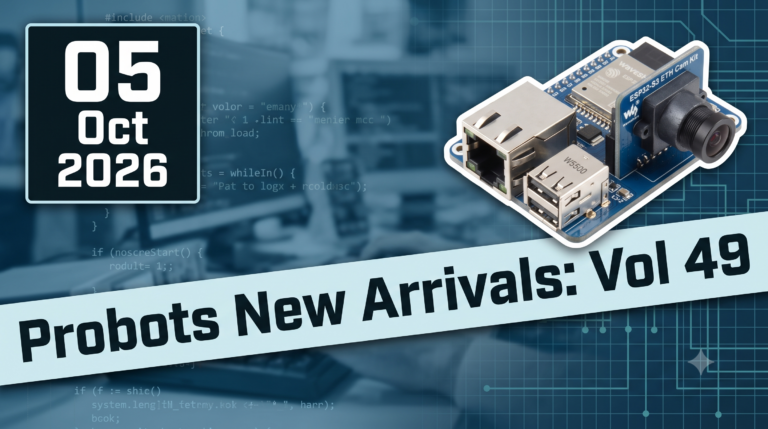 ● 13 min read
Workbench Vol. 49 🚀 The Project Trifecta: 3 Builds to Start Today We don’t just stock parts; we curate ecosystems. This week’s arrivals are desi
Read Article →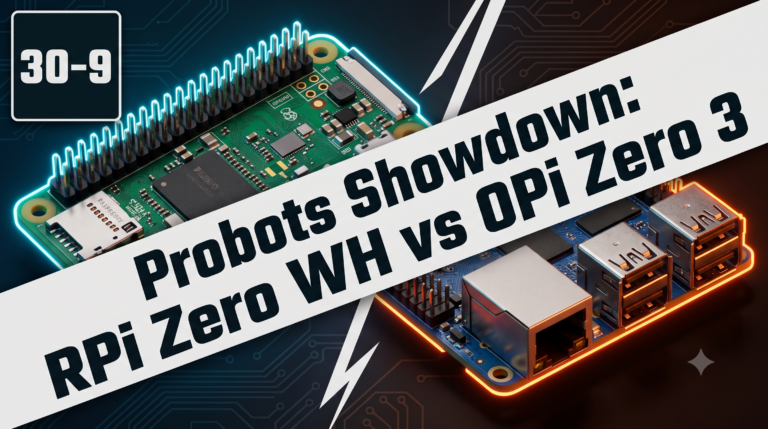 ● 18 min read
Vol. 59 | The Battle of the Bite-Sized Boards Picture a project that needs full Linux, networking, and GPIO—but has almost no room for a conventional
Read Article →