









 ● 20 min read
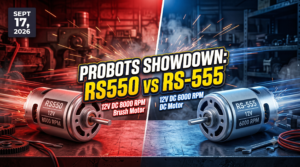
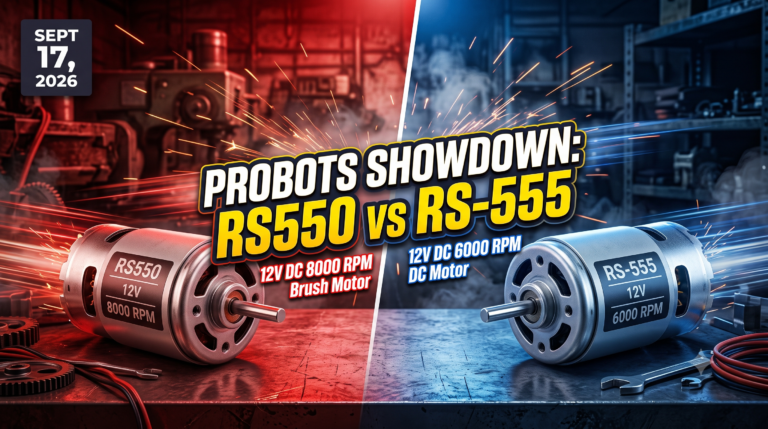
Showdown: RS550 12V DC 8000 vs RS-555 12V DC 6000 RPM DC Motor
Vol. 56 | The Heavyweight DC Drivetrain Duel Reliability isn’t optional when you’re designing actuators that need to move actual steel or
Read Article →
In the world of electronics manufacturing, a product is not truly finished when it comes off the assembly line; it is finished when it has been proven to work perfectly. For any product manufactured at scale—from a mission-critical medical device to a high-volume IoT sensor—hope is not a strategy. The only way to guarantee quality, protect your brand's reputation, and ensure profitability is through rigorous, automated testing of every single unit. This is a discipline that requires a unique blend of mechanical, electronics, and a software engineering. The design of a production test fixture is the science of building confidence, transforming the uncertainty of mass production into the certainty of a reliable product.
The Probots Engineering Division provides an expert-level, end-to-end production test fixture design service. This is a comprehensive engineering partnership that covers the entire lifecycle of creating a custom test solution. The scope includes defining the test strategy, the mechanical design of application-specific fixtures—from manual clamshell fixtures for low-volume testing, to high-force Z-axis pressing fixtures for board-to-board connector validation, and fully automated vacuum or pneumatic-operated fixtures designed for millions of cycles in high-throughput environments. It also includes the design of the internal control electronics, and the development of the test software that orchestrates the entire process. Critically, this service extends beyond simple testing to include the automated firmware provisioning and unique device serialization (e.g., MAC addresses) required to make a product fully functional.

A key area of expertise is the development of custom machine vision systems, where our engineers design unique lighting, camera setups, and algorithms to automatically inspect for defects. This deep technical work solves the critical business problems of high return rates (RMAs) and shipping defective units, delivering an automated system that guarantees every unit leaving the factory meets your exact specifications.
Across every phase of our end-to-end product design process, from PCB layout and firmware to manufacturing and test, our teams are empowered by a unique, proprietary system: the Probots Velocity AI Engine. This is not an off-the-shelf AI tool; it is the culmination of our entire engineering division's collective experience, codified. The Velocity AI Engine is trained on a unified dataset encompassing years of real-world project data—schematics, firmware repositories, and the pass/fail data from millions of units tested in production. This allows it to provide our expert engineers with unparalleled, data-driven insights that are simply not available to anyone else.
Generating a Head Start with Proven Architectures For a new product, our Generative AI tools parse the PCB design files (netlist, schematics) and manufacturing data to create the initial, high-quality draft of the test scripts in Python. It automatically generates the framework for communicating with the device-under-test (DUT) and controlling the test instrumentation, based on architectures proven in past projects.
Predicting Failures with Real-World Insight This is where our proprietary advantage is most clear. The Velocity AI Engine's ML models are trained on historical failure data from previous production runs. When analyzing your new design, the models can predict which components or circuit blocks are statistically most likely to fail based on their complexity and supplier history. This allows us to design a test sequence that focuses effort on the highest-risk areas of your board. Our computer vision models can also be integrated for automated optical inspection, flagging assembly errors like incorrect component orientation or poor solder joints.

Trust is earned on the factory floor. The Probots Engineering Division has designed and deployed over 100 unique production test fixtures for a wide range of products. Our expertise is so recognized within the industry that we are the preferred outsourcing partner for leading Electronics Manufacturing Services (EMS) providers, who trust us to design the complex test solutions for their own A-list clients.
This expertise is often best demonstrated when solving a challenge others deemed impossible. A client came to us with a high-power ASIC board for an AI accelerator. Their previous designers had not foreseen the need for production testing, leaving them with a V1 board that was considered "untestable" but which they desperately needed to ship. The challenges were immense:

Our multidisciplinary team engineered a solution. We designed a custom water-cooled thermal system, a high-precision multi-level bed-of-nails fixture, and a Python test executive that could decode the UART streams on the fly. This fixture allowed them to validate and ship their V1 product, rescuing the entire project. Impressed by this capability, the client engaged our division to design the V2 PCB. The new board, designed by our team with proper Design for Test (DFT) principles, is now praised by their EMS and service engineers for its ease of testing, repair, and serviceability.
This rigorous, data-driven philosophy ensures our fixtures are not just testers, but powerful quality assurance tools that solve real-world production crises.
Our world-class test engineering expertise can be engaged in the way that best suits your project's needs: as a specialized, standalone service for your existing hardware, or as a fully integrated component of a complete, end-to-end product development partnership.
As a Standalone Service For teams with an existing product, this service provides the robust testing solution needed to guarantee the quality of every unit you ship. This is ideal for product companies who have already designed their hardware but need a specialist partner to solve the critical challenge of production testing and quality assurance.
As an Integrated End-to-End Solution: The Highest Value Engagement While offered as a standalone service, our test fixture design expertise delivers its most profound value when integrated into our end-to-end product development lifecycle. The reason is simple: higher savings and a more effective test solution. When our test engineers are involved from day one, they collaborate directly with our PCB design and firmware teams to implement Design for Test (DFT) principles into the core product from the very beginning. This ensures the hardware has the necessary test points and the firmware has the right diagnostic hooks, making the final test fixture simpler to design, cheaper to build, and far more effective at catching faults. This proactive approach can reduce final test fixture costs by up to 25% and accelerate its deployment by weeks.

A common temptation is to rely on a contract manufacturer's (EMS) simple, built-in testing. This is one of the most dangerous and costly mistakes a hardware company can make, as it creates a critical blind spot in both quality control and final product readiness.
The EMS "Go/No-Go" Trap: The Critical Difference Most EMS providers offer basic tests that provide a simple "PASS" or "FAIL" result. They can tell you if a product works, but not how well it works, and their responsibility often ends there. The fixtures designed by the Probots Engineering Division are complete product finishing systems. They perform deep, parametric testing and handle the critical final provisioning steps that an EMS is not equipped to manage.

This rich, quantitative data and complex provisioning capability is invaluable. It allows us to catch marginal components that are technically "in-spec" but are likely to cause field failures later. Furthermore, every single measurement and provisioning action is logged by a computer-controlled data logger with a timestamp, serial number, and lot code. This creates an indelible quality record, providing the hard data needed to verify customer warranty claims and pinpoint the root cause of any failures.
Industry data shows that a single product recall or a high RMA rate can cost a company 5-10 times the initial investment in a proper automated test system. A robust test fixture is not a cost; it is an insurance policy against the brand damage and financial loss of shipping a faulty product.
Embarking on a custom test fixture project is a structured, transparent journey. This roadmap clarifies the steps from our first conversation to a fully operational test system on your production line, whether we are working on an existing product or as part of an end-to-end design process.
Phase 1: Test Strategy & Discovery (No-Cost) The process begins with a free Test Strategy Review. Our lead test engineers collaborate with your team to understand your product, its critical functions, and your quality goals.
Phase 2: Formal Proposal & Quote Following the review, we prepare a detailed proposal and a formal quote. This document outlines the full test plan, the fixture's technical specifications, all software deliverables, a projected timeline, and a clear quotation.
Phase 3: Design & Development Once approved, the project kicks off. Our team executes the full multidisciplinary design: the mechanical fixture, the internal electronics, and the test software.

Phase 4: Integration & Validation The hardware and software are integrated, and the completed fixture is rigorously validated against a "golden" unit of your product to ensure it is catching all potential faults correctly.
Phase 5: Deployment, Training & Launch The fixture is deployed to your chosen contract manufacturer. We provide comprehensive documentation and on-site training for the factory operators to ensure a smooth handoff and successful launch.
Do your fixtures handle more than just electrical testing? Absolutely. A Probots-designed fixture is a complete functional testing and product finishing system. Its capabilities go far beyond simple electrical checks to ensure the entire product is ready for the customer. This includes:
What goes into the design of your custom test fixtures? A Probots-designed fixture is a complete, custom-engineered system designed for reliability and serviceability over hundreds of thousands of cycles. It includes:
How can we test more efficiently in high volume? This is a key part of our Design for Test (DFT) consulting. For high-volume products, we strongly recommend designing the PCB in a panelized array. This allows our test fixture to be designed to test all the boards on the panel simultaneously in a single operation. For example, testing a panel of 8 boards at once can reduce the total test time per board by over 85%, dramatically increasing factory throughput and lowering the cost of quality.
How does your machine vision testing work? It's a full-stack solution. We design a custom physical setup with specialized lighting and high-resolution cameras to capture the best possible image. Then, our software team moves beyond standard Automated Optical Inspection (AOI) to develop custom algorithms and train ML models that perform functional visual validation. For example, our systems can confirm that a status LED is blinking at the correct frequency, that an RGB LED is displaying the precise color commanded by the firmware, or use Optical Character Recognition (OCR) to read and validate the text on an LCD or OLED screen during a boot sequence. For mission-critical solder joints on components like BGAs, our models can analyze fillet geometry to predict the long-term risk of a cold solder joint, providing a level of quality assurance far beyond simple pass/fail checks.
How do you handle test data for traceability and warranty? Our fixtures are designed to log every single parametric measurement for every unit tested. Each result is stored in a central database tagged with the unit's unique serial number, a timestamp, and the manufacturing lot code. We provide software tools to analyze this data, allowing you to track production yield, identify trends, and provide definitive proof of a unit's tested performance when handling customer complaints or warranty claims.
What test instrumentation do you use? We integrate best-in-class instrumentation from industry leaders like National Instruments (NI), Keysight, and Rohde & Schwarz, selecting the right tools for your product's specific testing needs.
Can you design fixtures for RF and wireless products? Absolutely. We design fixtures with integrated RF shield boxes and use Vector Network Analyzers (VNAs) and Spectrum Analyzers to test the performance of radios for products like Wi-Fi, Bluetooth, and Cellular IoT devices.
What software do you use for test automation? Our primary development environments are Python and LabVIEW, allowing for rapid development and easy integration with a wide range of test equipment.
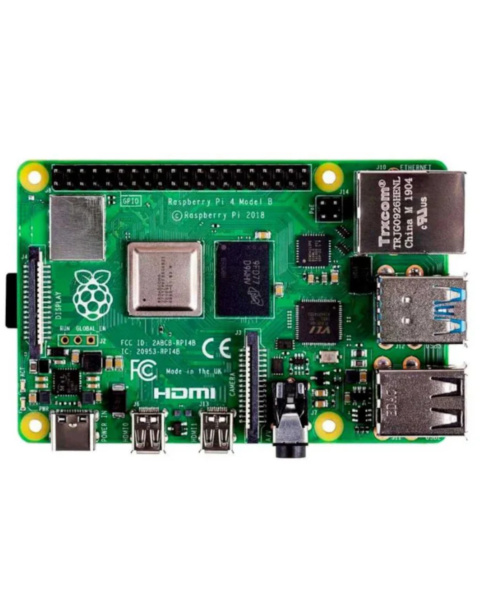
How is the fixture controlled? The fixture is typically controlled by an industrial PC or a single-board computer (like a Raspberry Pi) running the test executive software we develop.
How does this integrate with our firmware? Our test software communicates directly with your product's firmware through interfaces like UART, USB, or Ethernet. We collaborate with your firmware team (or our own) to create a "test mode" in your firmware that allows for deep diagnostic control.
Probots Electronics is highly regarded for its highly skilled team and knowledgeable staff who provide expert guidance to ensure customers select the right components for their technical projects. The business maintains a strong reputation for prompt service and reliable support, with many clients praising their quick response times and genuine commitment to customer satisfaction.


A very great place for electronics Such a well maintained shop... Felt good shopping here


Nice

For new developments kit available and they will support till working, and I suggest this place strongly


This place has all the electronic parts students will ever need, staff is friendly and the place is organised.


It was a really nice experience! I was happy to find such a wide range of robotics kits for kids, suitable for different age groups and learning levels.
Excellent experience




Good stuff

Buyed them. But no bargain. Helpful staff.


Available all children school project spears parts like electronics


It was good experience




Staff is very patient and helpful

One of the best place for electronics you will get everything you want! With the best and orginal quality

Very helpful staff and the best place to buy components for projects

Wonderful store with expert service and technically strong people.

Prompt delivery, excellent technical support


Large inventory of electronic components and parts. Well trained service personnel and technicians who can quickly identify and rectify product defect if any. They are a reliable and trustworthy online stores.

A very great place for electronics Such a well maintained shop... Felt good shopping here
Nice
For new developments kit available and they will support till working, and I suggest this place strongly
This place has all the electronic parts students will ever need, staff is friendly and the place is organised.
It was a really nice experience! I was happy to find such a wide range of robotics kits for kids, suitable for different age groups and learning levels.
Excellent experience
Good stuff
Buyed them. But no bargain. Helpful staff.
Available all children school project spears parts like electronics
It was good experience
Staff is very patient and helpful
One of the best place for electronics you will get everything you want! With the best and orginal quality
Very helpful staff and the best place to buy components for projects
Wonderful store with expert service and technically strong people.
Prompt delivery, excellent technical support
Large inventory of electronic components and parts. Well trained service personnel and technicians who can quickly identify and rectify product defect if any. They are a reliable and trustworthy online stores.
● 20 min readVol. 56 | The Heavyweight DC Drivetrain Duel Reliability isn’t optional when you’re designing actuators that need to move actual steel or
Read Article →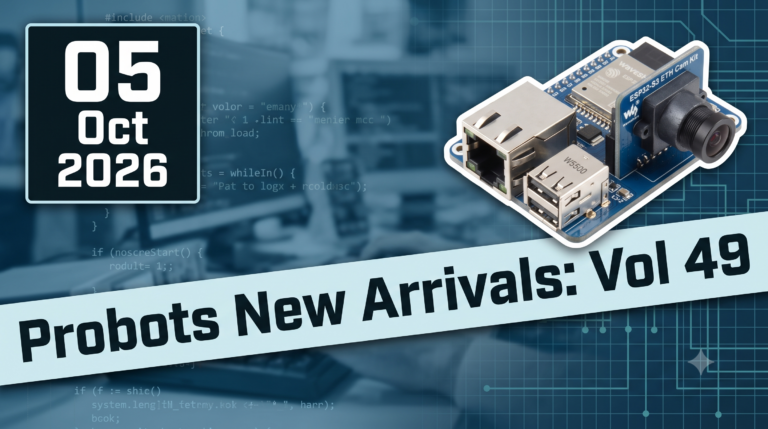 ● 13 min read
Workbench Vol. 49 🚀 The Project Trifecta: 3 Builds to Start Today We don’t just stock parts; we curate ecosystems. This week’s arrivals are desi
Read Article → ● 18 min read
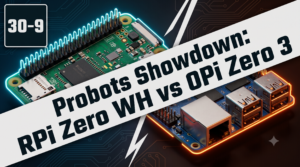
Vol. 59 | The Battle of the Bite-Sized Boards Picture a project that needs full Linux, networking, and GPIO—but has almost no room for a conventional
Read Article →