









 ● 20 min read
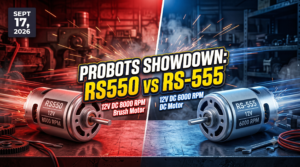
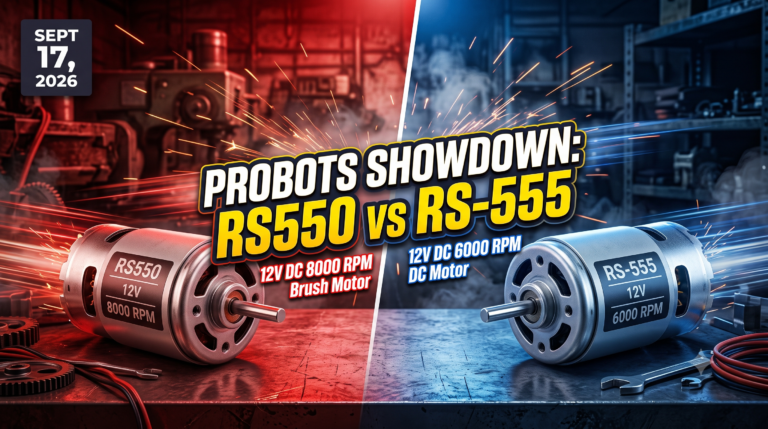
Showdown: RS550 12V DC 8000 vs RS-555 12V DC 6000 RPM DC Motor
Vol. 56 | The Heavyweight DC Drivetrain Duel Reliability isn’t optional when you’re designing actuators that need to move actual steel or
Read Article →
This case study examines the resolution of I²C bus contention in high-density thermal sensing arrays for industrial power electronics. By transitioning from a transparent bridge approach to a state-aware, deterministic segment management strategy using the PCA9546 multiplexer, we eliminated "ghosting" data and critical system hangs. The result is a robust, high-frequency sensing sub-system capable of meeting strict 50ms thermal protection windows in high-EMI environments.
In a high-density thermal monitoring application, our client faced a critical failure: the inability to scale their temperature sensing array. The design required monitoring 16 independent thermal zones using NTC218 digital temperature sensors. However, the NTC218 has a fixed or limited I²C address range, leading to immediate bus contention on a single master line.
The symptom was not a total system crash, but rather "ghosting" data—where readings from one sensor appeared to originate from another—and periodic I²C bus hangs that required a hard power cycle to clear. With high-voltage power stage protection at stake, a non-deterministic sensing sub-system was a catastrophic risk. The constraint was a legacy microcontroller with limited hardware I²C peripherals, precluding the use of multiple independent buses.
SEO Keywords: I2C multiplexer bus contention, PCA9546 configuration, NTC218 digital sensor interfacing, debug I2C address conflict, embedded thermal management.
Initial debugging using logic analyzers revealed that while primary I²C transactions were starting correctly, the bus would frequently enter a "Busy" state that the software could not recover from.
We investigated several "Red Herrings":
The solution involved a low-level overhaul of the I²C driver layer to treat the PCA9546 not as a transparent bridge, but as a state-aware gatekeeper.
Architectural Decision: Active Channel Isolation
We implemented a Mutex-locked I²C Transaction Wrapper. This ensured that the PCA9546 Control Register was the only point of entry for any sensor reading, preventing concurrent access and mid-transaction switching.
Configuration Logic
We implemented a strict "Select-Transact-Deselect" flow. The PCA9546 control register (at address 0x70) uses a 4-bit field to enable/disable downstream segments.
// Enable only Channel 2 on the PCA9546
uint8_t mux_config = 0x04; // Bit 2 set
HAL_I2C_Master_Transmit(&hi2c1, PCA9546_ADDR, &mux_config, 1, 100);
// Address the NTC218 on the isolated segment
uint8_t raw_temp[2];
HAL_I2C_Mem_Read(&hi2c1, NTC218_ADDR, TEMP_REG, I2C_MEMADD_SIZE_8BIT, raw_temp, 2, 100);
// Safety: Disable all channels to prevent bus noise leakage
mux_config = 0x00;
HAL_I2C_Master_Transmit(&hi2c1, PCA9546_ADDR, &mux_config, 1, 100);
To ensure a deterministic solution rather than a superficial patch, we employed a rigorous debugging and optimization workflow:
By implementing strict segment isolation and bus recovery logic (toggling SCL if SDA is stuck low), we achieved:
| Metric |
Before Optimization |
After Implementation |
| Mean Time Between Failures (MTBF) |
4.2 Hours | >10,000 Hours (Est.) |
| Bus Recovery Time | Manual Reset Required |
<1ms (Auto-Recovery) |
| Sampling Jitter | ±15ms | <1ms |
While the current implementation is reactive, our future roadmap includes:
The most significant hurdle was the software's "blind" switching. We discovered that switching a multiplexer while a subordinate device is in a state of flux (Mid-START or Mid-ACK) is the primary cause of unrecoverable bus hangs.
Expert Takeaway: Never treat a multiplexer as a transparent wire. Always implement a "Clear-Before-Switch" protocol that ensures the bus is in a verified IDLE state before reconfiguring segments.
Interfacing hardware at this level requires a deep understanding of the electrical characteristics of the I²C protocol and silicon-level behavior. At Probots, we specialize in high-reliability embedded systems where "usually works" is not an option. Our expertise in custom Linux kernels, RTOS optimization, and hardware-level debugging allows us to solve the "dead board" problems that stall R&D teams for months.
Contact our engineering team for a consultation.
Probots Electronics is highly regarded for its highly skilled team and knowledgeable staff who provide expert guidance to ensure customers select the right components for their technical projects. The business maintains a strong reputation for prompt service and reliable support, with many clients praising their quick response times and genuine commitment to customer satisfaction.


A very great place for electronics Such a well maintained shop... Felt good shopping here


Nice

For new developments kit available and they will support till working, and I suggest this place strongly


This place has all the electronic parts students will ever need, staff is friendly and the place is organised.


It was a really nice experience! I was happy to find such a wide range of robotics kits for kids, suitable for different age groups and learning levels.

Excellent experience




Good stuff

Buyed them. But no bargain. Helpful staff.


Available all children school project spears parts like electronics


It was good experience




Staff is very patient and helpful

One of the best place for electronics you will get everything you want! With the best and orginal quality

Very helpful staff and the best place to buy components for projects

Wonderful store with expert service and technically strong people.

Prompt delivery, excellent technical support


Large inventory of electronic components and parts. Well trained service personnel and technicians who can quickly identify and rectify product defect if any. They are a reliable and trustworthy online stores.

A very great place for electronics Such a well maintained shop... Felt good shopping here
Nice
For new developments kit available and they will support till working, and I suggest this place strongly
This place has all the electronic parts students will ever need, staff is friendly and the place is organised.
It was a really nice experience! I was happy to find such a wide range of robotics kits for kids, suitable for different age groups and learning levels.
Excellent experience
Good stuff
Buyed them. But no bargain. Helpful staff.
Available all children school project spears parts like electronics
It was good experience
Staff is very patient and helpful
One of the best place for electronics you will get everything you want! With the best and orginal quality
Very helpful staff and the best place to buy components for projects
Wonderful store with expert service and technically strong people.
Prompt delivery, excellent technical support
Large inventory of electronic components and parts. Well trained service personnel and technicians who can quickly identify and rectify product defect if any. They are a reliable and trustworthy online stores.
● 20 min readVol. 56 | The Heavyweight DC Drivetrain Duel Reliability isn’t optional when you’re designing actuators that need to move actual steel or
Read Article → ● 13 min read
Workbench Vol. 49 🚀 The Project Trifecta: 3 Builds to Start Today We don’t just stock parts; we curate ecosystems. This week’s arrivals are desi
Read Article → ● 18 min read
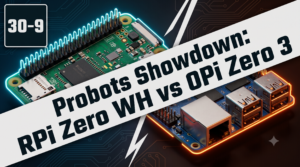
Vol. 59 | The Battle of the Bite-Sized Boards Picture a project that needs full Linux, networking, and GPIO—but has almost no room for a conventional
Read Article →