








 ● 20 min read
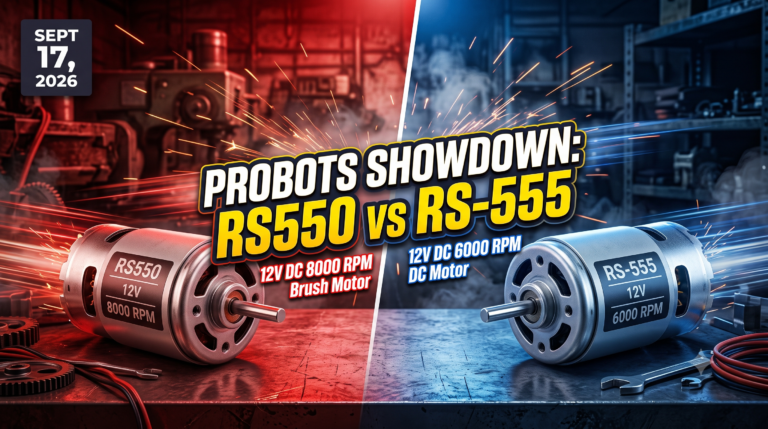
Showdown: RS550 12V DC 8000 vs RS-555 12V DC 6000 RPM DC Motor
Vol. 56 | The Heavyweight DC Drivetrain Duel Reliability isn’t optional when you’re designing actuators that need to move actual steel or
Read Article →
To your customer, the app is the product. You can engineer the most advanced PCB and write the most efficient firmware, but if the mobile app crashes during Bluetooth pairing or takes 5 seconds to toggle a light, the entire product is a failure. Mobile App Development for IoT is not web development. It is a specialized engineering discipline that requires deep knowledge of hardware communication protocols, real-time data synchronization, and battery-conscious design. Our service ensures your mobile app is a seamless, robust extension of your hardware, providing a user experience that builds trust, not frustration.
What is IoT Mobile App Development?
It is the creation of iOS and Android applications specifically designed to interact with connected hardware. Unlike standard apps that just fetch data from a server, IoT apps must manage direct Bluetooth Low Energy (BLE) connections, handle complex Wi-Fi Provisioning sequences, visualize real-time sensor data, and act as a reliable bridge between the physical device and the cloud.
Our Mobile App Development service is the expert execution phase where we build the user-facing control center for your product. We are not a generic digital agency; we are Embedded System Architects who build apps. Our core competency lies in the "handshake" between the phone and the device. We are masters of BLE GATT profiles, MQTT/WebSockets for low-latency cloud control, and complex data visualization for industrial sensors.
We solve the critical business problems of "flaky" connections, poor app store ratings due to pairing failures, and the disconnect between firmware engineers and app developers.
Smart Home & Consumer Electronics:
Smart Home & Consumer Electronics:
Wearables & Digital Health (HIPAA Compliant):
Smart Mobility & Automotive:

Industrial & Professional IoT:
Audio & Video Devices:
We go beyond basic connectivity. We implement NFC "Tap-to-Pair" for instant, frictionless onboarding and precise Geolocation & Geofencing services for asset tracking and logistics applications.
We deliver high-performance applications using industry-standard tools:
Who Is This Service For?
We build apps that talk to the industry's leading silicon:
Many IoT products aren't personal devices; they are business tools used in factories, hospitals, and retail stores. We specialize in building restricted, secure applications for Corporate Owned, Single Use (COSU) devices.
1. Enterprise Security & Identity
Security is non-negotiable. We integrate enterprise-grade identity management into your IoT app:
2. Android Enterprise & Kiosk Mode
For factory controllers, POS terminals, and logistics scanners, the device is a tool, not a phone. You cannot allow employees to watch YouTube, browse Facebook, or mess with Wi-Fi settings.
3. iOS Supervised Mode & Guided Access
For medical patient portals or high-end retail kiosks using iPads.

4. Specialized Industry Applications
Any agency can build a UI. Our advantage is an AI Co-Pilot trained on our proprietary library of proven IoT communication patterns and edge-case failure logs.

The Tangible Payoff:
Our metrics are our proof: we have deployed over 40+ IoT mobile applications, managing connections to hundreds of thousands of devices with 4.5+ star average ratings.
Case Study: The "Unpairable" Smart Lock
Our Engineering Philosophy: The app is not a remote control; it is the primary way the user experiences the quality of your hardware.

When to Choose Cross-Platform vs. Native: This is a critical architectural decision. We generally recommend Cross-Platform (Flutter) for speed and efficiency, but Native for deep hardware integration
| Feature | Cross-Platform (Flutter) | Native (Swift/Kotlin) |
|---|---|---|
| Cost & Speed | ~40% Faster/Cheaper (Single Codebase) |
Higher (Two Codebases) |
| BLE Performance | Excellent (via modern libraries) | Best (Direct CoreBluetooth access) |
| Background Tasks | Good (via Platform Channels) | Superior (Native Background Modes) |
| UI Consistency | Pixel-Perfect on all screens | Adapts to OS standard |
| Maintenance | Low (One codebase to update) | High (Maintain iOS & Android separately) |
We engage with clients at any stage:

This is a critical strategic decision. The alternative to professional IoT App development is usually hiring a generalist web/app agency.

The Expert Partner Solution: We are hardware natives. We understand the physical constraints of the device. We build resilient apps that handle disconnection gracefully, manage background tasks correctly, and guide the user through complex setup flows with ease.

How Much Does an IoT App Cost?
IoT apps are more complex than standard apps due to the hardware integration testing required.
Typical Timeline:

"App Store Insurance" (Maintenance Plan)
iOS and Android update their Bluetooth and Location permission policies every year (e.g., Android 12 introduced huge BLE changes). If you don't update your app, it will stop working. We offer an Annual Maintenance Contract (AMC) that includes:
OS Compatibility Updates: Ensuring the app works on iOS 18/Android 15.
Library Upgrades: Security patches for 3rd party dependencies.
Uptime Monitoring: Watching for crash reports and fixing them proactively.
Flutter or Native (Swift/Kotlin)? What do you recommend?
For 90% of IoT projects, we recommend Flutter. It allows us to write one codebase that runs flawlessly on both iOS and Android, saving you ~40% in development and maintenance costs. The performance is near-native, and the BLE libraries are mature. We recommend Native (Kotlin for Android, Swift for iOS) only if you need deep, OS-specific integrations (like Apple Watch complications or extensive background processing). Kotlin and Android Studio are our standard tools for any native Android work, ensuring we use the latest Jetpack libraries and best practices.
How do you handle Wi-Fi Provisioning (getting the device online)?
This is the hardest part of UX. We implement industry-standard, robust provisioning flows. We prefer BLE-based provisioning (sending Wi-Fi creds over Bluetooth) as it is much more reliable than the older "SoftAP" method (connecting to the device's hotspot). We use technologies like Espressif ESP-Touch or TI SmartConfig where appropriate.
Can the app update my device's firmware (OTA)?
Yes. We build robust DFU (Device Firmware Update) modules into the app. We support Nordic DFU, Espressif OTA, and custom protocols. Crucially, we implement safety checks (battery level, signal strength) and resume capability to ensure a failed download doesn't brick your hardware.
What about offline mode?
An IoT app must work when the internet is down. We implement local caching (using SQLite or Hive). The app stores data received from the device locally and syncs it to the cloud later when the connection is restored. This ensures the user never loses data.
Can you integrate with voice assistants (Alexa/Google Home)?
Yes. While this is primarily a cloud-to-cloud integration, the mobile app is often used to link the accounts ("Account Linking"). We build the OAuth flows required to connect your user's account with their Amazon or Google account to enable voice control.
How do you secure the data between the app and the device?
We treat the local link as a hostile environment. We implement BLE Bonding for encrypted local communication. For cloud communication, we use TLS 1.2/1.3. We also implement "Certificate Pinning" in the app to prevent Man-in-the-Middle attacks on the API.
Why does my current app disconnect from the device constantly?
This is usually due to poor "Connection Interval" negotiation or aggressive battery optimization by the Android OS. We tune the connection parameters on both the Firmware and App side to maintain a stable link, and we implement "Keep-Alive" logic that works with the OS's battery saver, not against it.
Can you visualize real-time high-frequency data (like ECG or Vibration)?
Yes. Standard charting libraries choke on 100Hz+ data. We use high-performance, GPU-accelerated charting engines (like Skia in Flutter) to render smooth, real-time graphs at 60fps, even with thousands of data points streaming in per second.
Do you handle App Store / Play Store rejection issues?
Yes. Apple and Google are very strict about apps that use Bluetooth and Location permissions. We know the guidelines inside out. We prepare the necessary privacy policy declarations, permission strings, and demo videos to ensure your app passes review on the first submission.
How do you test the app with the hardware?
We use a "Device Farm" approach. We test your app on a wide range of physical phones (low-end Androids, various iPhones, tablets) connected to your actual hardware. We also use automated UI testing to ensure that a UI update doesn't break the pairing flow.
Probots Electronics is highly regarded for its highly skilled team and knowledgeable staff who provide expert guidance to ensure customers select the right components for their technical projects. The business maintains a strong reputation for prompt service and reliable support, with many clients praising their quick response times and genuine commitment to customer satisfaction.


A very great place for electronics Such a well maintained shop... Felt good shopping here


Nice

For new developments kit available and they will support till working, and I suggest this place strongly


This place has all the electronic parts students will ever need, staff is friendly and the place is organised.


It was a really nice experience! I was happy to find such a wide range of robotics kits for kids, suitable for different age groups and learning levels.

Excellent experience




Good stuff

Buyed them. But no bargain. Helpful staff.


Available all children school project spears parts like electronics


It was good experience




Staff is very patient and helpful

One of the best place for electronics you will get everything you want! With the best and orginal quality

Very helpful staff and the best place to buy components for projects

Wonderful store with expert service and technically strong people.

Prompt delivery, excellent technical support


Large inventory of electronic components and parts. Well trained service personnel and technicians who can quickly identify and rectify product defect if any. They are a reliable and trustworthy online stores.

A very great place for electronics Such a well maintained shop... Felt good shopping here
Nice
For new developments kit available and they will support till working, and I suggest this place strongly
This place has all the electronic parts students will ever need, staff is friendly and the place is organised.
It was a really nice experience! I was happy to find such a wide range of robotics kits for kids, suitable for different age groups and learning levels.
Excellent experience
Good stuff
Buyed them. But no bargain. Helpful staff.
Available all children school project spears parts like electronics
It was good experience
Staff is very patient and helpful
One of the best place for electronics you will get everything you want! With the best and orginal quality
Very helpful staff and the best place to buy components for projects
Wonderful store with expert service and technically strong people.
Prompt delivery, excellent technical support
Large inventory of electronic components and parts. Well trained service personnel and technicians who can quickly identify and rectify product defect if any. They are a reliable and trustworthy online stores.
● 20 min readVol. 56 | The Heavyweight DC Drivetrain Duel Reliability isn’t optional when you’re designing actuators that need to move actual steel or
Read Article → ● 13 min read
Workbench Vol. 49 🚀 The Project Trifecta: 3 Builds to Start Today We don’t just stock parts; we curate ecosystems. This week’s arrivals are desi
Read Article →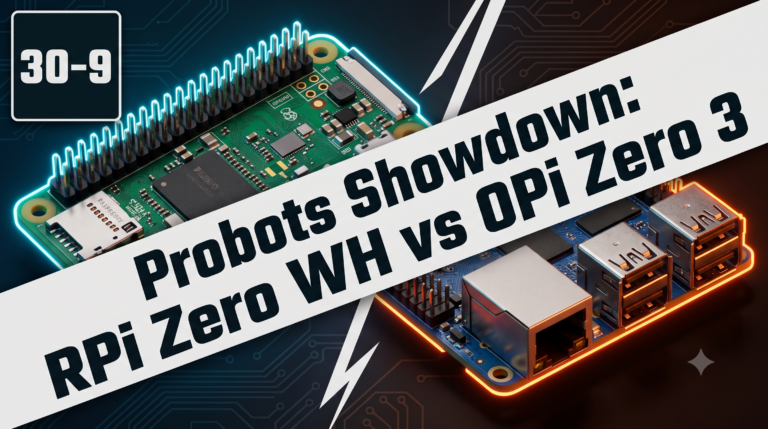 ● 18 min read
Vol. 59 | The Battle of the Bite-Sized Boards Picture a project that needs full Linux, networking, and GPIO—but has almost no room for a conventional
Read Article →