












 ● 20 min read
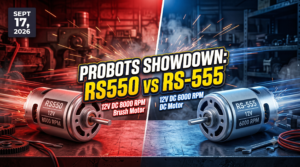
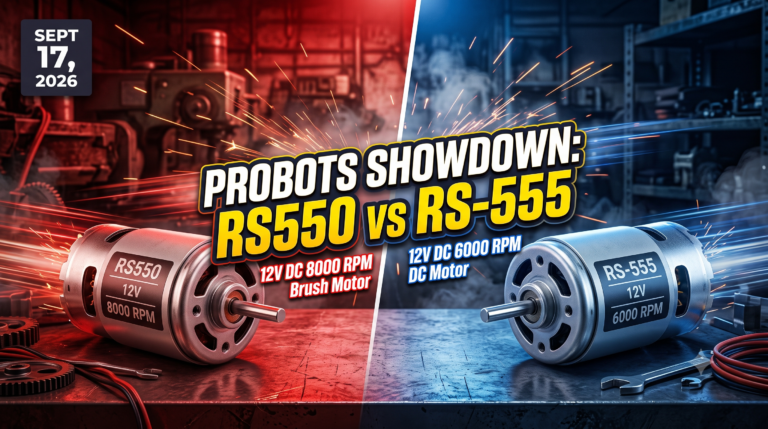
Showdown: RS550 12V DC 8000 vs RS-555 12V DC 6000 RPM DC Motor
Vol. 56 | The Heavyweight DC Drivetrain Duel Reliability isn’t optional when you’re designing actuators that need to move actual steel or
Read Article →
Subject: Embedded Protocol Optimization & High-Bandwidth Deterministic Interfacing
Industry: Industrial Robotics, High-Speed Data Acquisition (DAQ), Motion Control
Applicable Verticals: Real-time Telemetry, Motor Control Feedback, FPGA-to-MCU Interfacing, High-Speed Sensor Arrays
In precision robotics and high-frequency motion control, standard asynchronous communication speeds (115.2 kbps to 921.6 kbps) often become the primary system bottleneck. While SPI or I2C are alternatives, UART remains the preferred choice for long-trace robustness and ease of isolation. However, pushing UART to 3.125 Mbps introduces significant physical and logic-layer complexities.
During the development of a high-speed BLDC motor controller, the system experienced intermittent command "stalls" and telemetry lag.
An engineering audit revealed that the primary failures were not electrical, but rather a misalignment between peripheral clocking and interrupt handling.
| Failure Mode | Mechanism | Result |
|---|---|---|
| Quantization Error | The clock divider (USARTDIV) yielded a non-integer value for the target 3.125M speed from a 48MHz/80MHz clock. | Baud rate deviation > 3%, causing frequent framing errors. |
| Interrupt Saturation | The CPU spent >60% of cycles entering/exiting UART ISRs to move individual bytes. | Main control loop jitter; watchdog resets during high traffic. |
| Clock Domain Jitter | Changing system frequency dynamically shifted the UART peripheral clock (f_CK) without recalculating the BRR. | Instantaneous loss of synchronization (Link Death). |
Standard HAL drivers add overhead (error checking, state management) that consumes precious microseconds. At 3.125 Mbps, the window to process a byte is shorter than the execution time of a typical HAL-level function.
We bypassed the abstraction layers to manipulate the Baud Rate Register (BRR) and DMA Control Registers directly, ensuring the baud rate switch occurs within a single instruction cycle.
We implemented a two-stage protocol to allow the host to command a speed change without losing the link:
// Direct Register Access for 3.125 Mbps Configurationvoid set_uart_high_speed_3M125(UART_TypeDef *UARTx, uint32_t periphClock) { // Target: 3,125,000 bps // Formula: Baud = f_CK / (USARTDIV) [Assuming Over8 = 0] // Calculate fractional divider for precision float usartdiv = (float)periphClock / 3125000.0f; uint32_t brr_val = (uint32_t)usartdiv; // Critical Section: Ensure no data is in transit while(!(UARTx->SR & UART_FLAG_TC)); UARTx->CR1 &= ~UART_CR1_UE; // Disable UART // Apply Register-Level Configuration UARTx->BRR = (uint16_t)brr_val; UARTx->CR3 |= UART_CR3_DMAR; // Enable DMA Receiver for zero-CPU load UARTx->CR1 |= UART_CR1_UE; // Re-enable UART}
The implementation of this dynamic protocol delivered high-fidelity data streams for the Probots industrial line:
This case study proves that with deep-dive hardware knowledge, standard microcontrollers can achieve "industrial-plus" performance. By managing clocks and registers directly, we transformed a simple serial link into a high-speed backbone for modern robotics.
Need high-speed deterministic serial protocols for your project ?
Explore our controller range or contact the Probots engineering team for custom firmware optimization.
Probots Electronics is highly regarded for its highly skilled team and knowledgeable staff who provide expert guidance to ensure customers select the right components for their technical projects. The business maintains a strong reputation for prompt service and reliable support, with many clients praising their quick response times and genuine commitment to customer satisfaction.


A very great place for electronics Such a well maintained shop... Felt good shopping here


Nice

For new developments kit available and they will support till working, and I suggest this place strongly


This place has all the electronic parts students will ever need, staff is friendly and the place is organised.


It was a really nice experience! I was happy to find such a wide range of robotics kits for kids, suitable for different age groups and learning levels.

Excellent experience




Good stuff

Buyed them. But no bargain. Helpful staff.


Available all children school project spears parts like electronics


It was good experience




Staff is very patient and helpful

One of the best place for electronics you will get everything you want! With the best and orginal quality

Very helpful staff and the best place to buy components for projects

Wonderful store with expert service and technically strong people.

Prompt delivery, excellent technical support


Large inventory of electronic components and parts. Well trained service personnel and technicians who can quickly identify and rectify product defect if any. They are a reliable and trustworthy online stores.

A very great place for electronics Such a well maintained shop... Felt good shopping here
Nice
For new developments kit available and they will support till working, and I suggest this place strongly
This place has all the electronic parts students will ever need, staff is friendly and the place is organised.
It was a really nice experience! I was happy to find such a wide range of robotics kits for kids, suitable for different age groups and learning levels.
Excellent experience
Good stuff
Buyed them. But no bargain. Helpful staff.
Available all children school project spears parts like electronics
It was good experience
Staff is very patient and helpful
One of the best place for electronics you will get everything you want! With the best and orginal quality
Very helpful staff and the best place to buy components for projects
Wonderful store with expert service and technically strong people.
Prompt delivery, excellent technical support
Large inventory of electronic components and parts. Well trained service personnel and technicians who can quickly identify and rectify product defect if any. They are a reliable and trustworthy online stores.
● 20 min readVol. 56 | The Heavyweight DC Drivetrain Duel Reliability isn’t optional when you’re designing actuators that need to move actual steel or
Read Article → ● 13 min read
Workbench Vol. 49 🚀 The Project Trifecta: 3 Builds to Start Today We don’t just stock parts; we curate ecosystems. This week’s arrivals are desi
Read Article →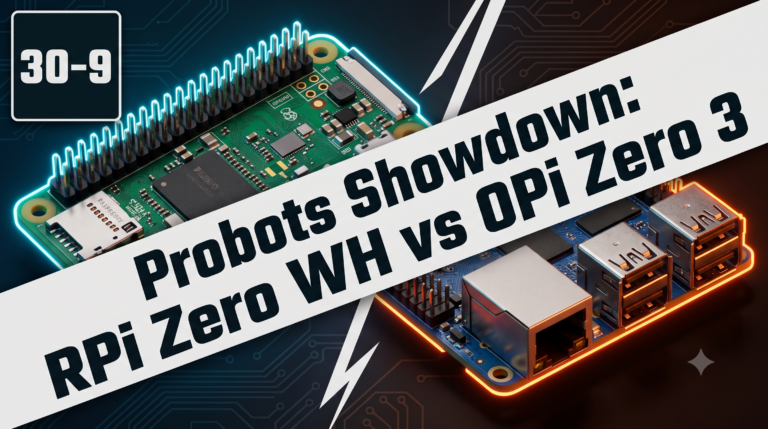 ● 18 min read
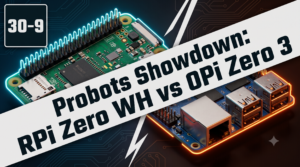
Vol. 59 | The Battle of the Bite-Sized Boards Picture a project that needs full Linux, networking, and GPIO—but has almost no room for a conventional
Read Article →