









 ● 20 min read
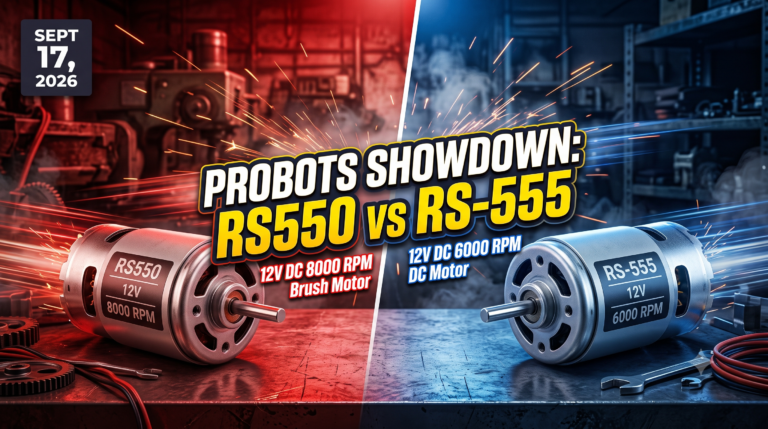
Showdown: RS550 12V DC 8000 vs RS-555 12V DC 6000 RPM DC Motor
Vol. 56 | The Heavyweight DC Drivetrain Duel Reliability isn’t optional when you’re designing actuators that need to move actual steel or
Read Article →
The most high-risk, high-stakes moment in any hardware product's life is the "first-time boot." This is where a 12-layer, custom-designed board, the product of thousands of hours of engineering, is first powered on. And in 99% of cases, it does absolutely nothing. It is a "dead" board. This is where modern products (IoT, Medical, Automotive) fail, stuck in a debugging hell because the hardware "bones" have no software "nervous system" to connect them to the operating system "brain." Our service is the essential, expert-level discipline of creating this nervous system. We write the deep, low-level code that makes your custom hardware come to life.
A Board Support Package (BSP) is the collection of software that makes an operating system (like Linux or an RTOS) run on your specific, custom hardware. Device Drivers are the individual software modules within that BSP that allow the OS to control each peripheral—like a camera, Wi-Fi chip, or touchscreen
Our BSP & Device Driver Development service is the expert-level process of writing, porting, and optimizing the entire low-level software stack that sits between your hardware and your OS. We are not application coders; we are deep kernel and hardware-level engineers. Our core competency is in writing custom devicetrees (.dts), porting bootloaders (U-Boot), and developing robust, high-performance kernel drivers for complex peripherals.
We solve the critical business problems of a "dead" prototype, an unstable Wi-Fi connection, a "jittery" camera feed, or a touchscreen that doesn't respond. We are masters of the kernel APIs: V4L2/DRM (for cameras/displays), netdev (for networking), and the intricacies of DMA, I2C, SPI, and MIPI-CSI2.
Our expertise is built on having tamed the most complex MPUs and MCUs for real-world products. We have production-level experience across all major manufacturers:
MPU Platforms (for Linux):

MCU Platforms (for RTOS/Bare-Metal):
This service is the foundation of our Custom Embedded Linux Development and RTOS & Real-Time Systems Development services, proven in Industrial, Medical, and Automotive applications.
Who Is This Service For?
Our AI Co-Pilot is not a "black box" that replaces engineers. It is a powerful force multiplier for our expert team, integrated directly into our rigorous, traditional development and testing processes to enhance accuracy, quality, and speed.
Generative AI (The Creative Partner): Our GenAI complements our engineers' work by accelerating the most complex setup tasks.
Machine Learning (The Analytical Partner): Our ML model acts as an "AI-super-reviewer" that complements traditional tools like Valgrind or static analysis.

The Tangible Payoff:
Our metrics are our proof: we have successfully developed and delivered over 100+ custom Board Support Packages, enabling clients to ship products with complex, custom hardware successfully.
Case Study: The "Unstable" 4K Camera System

Our code is built to be compliant with standards like MISRA C and certifiable for IEC 62304 (Medical) or ISO 26262 (Automotive).
Our Engineering Philosophy: A custom board without a custom, stable BSP is just an expensive paperweight.
We engage with clients at any stage and offer flexible models to provide the exact expertise you need.

This is a critical strategic decision. Your primary alternatives are to trust the vendor's BSP or attempt this highly specialized work in-house.
The Generic/Vendor Trap (The "Vendor BSP Trap"): This is the #1 pitfall. The vendor's BSP is a demo, not a product. It's designed to make their dev kit work, not your custom board. The drivers are often undocumented, unstable, and non-optimized. The moment you add your custom peripheral, the entire system breaks, and the vendor will not support you.
The In-House Labyrinth (The "Kernel Driver" Trap): This is the hidden-cost trap. You ask your (brilliant) senior firmware engineer to "just write a driver." They are now lost in the 30-million-line Linux kernel source code, trying to understand the complex DRM/KMS subsystem (for displays) or the V4L2 API (for cameras). These are not "drivers"; they are entire, complex frameworks that take years to master.
The "Hidden" Engineering Tasks: The real, project-killing work is not just writing code. It's the deep, low-level debugging and integration:

The Expert Partner Solution: We are your expert, outsourced BSP and driver team. We have already mastered these complex subsystems. We deliver clean, maintainable, and stable low-level code, allowing your application team to work on a platform that just works.
Phase 1 (No-Cost): Hardware & Architecture Review. We start with a free consultation to review your schematics, component datasheets, and OS (Linux/RTOS) requirements.
Phase 2 (Commercials): Formal BSP & Driver Development Plan. We provide a detailed proposal, outlining the scope (e.g., "port U-Boot," "write V4L2 driver"), all deliverables, and a firm timeline and quote.
Phase 3 (Execution): Initial Board Bring-Up & Bootloader Porting. This is the first, critical test. Our team performs the$$System Integration & Bring-Up$$
, establishing JTAG/SWD debug, verifying power rails, and porting the U-Boot bootloader to get a console.
Phase 4 (Execution): Kernel Porting & Custom Driver Development. We port the Linux/RTOS kernel, write the new devicetree, and then write the custom drivers for all your peripherals (Camera, Display, Wi-Fi, etc.).
Phase 5 (Handoff & Support): Full BSP Delivery & Team Integration. We deliver the complete, fully-documented source code for the BSP and all drivers. Our "white-glove" handoff includes setting up your team's cross-compilation (GCC) and debugging (GDB) environment, so you are ready to start development.
What is a BSP vs. a Devicetree vs. a Driver?
Why can't I just use a vendor's C library or an Arduino library?
This is the most critical difference between a hobbyist prototype and a professional product. A vendor's C library (like an Arduino library) is:
Not Thread-Safe: In a multitasking OS (Linux or RTOS), if two tasks try to use the library at the same time, it will corrupt data and crash the system.
Not OS-Integrated: It doesn't use the standard kernel interfaces (read, write, ioctl), so your application is a non-standard, unmaintainable monolith. Inefficient: It almost always uses "polling" or "bit-banging," which ties up 100% of your CPU. A proper device driver is thread-safe (using mutexes), OS-integrated (provides a /dev/ file), and efficient (uses interrupts and DMA), allowing your CPU to be 100% free. This is the only way to build a reliable, scalable, and power-efficient product.
Do you develop all types of Linux drivers, like char, block, and network?
Yes. While our expertise is in solving your product problem (e.g., "making your camera work"), this translates to deep technical mastery of all the core Linux driver subsystems.
What specific MPU/MCU platforms do you write BSPs for?
We have production-level experience across all major manufacturers, both Western and Chinese. This includes, but is not limited to:
MPU Platforms: NXP i.MX 6/8/9, ST STM32MP1/MP2, Rockchip RK35xx, TI Sitara AM-series, Allwinner A/H-series, Amlogic S-series, Microchip SAMA5/9, and FPGA SoCs (Xilinx/Intel).
MCU Platforms: ST STM32 (F/L/H/U/G), Nordic nRF52/53/91, Espressif ESP32, NXP i.MX RT, Microchip SAM D/E/L, GigaDevice GD32, and WCH CH32.
My vendor's BSP "mostly" works. Why can't I just use that?
You are hitting the "Vendor BSP Trap." The vendor's BSP was built for their dev kit, not your custom board. It's bloated, often unstable, and not maintainable. The moment you need to change a peripheral or update your kernel, your "mostly-working" build will break, and you'll have no support. We build you a clean BSP from scratch, so it's 100% maintainable.
My new Wi-Fi/Bluetooth chip is unstable and has low throughput. Can you fix it
Yes. This is one of our most common "driver rescue" services. Wireless driver integration is notoriously difficult. We are experts at stabilizing these drivers, optimizing the data path, managing power-save modes, and ensuring the chip coexists properly with other protocols like Bluetooth (BLE).
What's your expertise with camera (V4L2) and display (DRM/KMS) drivers?
This is one of our core specialties, essential for our Edge AI & Machine Learning Deployment service. We are experts in the V4L2 (Video4Linux2) framework for writing camera drivers (e.g., for MIPI-CSI2 sensors) and the DRM/KMS (Direct Rendering Manager) framework for modern display drivers (e.g., for MIPI-DSI panels).
How do you test your drivers?
We use a rigorous, multi-level process. We perform host-based unit testing, but most importantly, we conduct Hardware-in-the-Loop (HIL) testing. We build automated test jigs (using our ATE System expertise) to send real signals, test edge cases, and run 24/7 stress tests to find subtle bugs (like memory leaks or race conditions) before you do.
How do you handle drivers for hardware you didn't design?
We are experts at this. Our process starts with your schematics and the component datasheets. We use low-level tools like logic analyzers, oscilloscopes, and JTAG debuggers to "talk" to the peripheral directly, verify its behavior, and then write a new, clean driver from scratch that matches the hardware's real-world behavior.
Probots Electronics is highly regarded for its highly skilled team and knowledgeable staff who provide expert guidance to ensure customers select the right components for their technical projects. The business maintains a strong reputation for prompt service and reliable support, with many clients praising their quick response times and genuine commitment to customer satisfaction.


A very great place for electronics Such a well maintained shop... Felt good shopping here


Nice

For new developments kit available and they will support till working, and I suggest this place strongly


This place has all the electronic parts students will ever need, staff is friendly and the place is organised.


It was a really nice experience! I was happy to find such a wide range of robotics kits for kids, suitable for different age groups and learning levels.

Excellent experience




Good stuff

Buyed them. But no bargain. Helpful staff.


Available all children school project spears parts like electronics


It was good experience




Staff is very patient and helpful

One of the best place for electronics you will get everything you want! With the best and orginal quality

Very helpful staff and the best place to buy components for projects

Wonderful store with expert service and technically strong people.

Prompt delivery, excellent technical support


Large inventory of electronic components and parts. Well trained service personnel and technicians who can quickly identify and rectify product defect if any. They are a reliable and trustworthy online stores.

A very great place for electronics Such a well maintained shop... Felt good shopping here
Nice
For new developments kit available and they will support till working, and I suggest this place strongly
This place has all the electronic parts students will ever need, staff is friendly and the place is organised.
It was a really nice experience! I was happy to find such a wide range of robotics kits for kids, suitable for different age groups and learning levels.
Excellent experience
Good stuff
Buyed them. But no bargain. Helpful staff.
Available all children school project spears parts like electronics
It was good experience
Staff is very patient and helpful
One of the best place for electronics you will get everything you want! With the best and orginal quality
Very helpful staff and the best place to buy components for projects
Wonderful store with expert service and technically strong people.
Prompt delivery, excellent technical support
Large inventory of electronic components and parts. Well trained service personnel and technicians who can quickly identify and rectify product defect if any. They are a reliable and trustworthy online stores.
● 20 min readVol. 56 | The Heavyweight DC Drivetrain Duel Reliability isn’t optional when you’re designing actuators that need to move actual steel or
Read Article →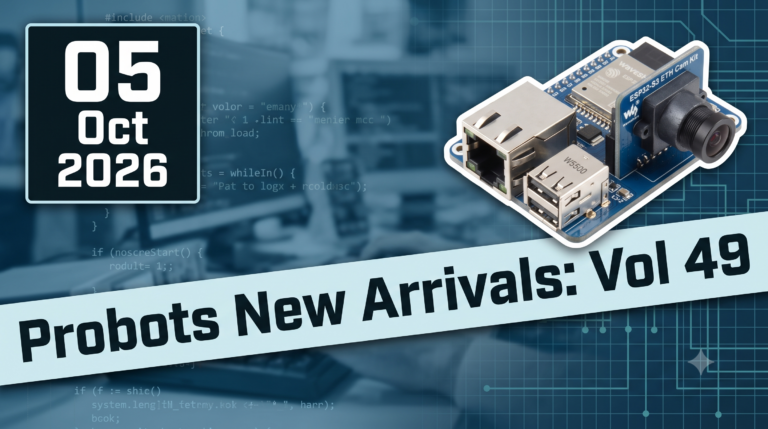 ● 13 min read
Workbench Vol. 49 🚀 The Project Trifecta: 3 Builds to Start Today We don’t just stock parts; we curate ecosystems. This week’s arrivals are desi
Read Article →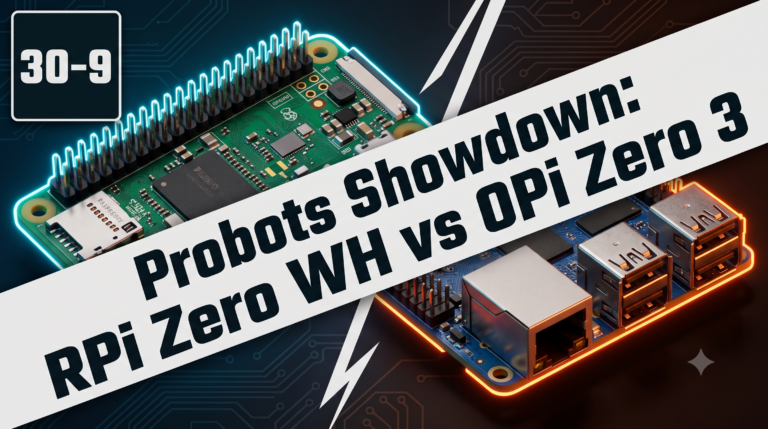 ● 18 min read
Vol. 59 | The Battle of the Bite-Sized Boards Picture a project that needs full Linux, networking, and GPIO—but has almost no room for a conventional
Read Article →