










 ● 20 min read
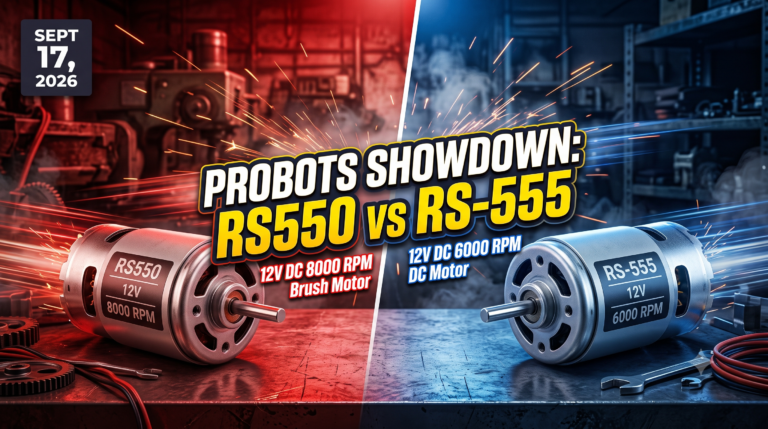
Showdown: RS550 12V DC 8000 vs RS-555 12V DC 6000 RPM DC Motor
Vol. 56 | The Heavyweight DC Drivetrain Duel Reliability isn’t optional when you’re designing actuators that need to move actual steel or
Read Article →
In high-volume manufacturing, the bottleneck is rarely assembly; it is testing. Manual testing using multimeters, oscilloscopes, and logic analyzers is slow, error-prone, and unscalable. A single missed solder joint or a marginal voltage rail can lead to a disastrous "Dead on Arrival" (DOA) field failure rate. Automated Test Equipment (ATE) is the discipline of converting manual verification into a high-speed, data-driven science. It is not just about a "test jig"; it is about building an intelligent machine that validates your product's entire functionality, logs every metric to the cloud, and enforces a strict "Go/No-Go" decision in seconds, ensuring that only perfect units leave your factory.
What is an ATE System?
An ATE System is a complete, integrated test solution comprising three layers:
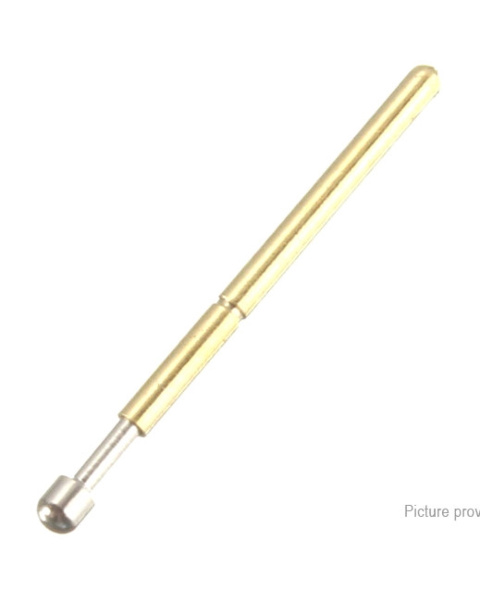
Our ATE Systems service is the expert execution phase where we design and build the "Quality Gate" for your manufacturing line. We are not just mechanical designers; we are full-stack test architects. Our core competency lies in bridging the gap between the physical PCB and the factory IT system. We design robust mechanical fixtures with high-precision pogo pins (Ingun/ECT), integrate industrial-grade instrumentation via SCPI/VISA protocols, and write the high-speed test logic in Python, C#, or LabVIEW.
Functional Validation Beyond Signals
We go far beyond checking if a pin is 3.3V. We build systems that perform complete functional validation:

We solve the critical business problems of test coverage (DFT), cycle time reduction, and traceability. We enable you to test complex mixed-signal boards, validate RF performance, and flash firmware in parallel, all with a single button press.
Who Is This Service For?
We build systems for testing a wide range of electronics:
Any shop can machine a fixture. Our advantage is an AI Co-Pilot trained on our proprietary database of manufacturing defect patterns and test coverage metrics from millions of tested units.
Our Engineering Toolchain: The Tools of the Trade We build systems using industry-standard, reliable components to ensure long-term supportability
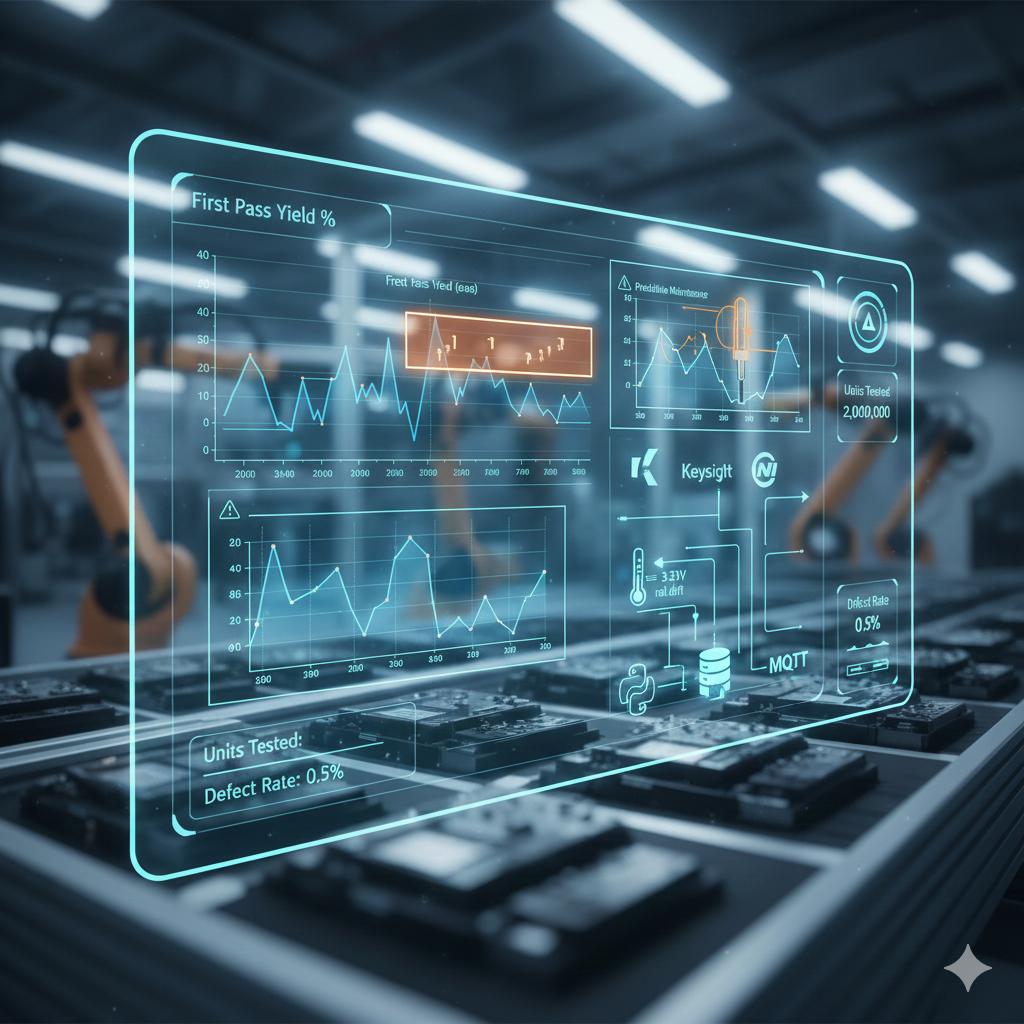
The Tangible Payoff:
Case Study 1: The "Zero-Defect" EV Battery Manager
Problem: An EV client was manufacturing a complex Battery Management System (BMS). Manual testing took 20 minutes and missed critical safety checks like short-circuit protection response time. They faced a 5% field failure rate, which was a massive liability risk.
Process: We designed a fully automated Functional Test System (FCT) using 4-Wire Kelvin Sensing for precise resistance measurement. We integrated a Programmable Electronic Load to simulate 100A discharge events and a Source Measure Unit (SMU) to inject precise voltages into the cell balancing pins. The software, written in Python, ran a 150-step test sequence, including thermal calibration and over-current protection verification.
Result: The test cycle time dropped to 45 seconds (96% reduction). The automated system caught 100% of the safety defects, reducing their field failure rate to near-zero. Every single board now has a "Birth Certificate"—a digital log of its exact calibration values—stored in the client's cloud database.

Case Study 2: The "Deaf" IoT Sensor (RF Calibration)
Problem: A smart home client was shipping Zigbee sensors that had poor range. The assembly house was soldering the antenna chip, but variance in solder paste was detuning the RF circuit.
Process: We built a Shielded Box (Faraday Cage) ATE with an integrated Spectrum Analyzer. Every unit was placed inside, and the ATE performed a Conducted RF Power Test and Frequency Offset Calibration. The system automatically trimmed the crystal capacitance (internal register) to center the frequency.
Result: Every shipped unit was calibrated to within ±2ppm frequency accuracy. Range increased by 40%, and returns due to "connectivity issues" vanished.
Case Study 3: The Medical Device Traceability Mandate
Problem: A medical startup needed to manufacture an FDA-approved patient monitor. FDA regulations (21 CFR Part 11) required a permanent, unalterable log of every test result for every serial number. Manual spreadsheets were non-compliant.
Process: We deployed an SQL-backed ATE System. The tester scanned the PCB barcode, ran the diagnostic suite (ECG simulation, SpO2 sensor validation), and cryptographically signed the results before pushing them to the cloud.
Result: The client passed their ISO 13485 audit with flying colors. The system provided full upstream/downstream traceability for every component batch.
Our Engineering Philosophy: If you didn't measure it and log it, you didn't test it.
When to Choose ATE vs. Manual Testing: This is a volume decision. If you are building <100 units, manual testing is acceptable. If you are building >1,000 units, manual testing is a liability. The cost of a single field failure often exceeds the cost of a basic test fixture.
We engage with clients at any stage:
As a "Design for Test (DFT)" Consultant:
You are in the schematic phase. We review your design to ensure you have adequate Test Points (TPs), debug connectors, and isolation circuitry. We prevent the nightmare scenario of building a board that cannot be tested automatically.
As a "Fixture Design" Partner:
You have a board and a test plan. We design and manufacture the mechanical "Bed of Nails" fixture, integrating the pogo pins, hold-down clamps, and safety interlocks. We deliver a robust, ergonomic electromechanical assembly ready for your team to wire up.
As an Integrated End-to-End Solution:
This is the gold standard. We deliver the Turnkey ATE System. We handle everything: DFT analysis, mechanical fixture design, electrical wiring, instrument selection, test software development, and database integration. You receive a "Black Box" test station that you simply plug in at your factory. It connects to your Cloud Backend & IoT Platform
to upload results instantly.

This is a critical strategic decision. The alternative to a professional ATE is usually a "DIY Jig" or manual probing.
The "Warranty Blind Spot" Trap:
This is the biggest financial risk for small manufacturers. You ship 1,000 units. A customer claims "Dead on Arrival" (DOA). Without data, you have to accept the return and eat the cost.
The "In-House / DIY" Fallacy (The "It's Just Pogo Pins" Trap):
Many engineering teams think, "We can 3D print a holder and wire it up ourselves." This works for 50 units. It fails for 5,000.
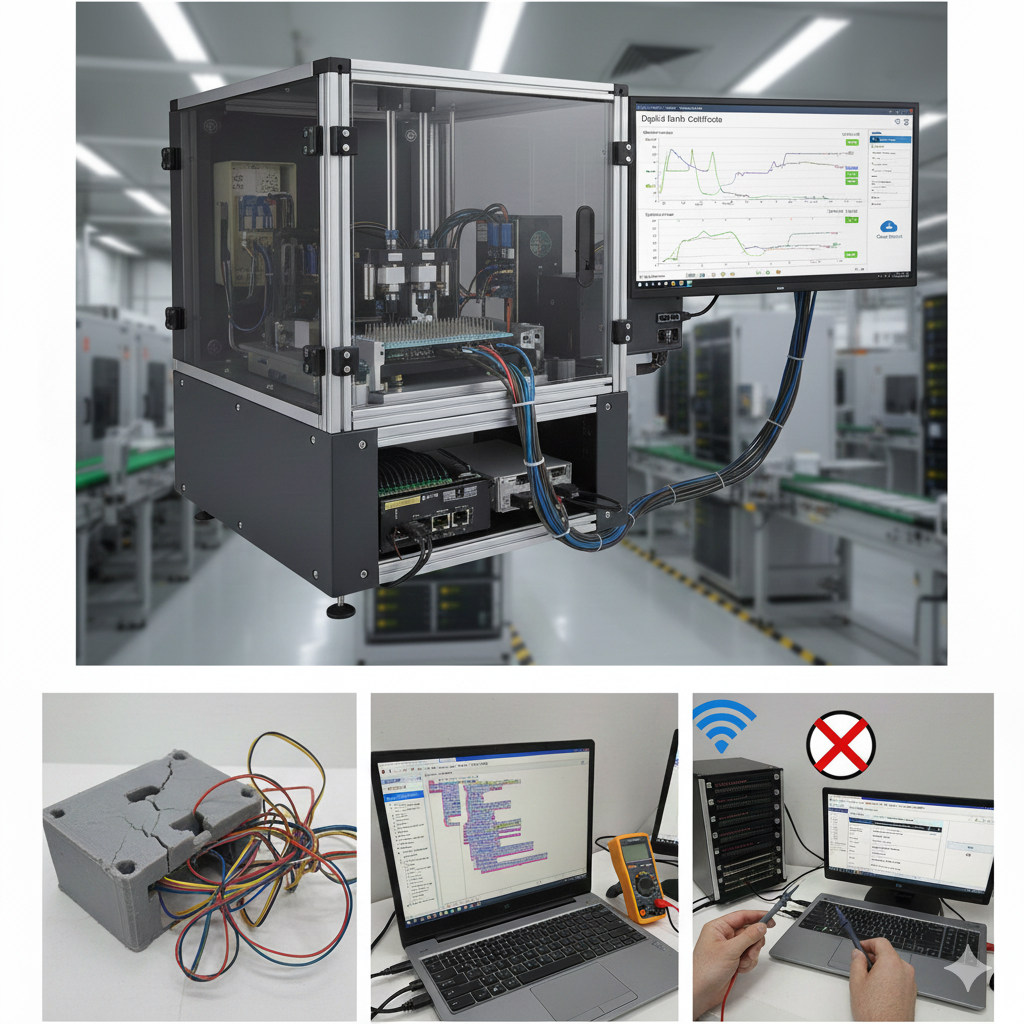
The Expert Partner Solution: We build Industrial-Grade Systems. We use machined ESD-safe materials, rated test probes, and robust wiring harnesses. Our software pushes data to a central database, giving you a live dashboard of your manufacturing health.
Phase 1 (DFT Analysis): We review your ECAD files (Altium/Eagle/KiCad). We identify where test points are needed for 100% coverage (Power, JTAG, Comm Buses, Analog Inputs).
Phase 2 (Architecture & Strategy): We define the Test Strategy. Will we do In-Circuit Test (ICT)? Functional Test (FCT)? Flashing? We select the right instrumentation (DMM, Scope, Programmer) to meet your budget and cycle time goals.
Phase 3 (Mechanical & Electrical Design): We design the fixture in 3D CAD to ensure perfect alignment with your PCB. We design the "Interface Board" to route signals from the pogo pins to the instruments.
Phase 4 (Software Development): We write the test sequencer. We implement the drivers for the instruments, the communication logic for the DUT (UART/USB/BLE), and the database connectors. We build the operator GUI (Green Pass / Red Fail).
Phase 5 (Fabrication & Deployment): We machine the fixture, wire the cabinet, and validate the system with "Golden Boards" (known good units) and "Red Rabbits" (known bad units) using Gauge R&R methods. We install the system at your factory and train your operators.

What is the difference between ICT and FCT?
ICT (In-Circuit Test): checks individual components (resistors, capacitors) for value and shorts/opens using machines like the HP 3070 (Keysight) or Teradyne. It finds manufacturing defects (solder bridges, missing parts) but doesn't prove the device works.
FCT (Functional Test): Powers up the board and tests its actual function. This includes simulating complex user inputs (e.g., button sequences), verifying logical responses (e.g., "Does the LED blink twice?"), and running internal self-test diagnostic routines via the debug port. Our ATE systems focus on this deep functional verification, providing the ultimate proof of quality.
We already use an HP 3070 (Keysight). Do we need your system?
Yes, for the functional layer. While the HP 3070 is excellent for finding shorts and wrong components (ICT), it cannot easily test complex logic—like "Connect to Wi-Fi, authenticate with AWS IoT, and send a packet." It is a structural tester, not a functional one. Our systems are built on Linux/Python specifically to validate these complex, high-level behaviors that modern smart devices depend on.
Can you flash firmware during the test?
Yes. This is a standard part of our workflow. We integrate high-speed programmers (like Segger Flasher or PEmicro) into the fixture. We can flash the bootloader, fuse keys, and load the main application as the first step of the test sequence.
Do you use LabVIEW or Python?
We are experts in both. We typically recommend Python for its flexibility, low cost, and ease of integration with cloud/databases. We use LabVIEW for legacy systems or when specific high-speed NI hardware is required.
Can you automate mechanical tests (buttons, LEDs)?
Yes. We use pneumatic cylinders to automatically press buttons during the test sequence. We use color sensors or optical fibers to verify LED color and brightness automatically, removing human subjectivity.
How do you handle different PCB revisions?
We design our fixtures with interchangeable cassettes or "top plates." If you move connectors or change the PCB shape, you only need to buy a new, low-cost plate, not a whole new machine.
Do you support "Parallel Testing"?
Yes. For high-volume lines, we build Multi-UP (Panelized) Fixtures. We can test 2, 4, or even 8 boards simultaneously. This dramatically reduces the cycle time per unit.
How do we get the data out of the machine?
We support multiple formats. The simplest is a local CSV/Log file. The professional standard is pushing data to an SQL Database (local or cloud) or integrating directly with your MES (Manufacturing Execution System) via API.
What happens if a board fails?
The system locks the fixture (optional), sounds a buzzer, and displays a clear "FAIL" message with the specific error code (e.g., "Error: 3.3V Rail too low"). This tells the repair technician exactly what to fix.
Can you test wireless functions (Wi-Fi/BLE)?
Yes. We use Shielded Boxes (Faraday Cages) to isolate the device from external RF noise. We then use calibrated antennas or conducted measurements to verify the device's transmit power (TX) and receive sensitivity (RX).
How accurate are your measurements?
We select instrumentation based on your requirements. For general checks, we use industrial DAQs (Data Acquisition Units). For precision metering, we integrate 6.5-digit benchtop DMMs. We perform Gauge R&R (Repeatability & Reproducibility) studies to prove the system's accuracy.
How does an ATE system save money on warranty claims?
By eliminating "he said, she said" disputes. When you have a timestamped test log for every serial number, you have proof of quality. If a customer returns a unit claiming it was "Dead on Arrival," you can check the logs. If the logs show it passed all functional tests with nominal values 2 days ago, you can rule out manufacturing defects and look for shipping damage or user misuse. This creates an audit trail that protects your margins and reputation.
Ready to Automate Your Manufacturing Quality?
If you have a production run coming up and need to guarantee every unit is perfect, we are ready to be your manufacturing partners.
How to Contact Us:
Our Engagement Process:

Sample Request Template (Copy & Paste)
To help us understand your needs, please use this structure:
Project Name:
e.g., Smart Meter Production Tester
1. The Product:
e.g., AC Energy Meter with LoRaWAN. PCB Size: 100mm x 80mm.
2. The Volume:
e.g., Planning to build 5,000 units/month.
3. Key Test Requirements:
4. Cycle Time Goal:
$$e.g., Need to test each unit in under 60 seconds.$$
5. Current Status:
e.g., Schematics are frozen. Prototyping phase complete.
What You Get in Response (Our Summary)
Before you pay, we provide value in our first reply:
DFT Feedback: "Can we actually test this?" (e.g., "You are missing test points for the USB D+/D- lines, we recommend adding them.")
Fixture Concept: We will recommend the right mechanical approach (e.g., "A manual clamp is fine for 1k units, but you need pneumatic for 5k.")
Feasibility Check: A realistic estimate of the Cycle Time and Test Coverage we can achieve.
Probots Electronics is highly regarded for its highly skilled team and knowledgeable staff who provide expert guidance to ensure customers select the right components for their technical projects. The business maintains a strong reputation for prompt service and reliable support, with many clients praising their quick response times and genuine commitment to customer satisfaction.


A very great place for electronics Such a well maintained shop... Felt good shopping here


Nice

For new developments kit available and they will support till working, and I suggest this place strongly


This place has all the electronic parts students will ever need, staff is friendly and the place is organised.


It was a really nice experience! I was happy to find such a wide range of robotics kits for kids, suitable for different age groups and learning levels.

Excellent experience




Good stuff

Buyed them. But no bargain. Helpful staff.


Available all children school project spears parts like electronics


It was good experience




Staff is very patient and helpful

One of the best place for electronics you will get everything you want! With the best and orginal quality

Very helpful staff and the best place to buy components for projects

Wonderful store with expert service and technically strong people.

Prompt delivery, excellent technical support


Large inventory of electronic components and parts. Well trained service personnel and technicians who can quickly identify and rectify product defect if any. They are a reliable and trustworthy online stores.

A very great place for electronics Such a well maintained shop... Felt good shopping here
Nice
For new developments kit available and they will support till working, and I suggest this place strongly
This place has all the electronic parts students will ever need, staff is friendly and the place is organised.
It was a really nice experience! I was happy to find such a wide range of robotics kits for kids, suitable for different age groups and learning levels.
Excellent experience
Good stuff
Buyed them. But no bargain. Helpful staff.
Available all children school project spears parts like electronics
It was good experience
Staff is very patient and helpful
One of the best place for electronics you will get everything you want! With the best and orginal quality
Very helpful staff and the best place to buy components for projects
Wonderful store with expert service and technically strong people.
Prompt delivery, excellent technical support
Large inventory of electronic components and parts. Well trained service personnel and technicians who can quickly identify and rectify product defect if any. They are a reliable and trustworthy online stores.
● 20 min readVol. 56 | The Heavyweight DC Drivetrain Duel Reliability isn’t optional when you’re designing actuators that need to move actual steel or
Read Article →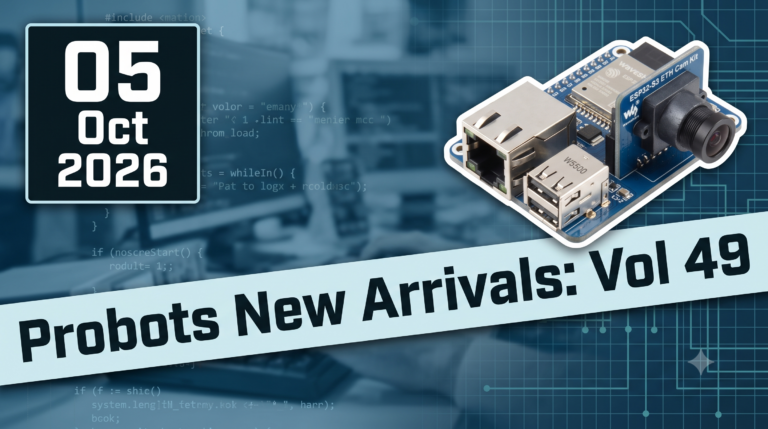 ● 13 min read
Workbench Vol. 49 🚀 The Project Trifecta: 3 Builds to Start Today We don’t just stock parts; we curate ecosystems. This week’s arrivals are desi
Read Article →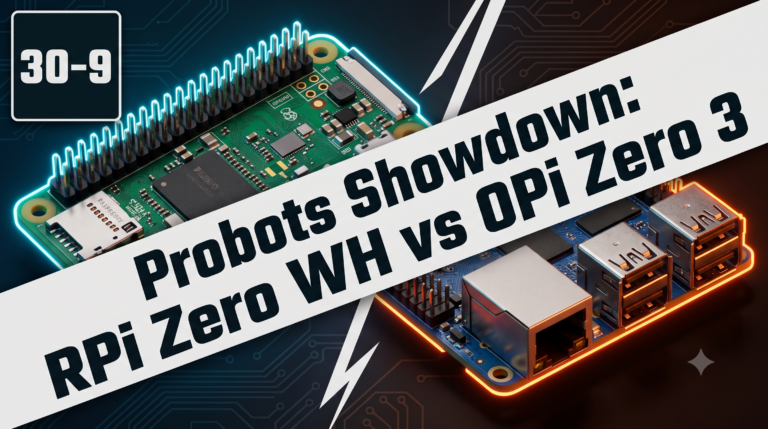 ● 18 min read
Vol. 59 | The Battle of the Bite-Sized Boards Picture a project that needs full Linux, networking, and GPIO—but has almost no room for a conventional
Read Article →